


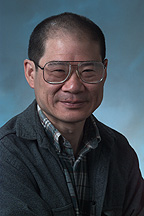
Andrew Yen, PhD
Department of Biomedical Sciences
Professor of Biomedical Sciences
Department of Biomedical Sciences
Cornell University College of Veterinary Medicine
T4 008A Veterinary Research Tower, Box 11
Ithaca, NY 14853-6401
Office: 607-253-3354
Email: ay13@cornell.edu
Research Interest
Research in Dr. Yen's laboratory is in the area of cell cycle regulation and cell differentiation. They study in particular a myeloblastic hematological tumor cell line, HL-60, which retains the capability to undergo GO arrest and differentiation along either the myeloid or the monocytic lineages. For example, retinoic acid causes GO arrest and myeloid differentiation, whereas 1,25-dihydroxy vitamin D3, a ligand for another member of the same steriod thyroid hormone receptor superfamily, causes arrest and monocytic differentiation. This established cell line has been one of the archtypical models for studies of myelo-monopoiesis and hematopoietic differentiation. Because it is derived from a patient with acute promyelocytic leukemia, a disease where retinoic acid has now been found to induce temporary remissions while conventional chemotherapy has not been effective, there is significant motivation for understanding its mechanism of action. The current work focuses on what retinoid receptors are implicated in initiating the metabolic cascade culminating in GO arrest and cell differentiation, how that process is modulated by cell surface receptors such as c-FMS (the CSF-1 receptor) that use MAPK signaling, and how the RB (retinoblastoma tumor suppressor) protein may function as a downstream effector of these signals to regulate cell cycle and cell differentiation. One of the central scientific questions addressed in the laboratory is the cellular molecular mechanisms of myeloid and monocytic cell differentiation.
The application of basic principles elucidated in these in vitro studies is directed toward understanding the mechanism of teratogenic agents and also toward the rational design of differentiation induction therapy of cancer. Whereas conventional chemotherapy seeks to expunge the tumor stem cell population, this alternative seeks to nullify the proliferative activity and differetiatively immature hallmarks of the tumor by inducing terminal differentiation. The host can thus be relieved of the tumor burden. The hope is that this potential form of therapy will spare the host of the severely toxicity inherent in conventional chemotherapy. Significantly certain dietary factors and environmental pollutants can induce terminal differentiation of neoplastic cells. The molecular mechanism by which they act is being studied by the above.
Education
- PhD, Biophysics, Cornell University, 1976
- MS, Physics, University of Washington, 1970
- BA, Physics/Mathematics, Haverford College, 1969
Biography/Professional Experience
Dr. Andrew Yen, a professor in the Department of Biomedical Sciences, is a member of several graduate fields. His undergraduate and graduate training at Haverford College (BA, physics/mathematics 1969), University of Washington (MS, physics 1970) and Cornell University (PhD, biophysics 1976) led to postdoctoral work at Harvard with A.B. Pardee and subsequent faculty appointments at the Sloan-Kettering Institute for Cancer Research, the University of Iowa, and now Cornell University. Dr. Yen’s research has focused on the cellular/molecular control mechanisms regulating cell growth and differentiation which may be pathologically aberrant in cancer. His work has been supported by the National Institutes of Health, The American Institute for Cancer Research, The Council for Tobacco Research, The Children’s Leukemia Research Foundation, The United States Department of Agriculture, and the March of Dimes Foundation. Dr. Yen is Director of Graduate Studies in Environmental Toxicology, Director of the Biomedical Sciences Flow Cytometry Core Laboratory, and Associate Director of the Institute for Comparative Environmental Toxicology.
Publications
- Dissecting the novel partners of nuclear c-Raf and its role in all-trans retinoic acid (ATRA)-induced myeloblastic leukemia cells differentiation. Rashid A, Wang R, Zhang L, Yue J, Yang M, Yen A.Exp Cell Res. 2020 Apr 10:111989. doi: 10.1016/j.yexcr.2020.111989. Online ahead of print.PMID: 32283065
- Roscovitine enhances all-trans retinoic acid (ATRA)-induced nuclear enrichment of an ensemble of activated signaling molecules and augments ATRA-induced myeloid cell differentiation. Rashid A, Duan X, Gao F, Yang M, Yen A.Oncotarget. 2020 Mar 24;11(12):1017-1036. doi: 10.18632/oncotarget.27508. eCollection 2020 Mar 24.PMID: 32256976
- Roscovitine enhances All-trans retinoic acid (ATRA)-induced leukemia cell differentiation: Novel effects on signaling molecules for a putative Cdk2 inhibitor. Rashid A, Duan X, Gao F, Yang M, Yen A.Cell Signal. 2020 Jul;71:109555. doi: 10.1016/j.cellsig.2020.109555. Epub 2020 Feb 4.PMID: 32032659
- Retinoic acid and 6-formylindolo(3,2-b)carbazole (FICZ) combination therapy reveals putative targets for enhancing response in non-APL AML. Bunaciu RP, MacDonald RJ, Jensen HA, Gao F, Wang X, Johnson L, Varner JD, Yen A.Leuk Lymphoma. 2019 Jul;60(7):1697-1708. doi: 10.1080/10428194.2018.1543880. Epub 2018 Dec 20.PMID: 30570341
- CXCR5 overexpression in HL-60 cells enhances chemotaxis toward CXCL13 without anticipated interaction partners or enhanced MAPK signaling. MacDonald RJ, Yen A.In Vitro Cell Dev Biol Anim. 2018 Dec;54(10):725-735. doi: 10.1007/s11626-018-0293-z. Epub 2018 Oct 1.PMID: 30276608
- Src family kinase inhibitor bosutinib enhances retinoic acid-induced differentiation of HL-60 leukemia cells. MacDonald RJ, Bunaciu RP, Ip V, Dai D, Tran D, Varner JD, Yen A.Leuk Lymphoma. 2018 Dec;59(12):2941-2951. doi: 10.1080/10428194.2018.1452213. Epub 2018 Mar 23.PMID: 29569971
- The c-Raf modulator RRD-251 enhances nuclear c-Raf/GSK-3/VDR axis signaling and augments 1,25-dihydroxyvitamin D3-induced differentiation of HL-60 myeloblastic leukemia cells. Supnick HT, Bunaciu RP, Yen A.Oncotarget. 2018 Jan 19;9(11):9808-9824. doi: 10.18632/oncotarget.24275. eCollection 2018 Feb 9.PMID: 29515772
- Potential for subsets of wt-NPM1 primary AML blasts to respond to retinoic acid treatment. Bunaciu RP, MacDonald RJ, Gao F, Johnson LM, Varner JD, Wang X, Nataraj S, Guzman ML, Yen A.Oncotarget. 2017 Dec 23;9(3):4134-4149. doi: 10.18632/oncotarget.23642. eCollection 2018 Jan 9.PMID: 29423110
- Probing the requirement for CD38 in retinoic acid-induced HL-60 cell differentiation with a small molecule dimerizer and genetic knockout. MacDonald RJ, Shrimp JH, Jiang H, Zhang L, Lin H, Yen A.Sci Rep. 2017 Dec 12;7(1):17406. doi: 10.1038/s41598-017-17720-4.PMID: 29234114
- An Effective Model of the Retinoic Acid Induced HL-60 Differentiation Program. Tasseff R, Jensen HA, Congleton J, Dai D, Rogers KV, Sagar A, Bunaciu RP, Yen A, Varner JD.Sci Rep. 2017 Oct 30;7(1):14327. doi: 10.1038/s41598-017-14523-5.PMID: 29085021
 Browse PubMed for a complete listing of Dr. Yen's publications
Awards and Honors
- National Woodrow Wilson Fellow
- Leukemia Scoiety of America Fellow
Professional/Academic Affiliations
- American Society for Cell Biology
- American Association for Cancer Research
- Cell Kinetics Society
- Biophysical Society
- Sigma Xi
- American Physiological Society
- Society for Analytical Cytology
- Honorary Phi Zeta
- Society for Experimental Biology and Medicine