



Rural Brazil faces highest outbreak risk of Oropouche virus

Rio Sucuri in Bonito, Mato Grosso do Sul, Brazil. Photo: Paulo H. Pigozzi / Adobe Stock
A once-neglected tropical virus is silently spreading across Brazil and putting rural communities at highest risk, according to a new study published in Nature Health led by the Cornell University College of Veterinary Medicine and the University of Kentucky.
The research examines the factors causing the spread of Oropouche fever in Brazil. The research team, co-led by Cornell epidemiologist Dr. Ana Bento, assistant professor in the Department of Public and Ecosystem Health, and postdoctoral researcher Dr. Laura Alexander, analyzed over 30,000 confirmed Oropouche fever cases reported between 2014 and 2025 across 5,570 municipalities. They found that rural areas experienced more than 11 times the incidence seen in cities, a pattern opposite to better-known mosquito-borne diseases like dengue, Zika and chikungunya, which typically hit urban centers hardest.
Oropouche fever often causes a short, flu-like illness, but it can lead to severe neurological complications, pregnancy problems, and, in rare cases, death, and there are currently no vaccines or specific antiviral treatments. With the virus now detected across all 27 Brazilian federal units and in travelers to North America and Europe, Bento and Alexander emphasize that understanding outbreak risk from disease introduction — not just where the virus could in theory survive — will be key to staying ahead of this emerging threat.
Working with colleagues in Brazil and at the University of Kentucky, the scientists combined detailed case data with climate, land use and demographic information to understand where an introduction of Oropouche virus is likely to spark a true outbreak versus fizzle out after a few cases.
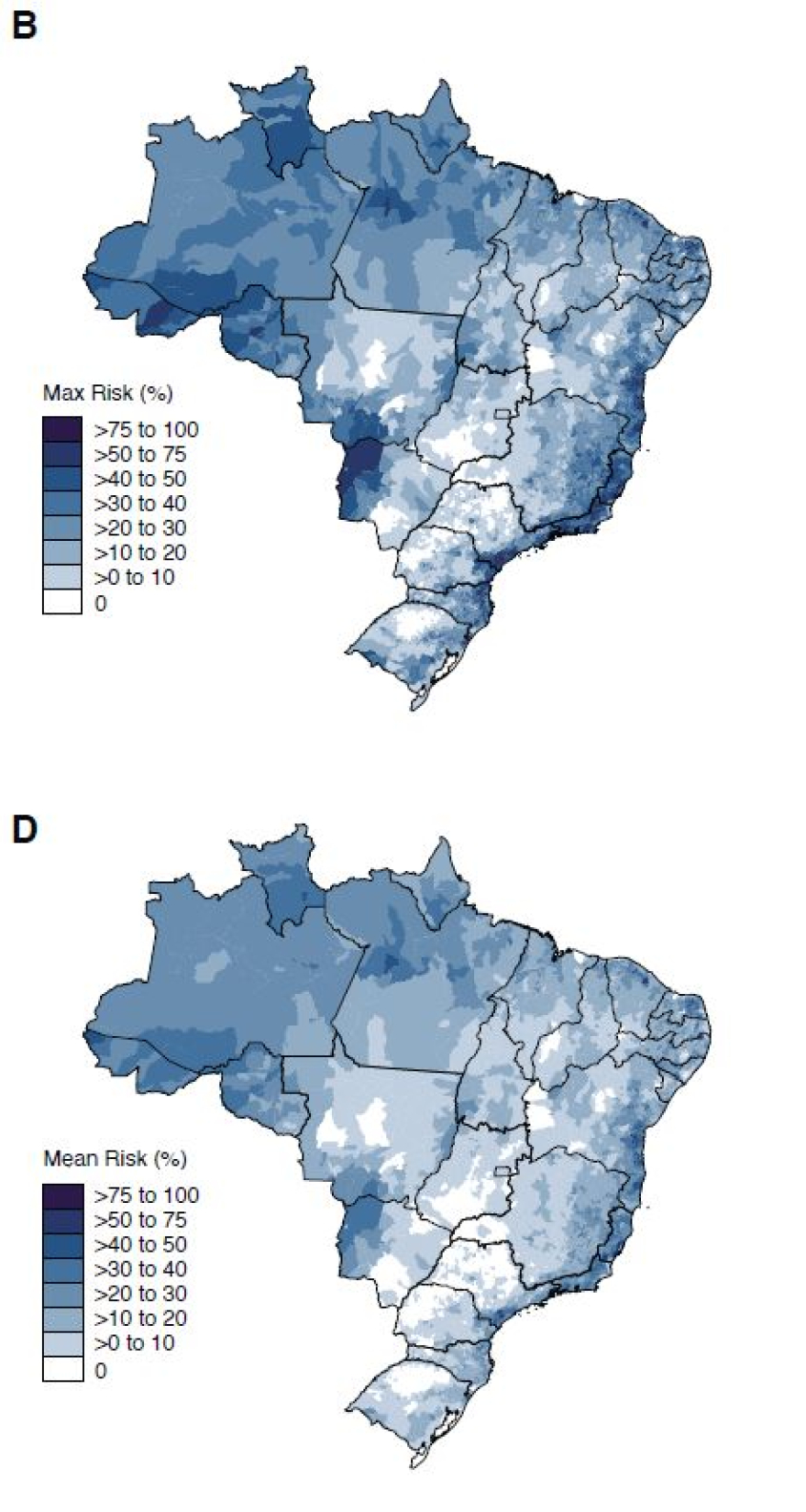
Using a statistical framework that links introductions, outbreak outcomes and local environmental and demographic features, the team generated national maps showing the probability that an introduction will lead to an outbreak in each municipality. These maps reveal not only places where outbreaks have already occurred, but also many municipalities that have high outbreak risk despite not yet recording any Oropouche introductions.
For public health officials, those “high-risk but not yet affected” areas are critical targets for preparedness. The authors argue that focusing surveillance, diagnostic capacity and vector control in these locations could help authorities act before Oropouche virus arrives, rather than scrambling after large surges are underway.
"Oropouche is telling us the same story we’ve seen with other emerging infections: By the time you see large outbreaks, you’re already behind," Bento said. “Our maps show where an imported case is most likely to turn into an outbreak, even in places that haven’t reported cases yet, so health officials can invest in testing, surveillance and vector control before the virus arrives.”