


Student story: Beyond blood samples; building veterinary trust in remote regions
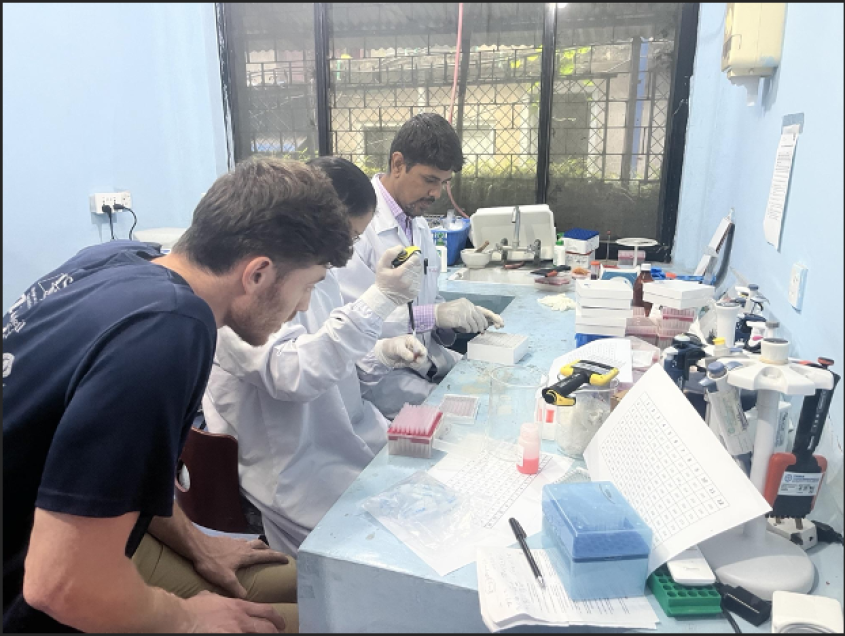
Zach Bisconti at the Central Veterinary Laboratory in Nepal. Photo: Provided
This summer, with funding support from Cornell’s Expanding Horizons Program, the Einaudi Center for International Studies, and the American College of Veterinary Preventative Medicine, I served as the principal field investigator for the Kanchenjunga community livestock and carnivore conflict study in Taplejung District, Nepal. I worked with the Veterinary Hospital and Livestock Service Expert Center in Phungling Municipality and the Kathmandu Central Veterinary Laboratory to study how livestock health, carnivore–livestock conflict, and community-based solutions interact in remote Himalayan villages. In Nepal, carnivore attacks on livestock, and even people, are not uncommon in farming communities, and unsurprisingly, community members struggle to manage these situations. Furthermore, if livestock health is poor and local farming communities are already struggling with food insecurity and financial instability, losses from carnivore predation can be devastating. Under these circumstances, retaliation against predators is understandable but can also inhibit conservation efforts and threaten the survival of endangered carnivore populations. This project’s goal was to understand the roots of these issues by incorporating veterinary practices into livestock management, evaluating small ruminant health risks, and fostering collaboration between local farmers, veterinarians, and conservationists. This local involvement aims to empower these communities to adopt practices that enhance livestock health and human health, while also promoting wild carnivore conservation.
My part of the project focused on detecting antibodies against Peste des Petits Ruminants (PPR), a viral disease of sheep and goats that causes fever, respiratory illness and death, in local livestock herds in the Taplejung District of Nepal. I also examined vaccine coverage to help agencies identify gaps in national immunization programs. Although the overall severity and frequency of PPR outbreaks in Nepal have significantly decreased in recent years due to the dedicated efforts of the Government of Nepal, the country is in the initial stages of a nationwide PPR disease control and eradication program. For two months, I lived and worked in Nepal; phase one of my project encompassed field work in two communities in Taplejung district to collect blood samples from goats and sheep to test for antibodies against PPR. While there, I also interviewed farmers to learn about livestock vaccination practices, animal management and carnivore predation of their animals. Phase two comprised testing the samples for PPR antibody seroprevalence, or the proportion of antibody prevalence in the blood serum, in these communities.
In the field
Our base of operations was the Veterinary Hospital and Livestock Service Expert Center in the Phungling Municipality. For this, I am indebted to Dr. Roshan Dahal for allowing me to work in his facility and facilitating transport. From there, I traveled with local veterinary technicians to nearby farms to speak with farmers about their experiences raising livestock and to collect blood samples from their goats. Right from the start, it was clear that trust would determine the success of any community-based work. The veterinarians and technicians I worked with had long-standing relationships with local farmers, connections that opened doors I would not have been able to access on my own.
Chief among these collaborators was Mr. Chandra Maden, the head technician at the Veterinary Hospital and
Livestock Service Expert Center. He accompanied me on every farm visit, assisted with every blood draw, and more than once kept me from slipping off a mountainside. It was thanks to Mr. Maden that I was accepted by the farmers I met; hardworking people who generously welcomed me into their homes, often with a cup of tea. He also introduced me to the local guides who helped us navigate the region’s remote villages. Mr. Maden’s guidance was invaluable; with the trust Mr. Maden had developed, local farmers not only allowed me to perform blood draws but also to learn and eventually assist in minor surgeries such as the supervised castrations of male goats and pigs.
I learned a great deal during this trip, not only in hands-on veterinary work but also in preparing me for the realities of being a principal investigator in the field. I encountered numerous logistical challenges that tested my planning and adaptability. For example, we had originally aimed to assess both sheep and goats, but most sheep herds had migrated to higher altitudes during the monsoon season to escape the stifling heat, making them inaccessible on my arrival. Compounding this, road closures and mudslide risk due to heavy rains made travel to higher-altitude areas and neighboring districts unsafe. Thus, we revised the scope of the project to focus on goats. Additionally, instead of sampling from four districts, we concentrated our efforts on two accessible sites: the municipalities of Phungling and Pathibhara Yangwarak.
Lab analyses
By the end of our time in the field, our team had successfully collected 294 goat serum samples and prepared blood smears to assess hemoparasite prevalence. After carefully packing the samples into a large, chilled styrofoam box, I loaded my belongings and began the journey to Kathmandu, a bus ride of more than 14 hours, to begin the second phase of the project: laboratory analysis at the Central Veterinary Laboratory.
Once again, trust and collaboration proved essential. Through the connections of local veterinarian Dr. Roshika Shrestha, and with the support of technicians Shri Sudip Kafle and Shri Anita Shrestha, I was able to reinforce my understanding of laboratory diagnostic protocols and conduct testing on all the samples. Their mentorship and patience made me feel like a true part of the lab team.
The data analysis is ongoing, but preliminary results will be shared with local veterinarians to better target outreach and help deliver vaccines to villages that have been overlooked or cut off by environmental challenges such as mudslides. Strengthening vaccine coverage will protect agricultural communities from devastating losses, while also improving their financial stability and creating more opportunities to participate in conservation efforts.
Beyond the comfort zone
As my project ended, I took a brief side trip to Bardia National Park in hopes of seeing some of the wild carnivore species that can be involved in conflict in Nepal. What began as a wildlife safari unexpectedly became another opportunity for community engagement. Alongside Bhawany “Baba” Prasad Kandel, head guide at Wild Planet Eco Retreat in Bardia, I met with veterinary technician Jeevan Kandel to learn about diseases affecting both livestock and people in the region. I also had the chance to visit Tribhuvan Secondary School, where, despite my limited Nepali, I spoke with an attentive and engaged group of students about another important issue affecting public health and carnivore conservation: rabies virus.
Professionally, this summer pushed me beyond my comfort zone. I became more confident handling goats and performing blood draws in rugged, unpredictable environments. I learned to adapt quickly when things didn’t go according to plan, such as shifting focus from farmer interviews to sample collection when time and staffing were limited. Through it all, I came to understand that in environments like this, connection and cultural respect matter just as much as technical skills. Humility and openness went a long way, especially when you did not speak the native language, and I was moved by how quickly I was welcomed into the communities I lived and worked in.
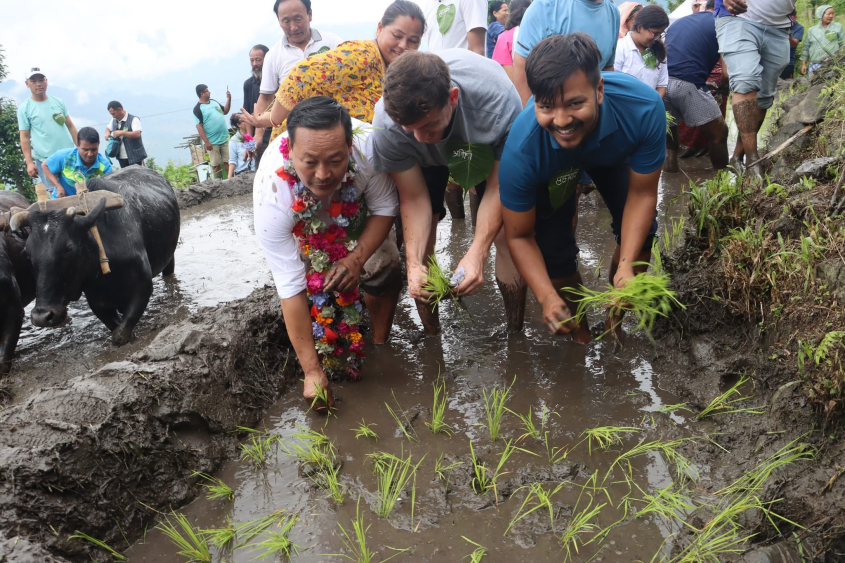
Outside of field work, Dr. Roshan Dahal invited me to participate in Ropai Jatra, their festival marking the rice planting season, and the Chandra Maden and Yogen Shrestha of the veterinary team helped me hike up Mukkumlung Hill, one of Nepal’s most sacred holy sites. I learned of the spiritual significance this site holds, both as a holy place for the Limbu community honoring the goddess Yuma Sammang and as the Pathibhara Devi Temple, visited by pilgrims from across Nepal.
New perspectives
This project gave me a new perspective on the role of veterinary medicine. In Nepal, many veterinarians work as generalists in remote regions with limited resources. Their responsibilities span animal health, human health and food security. Compared to the more specialized, individual-focused model that I am used to in the United States, it provided an eye-opening contrast.
More than anything, this experience helped me better understand the connections between animal health, human well-being and environmental conservation. In places like the Himalayas, protecting livestock and supporting rural communities isn’t just about animal care, it’s about fostering healthier, more sustainable relationships between people, wildlife and the landscapes they share.
This project would not have been possible without the collaboration, generosity and support of a wide network of veterinary professionals, guides, farmers and community members across Nepal. I am deeply grateful to Dr. Martin Gilbert, whose vision and dedication made this project possible. He not only encouraged my participation but also introduced me to Dr. Roshika Shrestha, who, in turn, connected me with Dr. Roshan Dahal, Mr. Chandra Maden, and the entire Taplejung team. Dr. Gilbert’s mentorship was invaluable, he guided me through the process of conducting fieldwork abroad, advised me on travel logistics, and provided steadfast emotional and practical support throughout my project. For the Taplejung team, thank you Dr. Roshan, Chandra, Yogen and Amit for being such wonderful hosts and housing me during my stay. I also want to thank Pritiman and Ashok Rai, who guided Mr. Maden and me across the Pathibhara Yangwarok district to collect our samples. In Bardia, I am especially thankful to Mr. Bhawany “Baba” Prasad Kandel, head guide at Wild Planet, for generously arranging all of my meetings. My sincere thanks also go to deputy Mayor Bina Bhattarai of Thakurbaba Municipality for sharing her time and insights, and to head technician Chandra Bahadur Mahatara and veterinary technician Jeevan Kandel for their knowledge and warm welcome. This experience was shaped at every turn by the trust, mentorship and kindness of the people I worked with, and I carry that with me as the most valuable part of this journey.
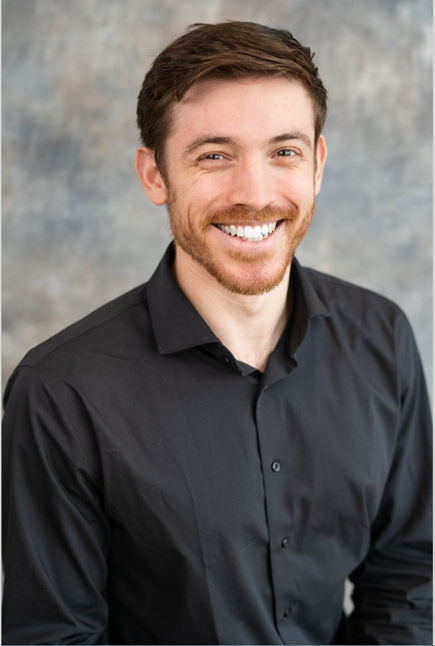
My name is Zachary Bisconti, and I’m a D.V.M. student (Class of 2027) at Cornell University College of Veterinary Medicine and an M.P.H. student at the University of Minnesota School of Public Health. I’m passionate about connecting communities and conservation, with a focus on the intersection of wildlife health, livestock care, and human well-being, particularly in regions where people and wildlife coexist. I’m driven to find practical, compassionate solutions that support both ecological resilience and the needs of local communities.