

Veterinarians upskill with musculoskeletal ultrasounds
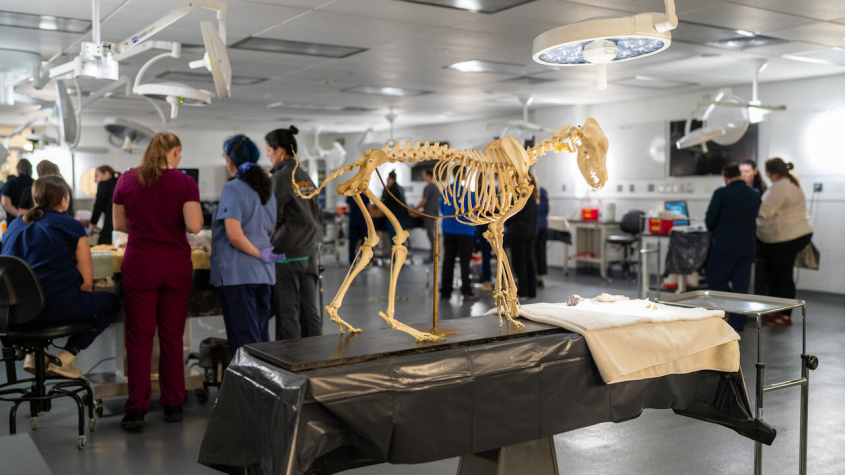
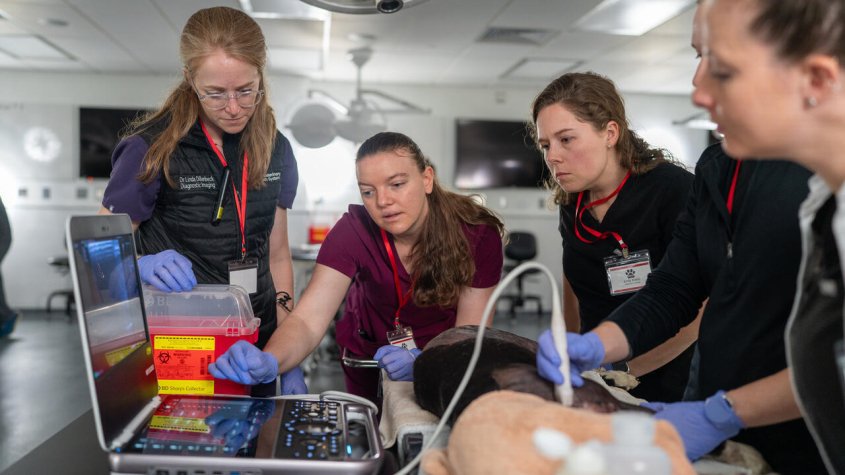
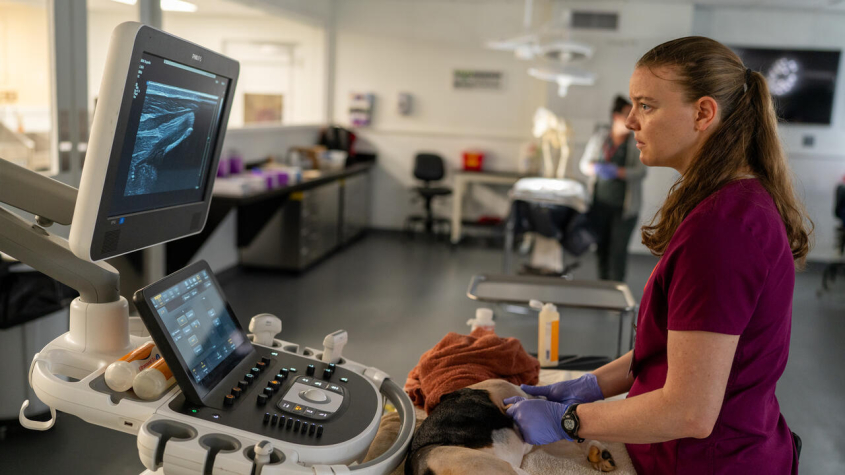
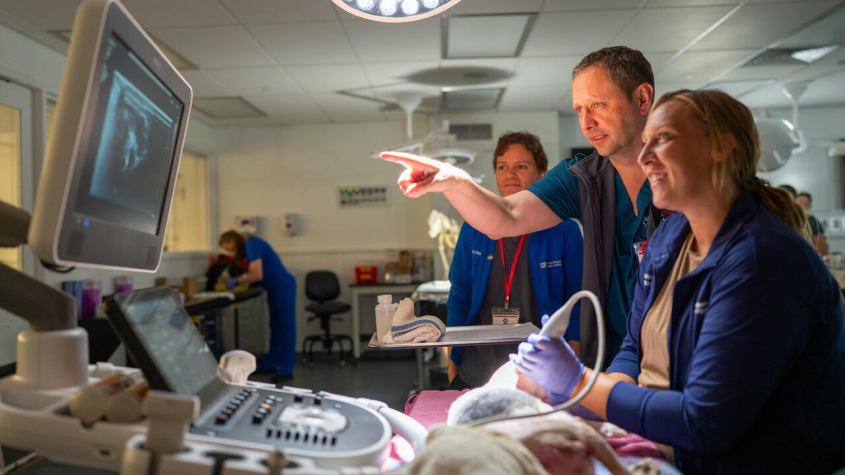
Head bent over the anatomical specimen of a leg, Dr. Margret Lenfest cross-checked what she was seeing with ultrasound readouts while talking with colleagues about their training.
“As residents at Cornell, we kept saying, we’re here, we’re doing this useful training, and more people should have this skillset,” Lenfest said.
It was wishful thinking back then, but now that she’s returned to Cornell as an assistant clinical professor, it’s become a reality through MSKamp.
MSKamp is the first national tiered continuing education program designed exclusively for veterinary specialists and residents, offering advanced training in using ultrasounds for canine injury and disease diagnosis, as well as to guide pain management procedures like hip and shoulder injections. It’s a collaboration between the Cornell University Hospital for Animals and the Colorado State University Veterinary Teaching Hospital, both considered leaders in the study of sports medicine and rehabilitation. The two-day course piloted in December 2025 and fully launches at the end of June.
“Musculoskeletal ultrasound is well established in human sports medicine and in the equine sphere of veterinary medicine,” Lenfest said. “However, it’s still a new thing on the canine and companion animal side of veterinary practice.”
Musculoskeletal (MSK) ultrasounds use sound waves emitted from an ultrasound probe to give veterinarians a living picture of various muscles, joints and nerves. This non-invasive imaging helps diagnose conditions like arthritis, sprains, tears and more.
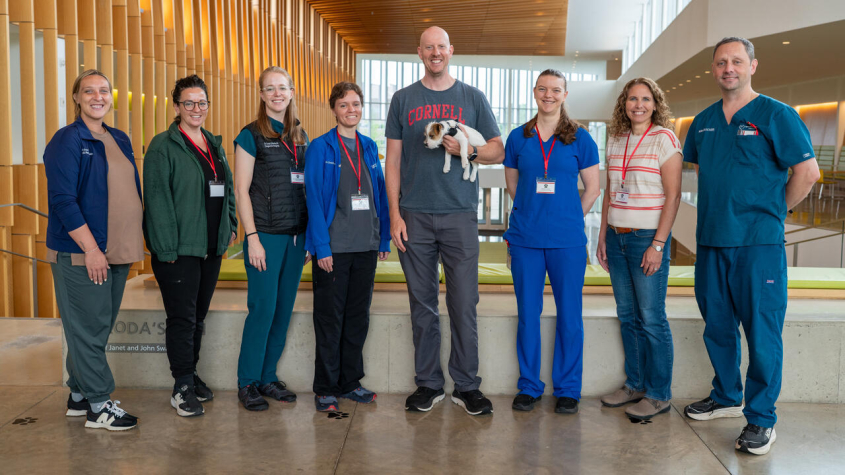
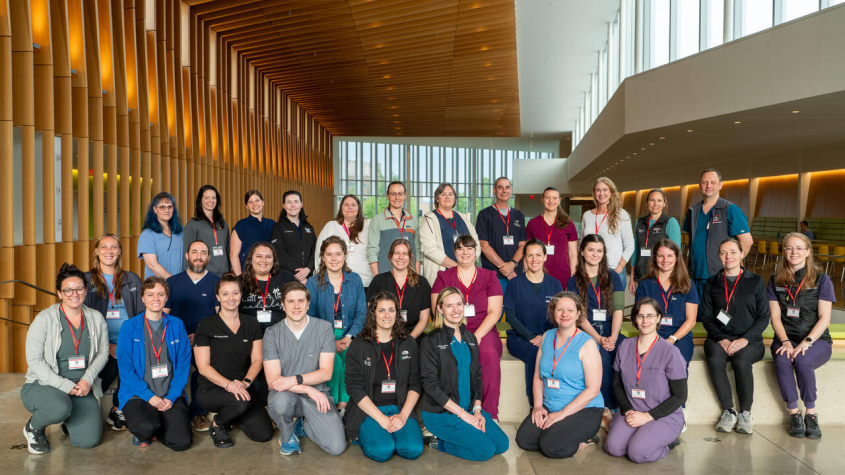
MSKamp relies on close collaboration between sports medicine specialists, who are well-versed in these injuries, and imaging specialists, experts at deploying and interpreting the technology. “Both of these perspectives are critical for maximizing the utility of MSK ultrasonography in the diagnosis and monitoring of MSK injuries,” said Amy Todd-Donato, D.V.M. ’06, assistant professor in the Section of Diagnostic Imaging and Radiology and MSKamp instructor.
Multiple academic faculty from both institutions are involved in the curriculum design and instruction, which also sets it apart from similar programs across the country.
“Collaboration across universities and veterinary specialties, who all have collective expertise in canine MSK ultrasound, has helped us develop a meaningful course,” said Allison Miller ’03, D.V.M. ’07, senior lecturer in the Section of Sports Medicine and Rehabilitation, also an MSKamp instructor.
The course also emphasizes high standards for clinical quality and encourages collective research that moves the field forward.
“In addition to the educational component, the collaborative research opportunities that have grown from the relationships formed through this program are exciting,” said Dr. Matthew Brunke, sports medicine and rehabilitation clinician at Veterinary Referral Associates in Maryland, and instructor in the course. “There remains a tremendous need for high-quality research in veterinary musculoskeletal imaging and rehabilitation, and bringing together experts with different backgrounds and perspectives helps advance that goal.”
“We have the goal of building collaborative care that bridges these specialties and establishes standardized approaches to image acquisition and interpretation, overall elevating the quality of MSK ultrasonography offered to patients over a broad geographic area,” Todd-Donato said.
A new day for a young specialty
The American Veterinary Medical Association (AVMA) officially recognized sports medicine and rehabilitation as a specialty, known as a ‘College,’ in 2010, more than 50 years since recognizing veterinary radiology as a College in 1961.
Christopher Frye, D.V.M. ’11, associate professor in the Section of Sports Medicine and Rehabilitation, was one of the early pioneers in this relatively young discipline. Lenfest came to Cornell for her residency under Frye’s tutelage, and alongside fellow resident and now-colleague Miller, the three came up with the idea for MSKamp while honing their own skills on specimens at Cornell.
“MSK ultrasound and imaging-guided interventional pain management are increasingly expected tools in modern sports medicine and rehabilitation practice, yet even specialists have limited opportunities for this level of focused, advanced training,” Frye said.
“The greatest reward of working together has been the amplification and sharing of knowledge across colleagues and coming to a consensus on how to make this course both unique and impactful across our specialty colleges,” Miller said.
MSKamp is supported in part by Purina, which was a founding sponsor to make the College of Sports Medicine and Rehabilitation a reality with the AVMA. It’s also a longstanding partner of the Cornell University Hospital for Animals. For the December course, they covered travel and lodging costs for attendees. This June, they’re covering a portion of the registration costs. Additionally, on the technology end, Samsung sent Lenfest several ultrasounds to help get MSKamp up and running.
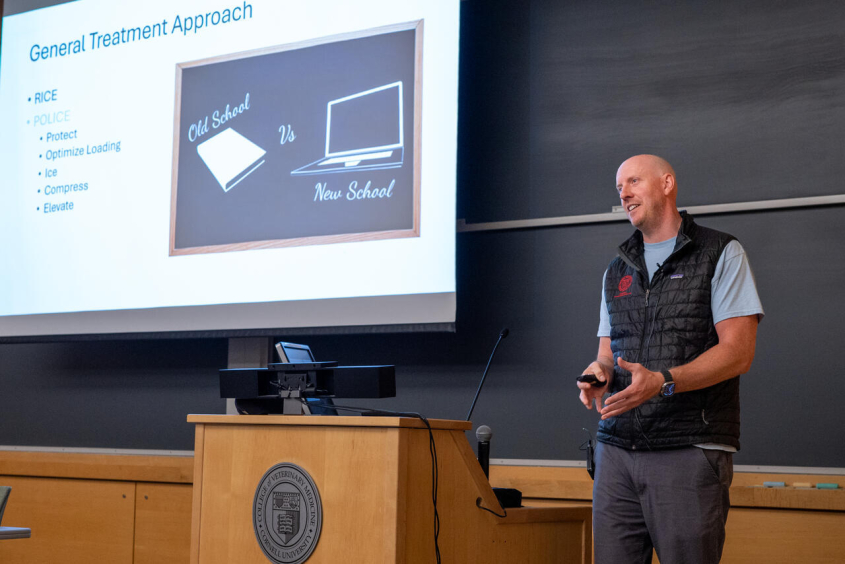
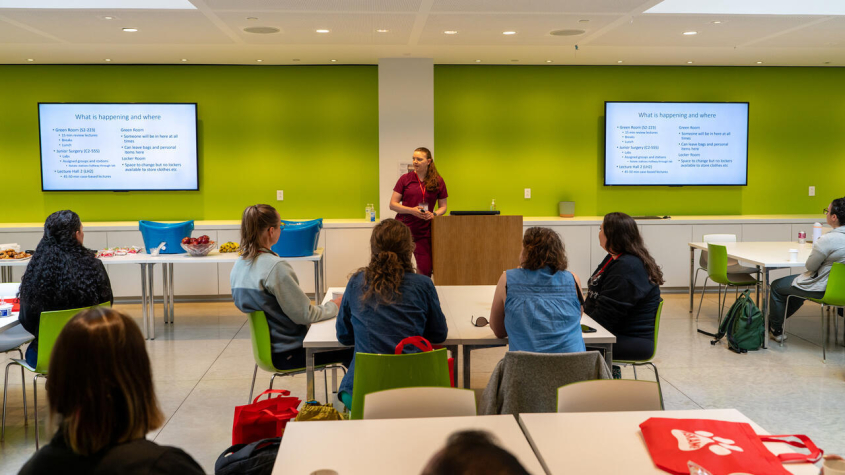
For this month’s course, Lenfest has 24 registrants from sports medicine residencies and elsewhere, plus seven of the original instructors from the December pilot. They’re also welcoming four new instructors from across universities and private practice.
“We’re big on collaboration,” Lenfest said. “We’re connecting with other colleges, other teaching programs, other boarded specialists, to build on this brain trust of folks that started with Colorado as our natural first partner.”
“Cornell and Colorado State spearheaded this effort, but what’s been most gratifying is watching it grow. The University of Florida has now joined us with instructors, and we have outstanding contributors from private practice as well,” Frye said. “The spirit of the course is that we all learn together and from each other, and seeing that culture take root across institutions is exactly what we hoped for when we started building this.”
They’re also considering hosting MSKamp in other states in coming years, like in Colorado or Florida, to make it easier for some attendees to come and to keep the endeavor multi-institutional.
“This is a fun, collaborative group of individuals who are dedicated to advancing and sharing knowledge in MSK ultrasonography for the betterment of our mutual specialty colleges and our patients,” Todd-Donato said.
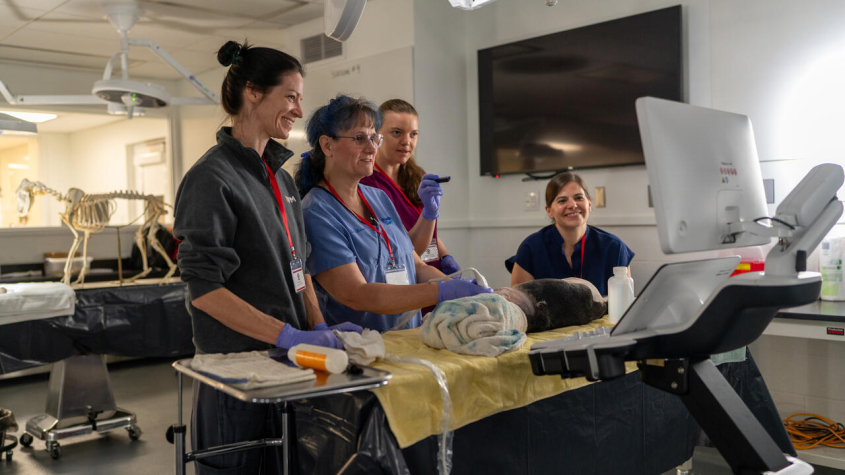
“The most rewarding part of my involvement has been working with such a talented and generous group of educators who are committed to advancing the field. I am grateful for the opportunity to contribute and am happy to be a small part of a team that is helping train the next generation of specialists while also pushing the science forward,” Brunke said.
Thus far, Lenfest has received positive feedback from attendees and their mentors. “We’re glad to be building this knowledge within our specialty, especially with residents, who are the field’s future,” Lenfest said. “It benefits us as well as our patients down the line to be able to provide an advanced level of care.”
Written by Melanie Greaver Cordova
All photos by Carol Jennings/CVM