


New path for old protein may present additional therapies for rare genetic disease
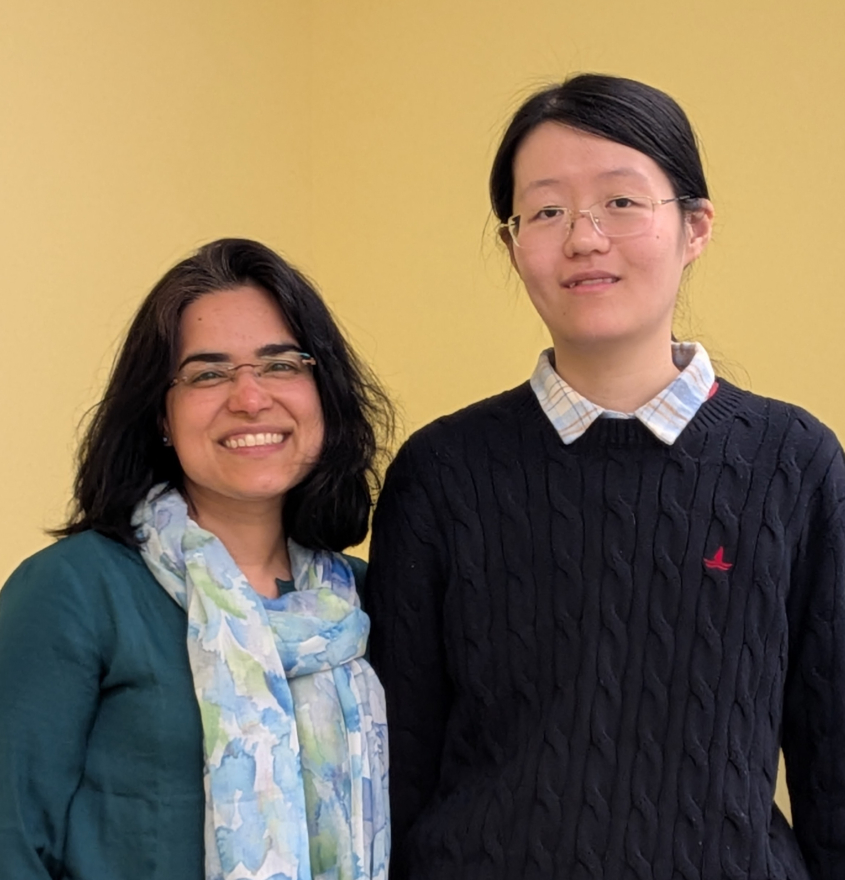
Dr. Richa Sardana and Julia Zhu, first author on the study and a graduate student in the Sardana lab. Photo: Provided
A new study from scientists at the Cornell University College of Veterinary Medicine has revealed interesting insights that can help with new therapeutic approaches for a rare genetic disease.
Cystinosis is uncommon but serious causing an amino acid called cystine to build up in cells, eventually causing kidney failure. The condition is caused by mutations in the protein cystinosin whose normal function is to prevent cystine build-up. Limited treatments exist for the disease, and many patients end up requiring dialysis or kidney transplants.
Now, Dr. Richa Sardana, assistant professor of biomedical and translational sciences, has uncovered new functions for cystinosin that can provide a possible new approach to tackling the disease. “Our finding questions existing assumptions,” she says.
The finding, published in the journal Molecular Biology of the Cell, examines a pre-existing medical puzzle; addressing a patient’s cystine buildup alone does not prevent many of the disease's major problems. “This indicates that cystinosin likely has other important roles in the cell,” Sardana says. “That’s what we were trying to identify.”
Sardana’s research team looked at cystinosin in yeast, where it operates in a different part of the cell that helps process and move newly made proteins to where they are needed. Using a multifaceted approach integrating multiple model systems and techniques, including proteomics, metabolomics, and electrophysiology, her team found that the yeast’s cystinosin does not transport cystine across cell membranes like it does in humans but rather helps cells maintain a stable internal chemical environment. Some human forms of cystinosin function similarly to yeast cystinosin, suggesting conserved functions across species.
The researchers also found that, if the yeast’s cystinosin is missing, the human version of can step in and perform the job — suggesting that these proteins share an important function that has been preserved throughout evolution. The finding also yields new clues about what cystinosin may be doing in human cells beyond its known role in clearing out cystine.
“This finding could have a fundamental impact on the therapeutic strategies for cystinosis patients,” says Sardana. “In the future, patients might benefit from a combination of therapies that address both cystine buildup and the protein's other functions throughout the cell.”
Written by Lauren Cahoon Roberts