

The 15-year quest for a new TB antibiotic
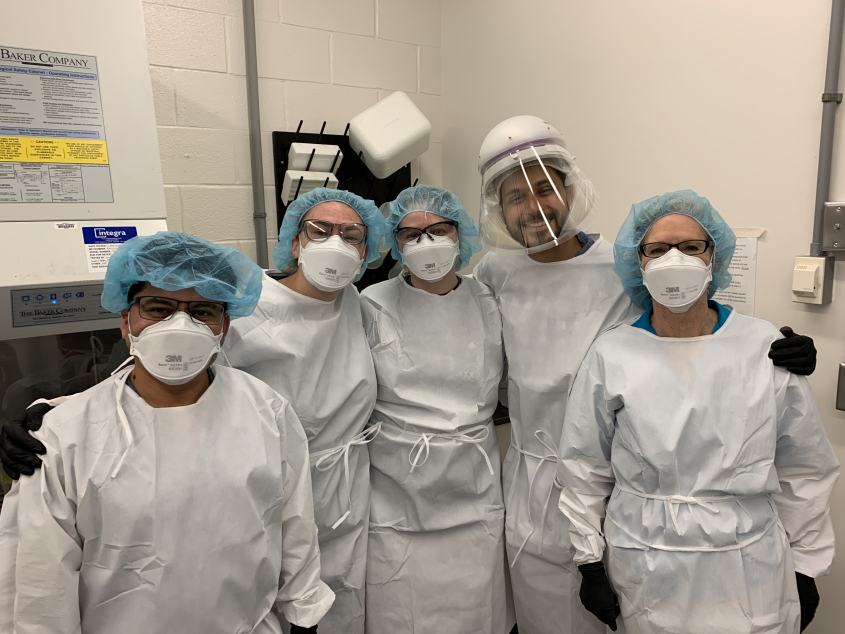
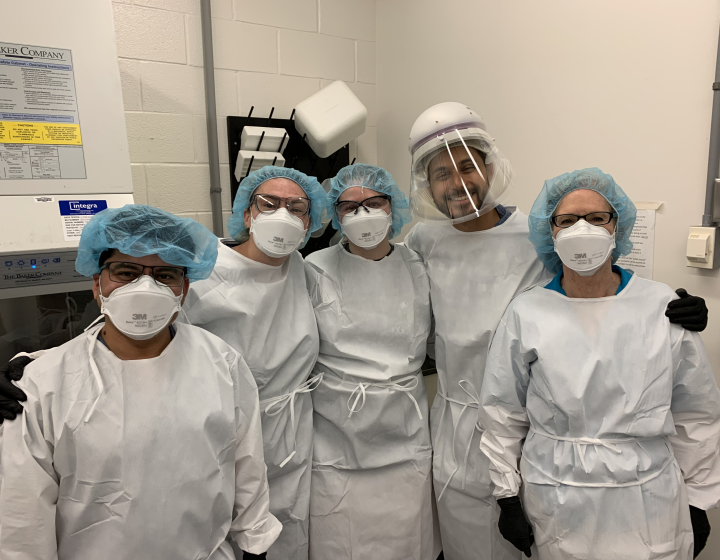
The scientific team researching a new antibiotic. Photo provided.
Written by Elodie Smith
TB is the deadliest infectious disease on earth. Over the last two centuries, it’s killed over two billion people, killing 1.25 million in 2023 alone — more than typhoid, malaria and war combined in a single year.
Thanks to the advent of antibiotics in the 1940’s, the disease is now rare in high-income countries. However, resistant strains of Mycobacterium tuberculosis, the bacteria that causes TB, have started to emerge. In 2024 alone, 10 million new cases of regular TB were contracted, and an estimated 410,000 drug resistant cases were reported.
Dr. Brian VanderVen, a microbiologist and immunologist at Cornell University, has been on a 15-year-long quest to find a new antibiotic that can fight resistant TB and with a promising candidate in clinical trials, he might just be on the cusp of finding one. But it begs the question: Why is it so hard and why does it take so long to find new antibiotics?
Molecular screening: Searching for a needle in a haystack
The first step, VanderVen said, consists in screening hundreds of thousands of molecules to find some that have an effect on Mycobacterium tuberculosis. He, along with Dr. David Russell, emeritus professor of infection biology, screened 280,000 compounds. The screening is done using special plates with 384 tiny wells. In each well, the researchers placed a tiny amount of fluorescing TB bacteria, and a drop of a different compound. If the fluorescent glow of the bacteria disappears in a well, it means that particular compound killed the bacteria. It only took one summer for VanderVen to identify 50 chemicals, from the 280,000 initial ones, that were able to kill TB bacteria. Despite these rapid results, there were still many years’ worth of steps to go.
Fine-tuning the candidates
For the next five years, VanderVen and his team ranked the 50 candidate molecules from the most to the least promising based on toxicity. He also studied their mechanism of action to understand why these compounds work, another requirement to develop a medication. The discoveries VanderVen’s team made during this are still impacting TB research today.
VanderVen also needed to see which of the candidate compounds could be improved by tweaking its molecular structure, which is a crucial step when creating a drug. This improvement, which took another five years, has two goals: make the compound more stable and make it more potent. “You don’t want to have to take the molecule every hour because it degrades too fast. And you don’t want to have to take a gallon of it at a time,” said VanderVen. Potency is crucial given the liver’s ability to destroy the chemicals we ingest. “When we take an aspirin, the liver destroys eighty percent of it, and the remaining drug that escapes the liver is enough to do the job,” he added.
The improvement phase was a painstaking, back and forth process between a chemist and the VanderVen team: The chemist creating ever-so-slightly modified versions of the best candidate molecule — adding a phosphorus here, shifting a carbon there — then sending it back to the VanderVen lab to test it for toxicity, stability and potency, informing the next modification of the molecule. Many of the resulting variants had a decreased potency or lower stability. Some were not improvable, others turned toxic. “If we were able to find something new each time we do a screen, we would have a lot of new antibiotics,” said VanderVen. There is quite a bit of luck involved.” For compound TBD11, the drug currently in clinical trial, it took roughly 100 iterations before finding the one that would move forward to the next step.
Testing in vivo activity
Given the economic and medical stakes, VanderVen was able to secure support from the Bill & Melinda Gates Foundation to continue the drug development, but whether the promising molecule would make it to clinical trials remained uncertain. “In the next two to four years, we had to show the drug did something special,” he explained. That meant moving compound TBD11 from in vitro experiments in plates and tubes to in vivo mouse testing, and showing that it improved upon most current TB treatments. This is also a grueling process. “Only about 10% of optimized compounds emerging from these types of screens make it to clinical trials,” said VanderVen.
Clinical trials: the lottery
After 15 years, compound TBD11 is currently in phase one of clinical trials to evaluate safety and efficacy in human subjects. At the clinical trial stage, failure rate is still high, with only about 10% of compounds that make it to the clinic. If any adverse effect is detected, the trial is stopped and the compound may be shelved. “This lottery, this is the nature of the game. That’s why we start with such a large number of molecules,” VanderVen said.
Still, he is cautiously optimistic because his project has defied the odds since the beginning. “TBD11 does not look or act like a typical antibiotic,” he said. “For 10 years, we were constantly debating whether it was worth pursuing, but it kept generating beautiful data so we kept going.”
VanderVen’s decade-and-a-half search for a new antibiotic has led to foundational findings in microbiology, making compelling discoveries in the field of lipid biology. “Before this work, we knew that the TB bacteria ate lipids, but we didn’t know how,” said VanderVen. “Now we know.” This new understanding has helped VanderVen’s team to further improve the molecule since the start of the clinical trial.
Without the administrative and logistical assistance he received, VanderVen said he would never have made it this far. Receiving economic support that is not conditional on profitability is fundamental for long-term research projects. VanderVen is not looking to generate gains from the new drug. “What we want is to discover new antibiotics,” he said. Undeterred by the time it takes to move from bench to bedside, he remains driven to complete the quest. “I’m still motivated to find new TB drugs, maybe more now than ever.”
Fun TB facts you won't regret knowing
- Mycobacterium tuberculosis, the cause of TB, is among a small group of disease-causing bacteria that live only in humans. The others in this group are those that cause gonorrhea, syphilis and leprosy.
- The bacteria that cause leprosy and TB are closely related. Both are of the genre Mycobacterium.
- It is estimated that TB might have been present in humans for 70,000 years — well before the invention of agriculture.
- A long time ago, humans probably infected cows: Bovine tuberculosis is a distinct disease from human TB, but scientists have shown that it descended from the human form.
- Do you want even more TB and other infectious diseases facts? Listen our Cornell Veterinary Podcast episode: David Russell and Goliath — how a bench-side scientist battled the world's deadliest diseases.