

Student story: Investigating parasitic drug resistance in Namibian goat herds to protect cheetahs
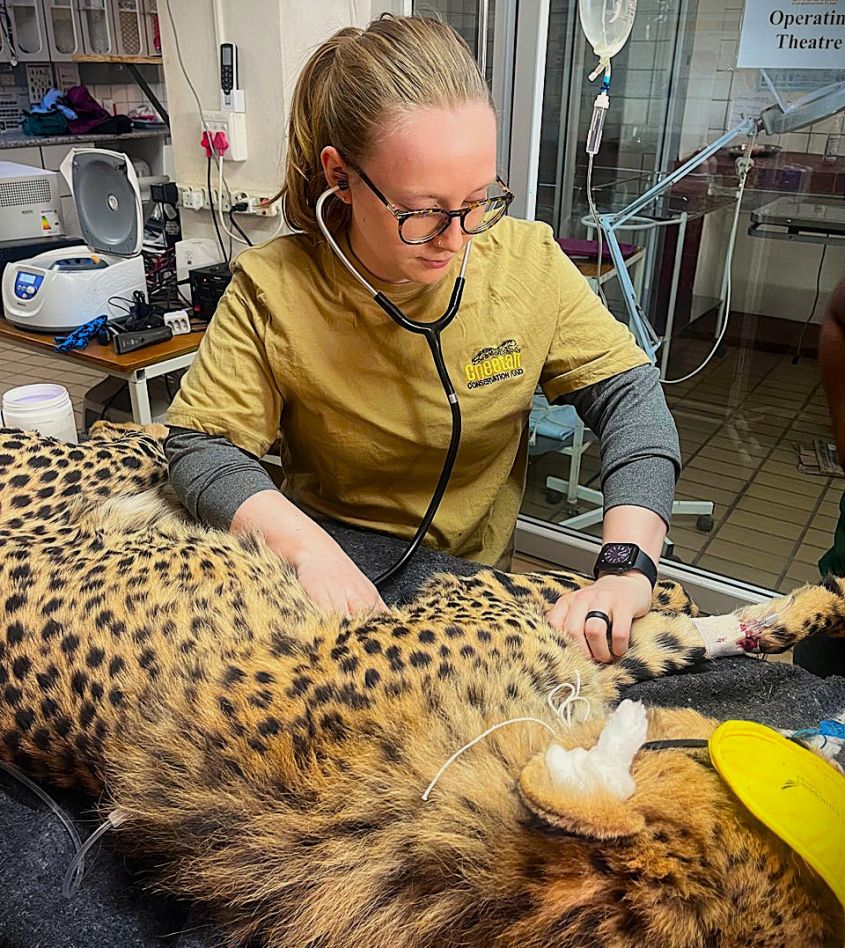
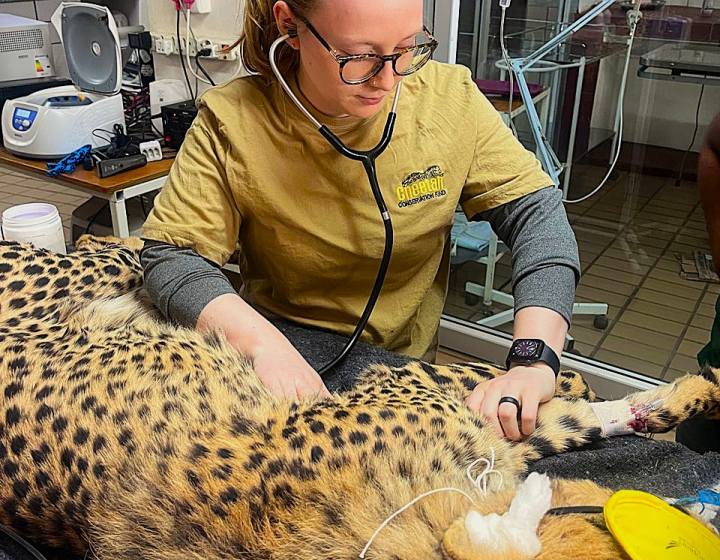
Russel assessing the heart rate and rhythm of a sedated cheetah. Photo: Provided
Let’s start by addressing the obvious question: How do goats and goat parasites have anything to do with cheetah conservation? Cheetahs are one of the only big cat species that do not do well in protected areas because larger predators, such as lions, will steal their food and kill their young at high rates. This means that successful cheetah conservation requires coexistence in areas populated by humans. The African country of Namibia has the largest population of cheetahs in the world, often in areas where livestock farming is heavily practiced. Cheetahs are more likely to prey upon livestock that are unhealthy or improperly protected. This dynamic creates conflict with the livestock farmers, making the farmers more likely to have a negative outlook on having cheetahs in their area. This is where goat parasites come in, because internal parasites like the “barber pole” worm (Haemonchus contortus) impact the overall health of a livestock herd, causing economic losses for farmers and making the livestock more likely to be preyed upon by cheetahs.
Unfortunately, there is a global rise among these worm populations gaining resistance to commonly used anti-parasitic drugs like fenbendazole. Despite the farmers’ efforts deworming their goats, we are seeing increasingly that the dewormers are not working. This is a One Health problem because not only does this impact the health of the herd animals, but it also impacts the farmers’ and food security and income, as the animals themselves are a major contributor to the farmer’s livelihood. This means there is a higher chance of human-wildlife conflict with predators like cheetahs through retaliation efforts by farmers to protect their herd.
Research
To address this issue, I partnered with the Cheetah Conservation Fund (CCF) and traveled to their base in Otjiwarongo, Namibia, where I stayed for eight weeks. My primary goal was to determine whether drug resistance to fenbendazole was present on the CCF Model Farm and to create updated deworming guidelines to slow parasitic drug resistance. To determine which goats needed to be dewormed, I used the five-point check, which involved looking at the eyes, nose, jaw, overall body condition and hind end of the animal for signs of disease (ex. paleness, swollen jaw, nasal discharge, low body condition, diarrhea). I would then collect samples (feces and blood) and deworm the goats according to manufacture label instructions. The blood samples were evaluated for blood parasites and the feces was tested for intestinal parasites. Fourteen days after deworming, I would recheck the animals’ overall condition and collect feces to perform a second egg count. The overall fecal egg count reduction from before and after deworming was then performed on each goat individually as well as a group average.
I ended up repeating this study three times, which reflects me learning and improving the process along the way. The first time I completed the study, my sample size ended up being smaller than I wanted, so I completed it a second time with a larger sample size. Upon sending my results and deworming recommendations to my mentors at the Cornell University College of Veterinary Medicine for their approval, one of their recommendations was to administer the drug (fenbendazole) at a higher dosage two days in row compared to the labelled dosage. Since I completed the study using the lower dosage, this meant my results could only suggest ineffective dosing rather than true resistance. So, I needed to do the study a third time with the higher dosage to assess resistance. This was frustrating because study days were incredibly long since I was evaluating about a hundred goats and processing all the blood and fecal samples the same day to ensure sample freshness. Yet I am glad that I had the mentorship to figure out these mistakes early enough that I had time to repeat the study and truly evaluate parasite resistance, which was my goal. Ultimately, I still lacked a sufficient sample size to have statistically significant evidence of parasitic drug resistance. However, my results do suggest resistance is affecting members within the herd. With the help of my Cornell faculty mentors, I was able to create recommendations to improve the deworming protocols, which required consideration of the availability of certain dewormers in the area and the costs associated with making these changes. To make the recommendations achievable, I worked with the kraal team (the workers who watch and take care of the herds) and the veterinarians on staff so they felt they understood the purpose of each recommendation, and we could discuss any concerns or points of confusion. I did not have time to go out and work with the local farmers myself to disperse the information as I had hoped. Yet, CCF will be able to implement these guidelines and educate other farmers in the area so that parasitic drug resistance emergence is slowed and the herds are healthier, more productive, with less predation by predators like cheetahs.
Clinical work
When I was not working on my research study, I was in CCF’s veterinary clinic working with a variety of species including goats, sheep, horses, dogs and cheetahs. I practiced my basic veterinary technical skills and learned how cases are diagnosed and managed with fewer resources than I am accustomed to in the United States. One of the highlights was helping with the evaluation and release of six total cheetahs (a mom and five cubs) back into the wild. They were trapped by a neighboring farmer who contacted CCF to relocate them. While ideally farmers would allow cheetahs to roam their land and prevent conflict by maintaining a healthy herd and having livestock-guarding dogs, it is vastly better for farmers to catch cheetahs and call CCF than catch and kill them.
While completing the research component of my project was rewarding, my favorite place to be was in the clinic. I love clinical work and there were so many opportunities to gain hands on experiences. I placed intravenous catheters, intubated and drew blood on multiple species. I was also able to do a laceration repair, assisted in spays, and independently neutered some of the livestock-guarding puppies! My favorite cases as an aspiring ophthalmologist were of course the goats with corneal ulcers and corneal edema. It was amazing seeing how robust ruminant eyes are, as they often healed faster than I expected and retained very good vision despite their injuries.
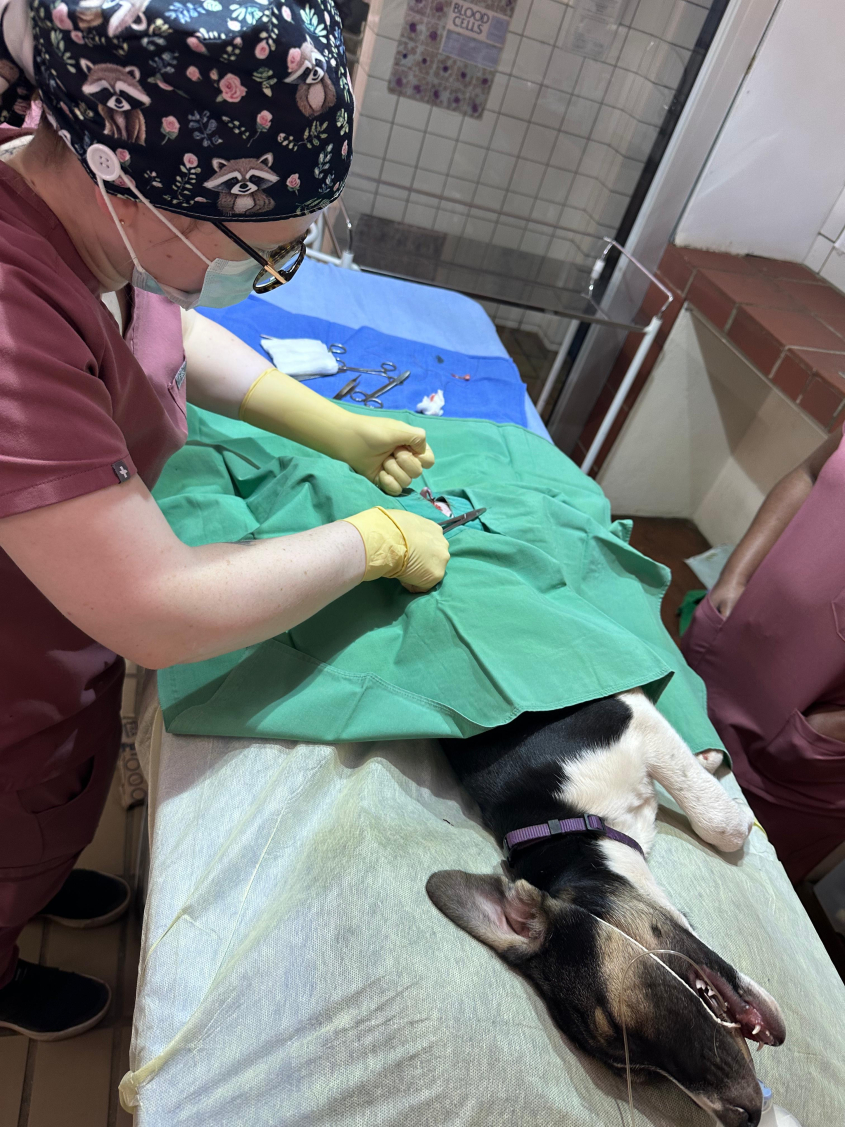
Through the clinic, I even got to do some field work as part of CCF’s rabies vaccination program. As part of a team of three, we traveled to remote villages in Northern Namibia and vaccinated pet cats and dogs against rabies, which is currently endemic in the country. I was definitely out of my comfort zone, surrounded by people who didn’t speak the same language and camping in thirty-degree Fahrenheit weather. Yet, in 10 days, we vaccinated more than 400 animals, and it was incredible to be part of that. We met people where they were and educated them on basic rabies prevention. In turn, I was able to experience and learn more about the local culture of the Herero people, one of the major tribes in Namibia.
One day a week, I would also work in the other departments at CCF, including the cheetah team doing basic cheetah husbandry, the creamery where I learned to make soap, and even helping the ecology team with camera traps and game counts on the wildlife reserve. I also spent time doing husbandry for the livestock-guarding dogs and horses and helped in tourism by organizing the gift shop. “General days” as we called them, allowed me to interact with the whole of CCF and learn about all the facets of the organization. The clinic was still my favorite place, but learning to make ice cream was pretty cool.
Free time
I interacted with native Namibians as well as many other students from all over the world and it was interesting learning about how all our cultures were similar and different. Between movie nights, card games and watching the World Cup, we grew close to one another, and I am incredibly grateful for the friendships I made throughout my time at CCF.

During my free time, I also went horseback riding and birding (over 100 new species!). I took a weekend trip to Etosha National Park with some friends and saw so many fantastic animals, including a baby black rhino! I was fortunate to be able to take a second trip to the coast (Swakopmund) and saw where the desert meets the ocean. We had a fantastic time looking at sea birds and running up and down the sand dunes. Back at CCF, we would also go through CCF’s wildlife reserve about once a month on a night drive. We were all freezing, but it was worth it to see the animals and sit under the stars to look up at the Milky Way (which I never got tired of seeing).
Reflection
When I decided to do this project, one of the biggest reasons I wanted to complete it was because I didn’t know if I could. Being completely separated from my family and friends thousands of miles away on a continent I had never been, working with species I was not very comfortable with on a project I had absolutely no expertise in was daunting to say the least. Having worked primarily in university veterinary hospitals, I was used to having extensive resources and access to specialists to consult at any given time. This was a completely new environment, and the truth is it scared me. I am so glad that I faced this fear because I feel it allowed me to grow and help me on my journey to become the best veterinarian I can be. Not only do I now have a significantly better understanding of goat herd management and proper parasite deworming and prevention, I also improved my ability to communicate this knowledge with people of varying education levels. From farm-hand workers to veterinarians, I had to explain why each recommendation I made would help. There were definitely struggles and differences in medical opinion along the way, but the ability to work through them and learn from each other was valuable and reflective of experiences I will likely have throughout my veterinary career.
Acknowledgements
This project would not have been possible without the financial support from the Cornell University College of Veterinary Medicine Expanding Horizons International Education Program and the Einaudi Center for International Studies at Cornell University. Thank you to the Cheetah Conservation Fund for allowing me to study their herd, use their resources, and work in their veterinary clinic. I would also like to thank Dr. Mary Smith, Dr. Timothy Wu, Dr. Araceli Lucio-Forster and Janice Liotta for their advice and expertise throughout my research project as well as Dr. Paul Maza for his advice and encouragement as I developed the project proposal.
About the author
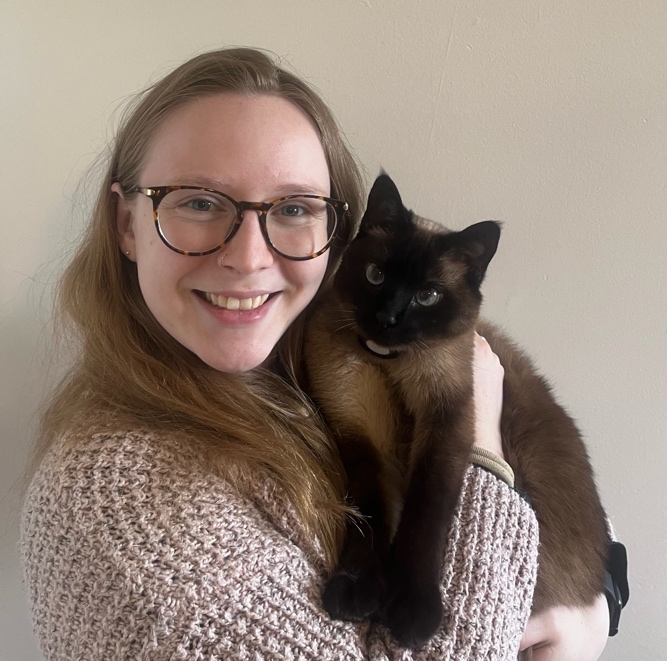 Leah Russell, class of 2028, is a Cornell D.V.M. student from Madison, Wisconsin. She received her bachelor’s in biochemistry, biology, and Spanish from the University of Wisconsin-Madison. Leah is interested in specializing in ophthalmology and aims to practice on all species, including wildlife. Vision often has a significant impact on the quality of life and releasability of many wildlife species. She is also interested in international medicine and would love to incorporate international work into her career.