




Panosteitis in dogs
Overview
Panosteitis (sometimes called "growing pains") is a painful but self-limiting inflammatory bone condition seen predominantly in growing dogs. It causes sudden lameness that can affect one leg or shift between legs. Episodes typically last 2–3 weeks and resolve on their own, though they may recur until the dog reaches skeletal maturity.
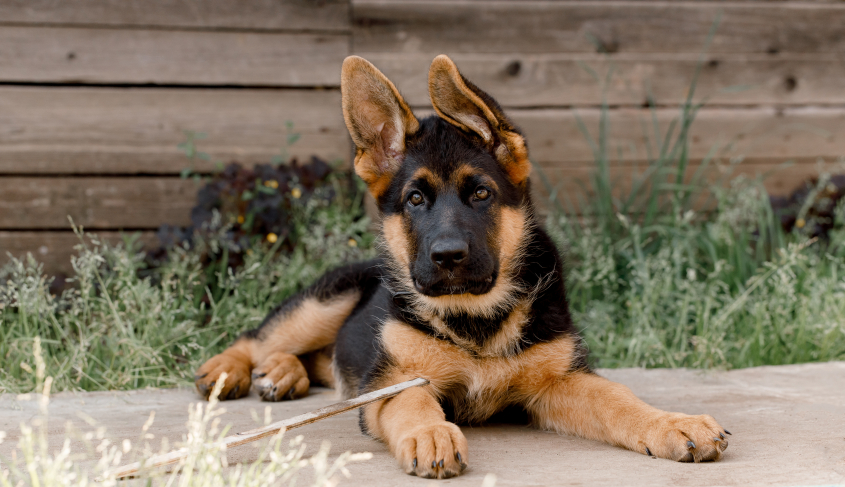
Panosteitis primarily affects large and giant breed dogs between 5-16 months of age, though it can occasionally occur in dogs up to two years old. German Shepherds are classically overrepresented, but other predisposed breeds include Doberman Pinschers, Golden and Labrador Retrievers, Great Danes, Saint Bernards and Basset Hounds.
Cause
The exact cause of panosteitis is not fully understood. It's considered a multifactorial condition, with genetics, rapid growth rate, and possibly nutrition all playing a role.
Inside the affected bone, the normal fatty marrow breaks down and is gradually replaced with fibrous tissue and new bone (osteoid). Because bone is a rigid, enclosed structure, this remodeling process increases pressure inside the marrow cavity of the bone and irritates the sensitive lining of the bone's outer surface (periosteum), which is what causes the pain. Over subsequent weeks, the bone finishes remodeling and returns to normal, and the pain resolves.
The front legs are affected roughly four times more often than the back legs and male dogs are affected roughly four times more often than females. The humerus (upper foreleg) is the single most commonly affected bone, followed by the ulna, radius, femur and tibia. More than one bone or limb can be involved at the same time, or in sequence over subsequent flare-ups.
Clinical Signs
The severity of panosteitis varies widely. Some dogs have a mild, barely noticeable limp, while others are markedly painful and reluctant to bear weight or move. Signs typically appear suddenly and may include:
- Acute lameness in one or more limbs
- Lameness that shifts from one leg to another over time or between episodes
- Pain when the shaft of a long bone is firmly palpated
- Reduced activity or reluctance to exercise
In more painful episodes, dogs may also show lethargy, decreased appetite, vocalization, or a low-grade fever.
Diagnosis
Veterinarians often suspect panosteitis based on a young, large-breed dog's age, breed, history of shifting lameness and physical exam findings.
X-rays (radiographs) are typically used to help confirm the diagnosis, showing patchy areas of increased density within the marrow cavity of the affected bone. The initial lesions often center on the area of the nutrient artery foramen (a small hole in the bone that allows the main blood supply into the bone). However, radiographic changes commonly lag 10–14 days behind the onset of clinical signs, so early radiographs can appear normal even in a dog that is clearly painful. Radiographic changes may also persist for some time after a dog is no longer showing signs of pain.
Because panosteitis can resemble other causes of lameness in young, large-breed dogs, including hip or elbow dysplasia, osteochondritis dissecans (OCD), hypertrophic osteodystrophy, or immune-mediated joint disease, additional diagnostics may be recommended if signs are severe, atypical, or not improving as expected.
Treatment
While there is no cure for panosteitis, the condition is self-limiting, and treatment focuses on managing pain while the condition runs its course. Medications often include nonsteroidal anti-inflammatory drugs (NSAIDs) prescribed by a veterinarian. Additional pain medications may be considered for dogs with more severe pain. Other supportive care often includes rest and activity restriction during painful flare-ups, with a gradual return to normal exercise as signs improve.
Outcome
The prognosis for panosteitis is excellent. Individual episodes typically improve within 2–3 weeks with rest and pain control. While lameness may shift to a different leg, and some dogs experience recurrent flare-ups over a period of several months, the condition almost always resolves completely by the time a dog reaches skeletal maturity (roughly 12 months of age, depending on breed).
Prevention
Panosteitis cannot be entirely prevented, since genetics and growth rate appear to play a role. However, appropriate nutrition during the growth period may help reduce risk, particularly in large and giant breed puppies.
Feeding a commercial large-breed puppy diet formulated to an AAFCO (Association of American Feed Control Officials) nutritional adequacy statement for growth (or growth/lactation) is recommended to achieve a diet balanced for appropriate protein, calcium and calorie levels. Avoid supplementing calcium, vitamin D, or protein beyond what a complete and balanced diet already provides. Additionally, avoid overfeeding, and keep growing puppies at a lean body condition (easily feel the ribs with a very light layer of fat, but the ribs are not heavily padded or overly prominent, a clearly visible waist and abdominal tuck).
Dogs should be allowed regular, age-appropriate exercise, but avoid repetitive high-impact or forced activity (such as long-distance running on hard surfaces) during the rapid growth phase.
This page was last updated on Tuesday, Sep 01, 2026


