
Baker Institute’s legacy of scientific impact: A journey of research from the bench to industry
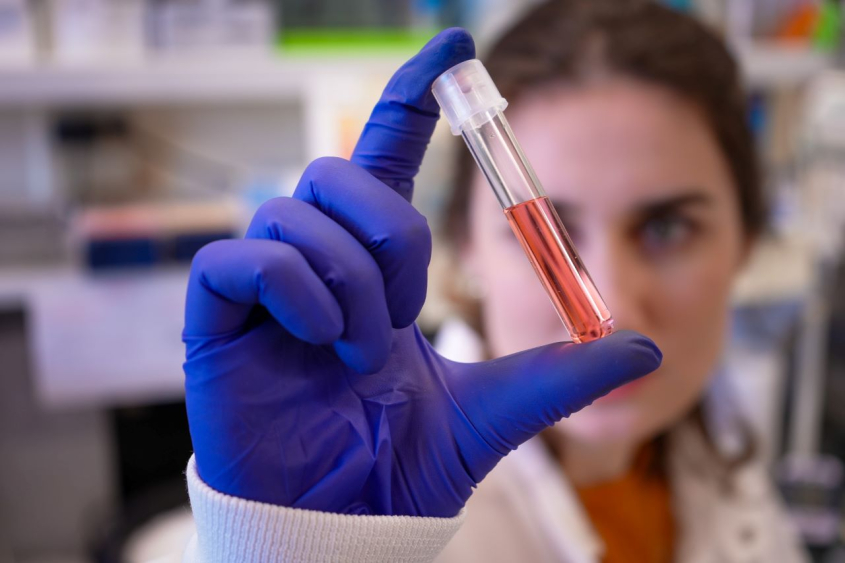
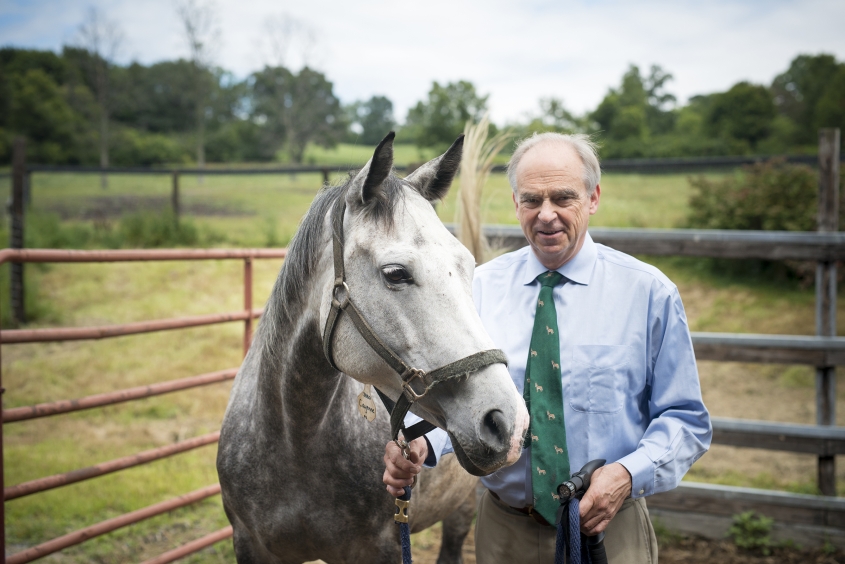
TETmedical's journey from lab bench to clinical-stage diagnostics embodies the Baker Institute’s long-standing mission — to transform curiosity-driven science into technologies that improve lives of animals and the humans who love them. Photo: John Enright/CVM
When someone suffers a stroke, every minute counts. But emergency rooms still lack a fast, definitive test to guide life-saving treatment decisions. That may soon change, thanks to a young diagnostics company with deep roots in animal health — and a commitment to pushing science beyond the lab.
“It’s kind of in the air,” said Dr. Roy Cohen, a research assistant professor at Cornell’s Baker Institute for Animal Health and co-founder and acting chief scientific officer of TETmedical, Inc. “When you walk through the halls, you see all the stories — vaccines, diagnostic breakthroughs, genetic tests — that changed how we treat animals...and sometimes, people, too.”
TETmedical is the latest chapter in that legacy. Co-founded by Cohen and Dr. Alexander Travis, professor of reproductive biology at the Baker Institute and director of Cornell Public Health, the company grew out of their basic research on how enzymes produce energy. Copying a design from nature, they figured out how to give nanoparticles different biological functions by attaching enzymes to their surface (TET stands for Tethered Enzyme Technologies.). They use these enzyme-based biosensors to rapidly detect biomarkers for stroke, liver damage, and even a common cancer in dogs (hemangiosarcoma). The company’s journey from lab bench to clinical-stage diagnostics embodies the Baker Institute’s long-standing mission — to transform curiosity-driven science into technologies that improve lives of animals and the humans who love them.
Legacy of impact
“Success often feeds success,” said Mandi de Mestre, the institute’s director. “And the impact and magnitude of some of the discoveries coming out of here are remarkable, especially for such a small organization.”
Currently with around a dozen faculty-led research teams, the Baker Institute has managed to make an indelible mark in many areas of animal and human health. As it celebrates its 75th anniversary, the last decade boasts 21 royalty generating patents covering a wide range of areas, from vaccines to genetic testing.
In the early 1980s, for example, a powerhouse team of researchers took on parvovirus, a new, rapidly spreading disease threatening dogs with vomiting, severe diarrhea and death. Leland “Skip” Carmichael, Ph.D. ’59, later the John M. Olin Professor of Virology; Roy Pollock, D.V.M. ’78, Ph.D. ’81, one of Carmichael’s advisees and now chief learning officer at The 6Ds Company; and virologist Max Appel, Ph.D. ’67, now professor emeritus, not only identified the novel virus but developed a diagnostic test and vaccine within three years.
Colin Parrish, Ph.D. ’84, John M. Olin Professor of Virology Emeritus and former director of the institute, first distinguished himself conducting fundamental research on parvoviruses of dogs and cats while a graduate student in Carmichael's laboratory from 1980 to 1984, during the parvovirus crisis. He later returned to the institute as a faculty member in 1988.
Parrish’s work has focused on how viruses emerge in new hosts, with a particular emphasis on canine parvovirus and its evolution from the previously known feline parvovirus, as well as the H3N8 canine and equine influenza viruses and the H3N2 canine influenza virus. He defined key mechanisms of initial spillover, host switching, and post-transfer evolution in new hosts that drive epidemics and pandemics. His research has illuminated the fundamental bases of viral disease — including pathogenesis, evolution, and the connections to virus capsid structures, host ligands, and cell and animal infection processes.
Arabian horses were the focus of Dr. Douglas Antczak ‘69, director of the Baker Institute from 1994 to 2009 and now professor emeritus, and Dr. Samantha Brooks, professor of equine physiology at the University of Florida — then in the Department of Animal Science — at Cornell around 2010. Having identified the mutated gene that causes lavender foal syndrome — an inherited, complex, and lethal neurological condition — the researchers subsequently developed a genetic test that can be used to determine whether a given horse is a carrier.
Around the same time, Drs. Gregory Acland and Gustavo Aguirre pushed the Baker Institute’s legacy on canine research forward by mapping the dog genome and uncovering the mutations behind several inherited eye diseases. Their work led to breakthrough DNA tests — including one for Collie Eye Anomaly, a condition that affects the development of tissues in the back of the eye and can lead to vision loss in certain breeds; night blindness in Briard dogs; and a malformation in Labrador retrievers and Samoyeds called retinal dysplasia. Acland and Aguirre worked with colleagues to develop a gene therapy technique to reverse blindness — the first gene therapy applied in a large animal — and their discoveries paved the way for a gene therapy for a rare form of human blindness, approved by the FDA in 2017.
In 2018 Dr. Gerlinde Van de Walle, Alfred H. Caspary Adjunct Professor, and her lab group confirmed an equine parvovirus she discovered with Dr. Thomas Divers in the Department of Clinical Sciences, is the source of Theiler’s disease, a fatal liver disease in horses. This finding then went on to impart regulatory change at the United States Department of Agriculture.
Incubating innovation
How does a small institute consistently produce such high-impact science? Researchers say it comes down to the Baker Institute’s unique structure, culture, and environment.
“It’s like a big incubator for technology and innovation, it has been pivotal as our launchpad,” said Esteban Flores, Ph.D. ’23, a former Baker trainee (under professor of chemical virology Dr. Luis Schang) who now works as a research scientist at TETmedical.
With scientists from across numerous disciplines working side by side, the institute provides fertile ground for new ways of thinking. “When we’re solving problems, we’re thinking about them differently than traditional teams” said de Mestre. “With our scientists spanning a true breadth of disciplines, even informal collaboration has been seen to shift how you approach a question.”
Regular seminars, shared tools and lab equipment, and open physical spaces further support that sense of creative exchange. “It’s a small place, but it’s very community-driven,” Flores added.
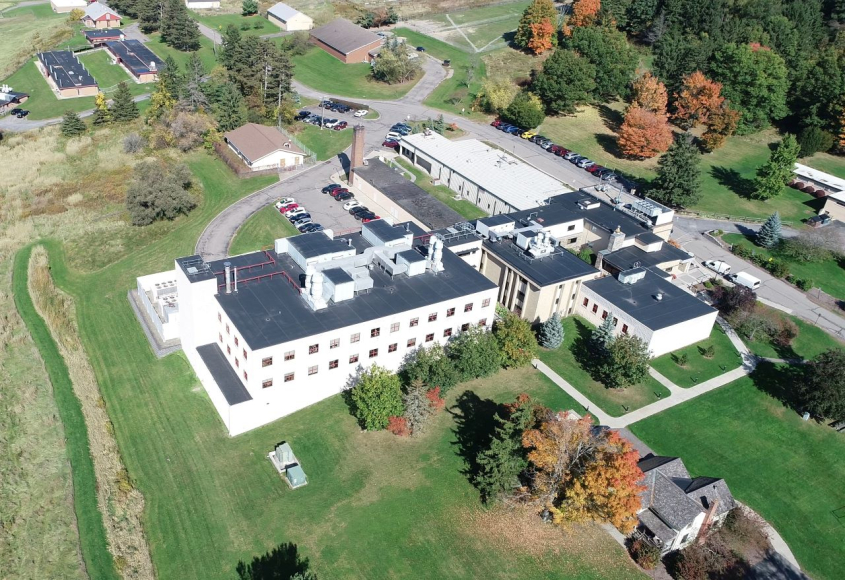
The Baker Institute’s physical location, perched on a quiet hill away from the bustle of central campus, also shapes the way people work. “There’s a little more freedom of thought,” said de Mestre. “You’re not in the crux of a busy university. The space itself gives you a slightly different perspective and an opportunity for meaningful regular informal exchanges between scientists at all stages of their career.”
Perhaps most importantly, the institute’s unique mix of clinicians and researchers conducting basic science pushes them to consider how discoveries can be used out in the world. “That component brings a sharp focus on translational biology and impact,” said de Mestre. “We’re always asking how our research will change clinical practice for both animals and people.”
Launching TETmedical
This translational mindset is what set TETmedical in motion. The company traces its roots to Travis’s basic research on how sperm generate the energy to swim and learning that they attach enzymes to a solid support. “We immediately asked ourselves — what can we do with that?” said Travis.
That question became the foundation for what is now a patented technique designed to facilitate fast, high-sensitivity enzyme-based reactions. The team’s first target was stroke, a condition where speed and accuracy are critical. When brain cells are damaged, they release an enzyme called neuron-specific enolase (NSE). Travis and Cohen realized they could build a biosensor to detect it in real time.
“This is an innovative technology that solves a huge problem for hospitals, because at the moment there’s no objective way to diagnose a stroke — just symptoms and CT scans,” said Cohen. He likens it to the troponin blood test that is standard for detecting cardiac muscle injury.
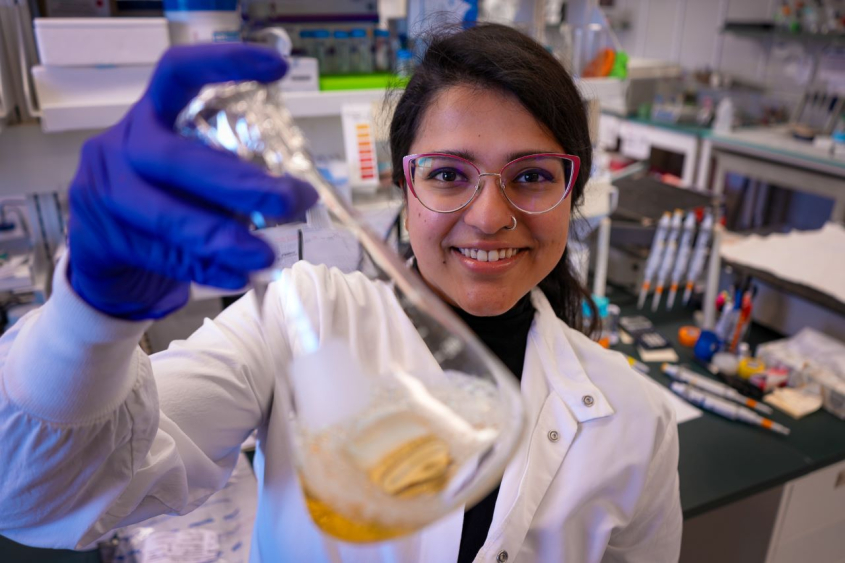
The resulting test — called the Neuron-Specific Enolase Functional Activity Stroke Test (NSE-FAST) — became the company’s flagship product. It is designed for use with standard plate readers already found in emergency departments and Cohen is now leading the clinical trials on its path toward FDA review.
Early support came from the National Institutes of Health (NIH), which recognized the technology’s promise with a prestigious Pioneer Award. This High-Risk, High-Reward Research Program helped propel the work forward.
In 2021, with help from Cornell’s Center for Technology Licensing, Travis and Cohen officially launched TETmedical. The company’s third co-founder is David Fischell ’75, M.S.E. ’78, Ph.D. ’80, a Cornell Trustee Emeritus and seasoned med-tech investor.
Today, TETmedical has grown into a team of eleven employees, a third of whom were trainees at the Baker Institute. Now, the company is in its own facility at 22 Thornwood Drive, just a few minutes from Cornell’s campus. “The Baker had a huge part in allowing us to grow to the point where we are now able to walk with our own feet,” said Cohen.
At the TETmedical offices and lab, the team produces the enzymes, mixes them with reagents, and dispenses them into sensors — the final diagnostic products that are shipped to hospitals. “Scaling up and automating the last step is what we’re still working on,” said Flores. “The beauty of the Baker Institute is that every lab exposes you to at least one very cool, specific technology you can take a peek at.” (He recalls a liquid-handling robot in Dr. Charles Danko's lab that inspired TETmedical to automate the final manufacturing process.)
Realizing the potential of the platform
At the same time, TETmedical is expanding its product pipelines. Another product in development — a blood test for hemangiosarcoma, a common and aggressive cancer in certain dog breeds — grew out of the Baker Institute’s conscious effort, about a decade ago, to have different labs tackle important challenges together.
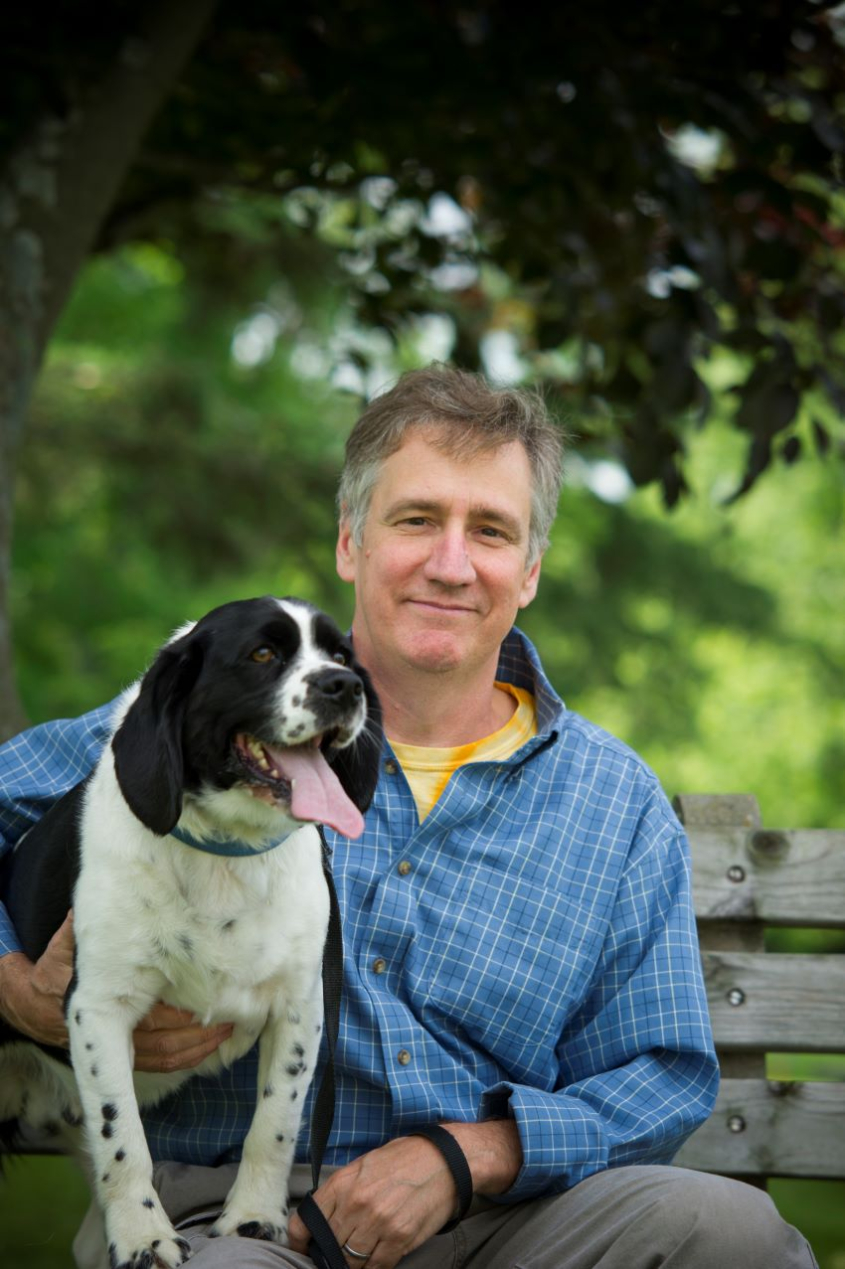
Dr. Scott Coonrod, professor emeritus of Cancer Biology, identified a new type of biomarkers, called micro-RNAs, for hemangiosarcoma. Cohen, meanwhile, figured out how to use different combinations of enzymes to detect specific nucleic acid sequences, not just the proteins or enzymes that were TETmedical’s initial focus. The result is a liquid biopsy that, the researchers hope, will help veterinarians detect the disease early, when it is still treatable.
(The blood and abdominal fluid samples used in the development of the test, Travis noted, are being sent from the lab of Skylar Sylvester '14, D.V.M. '18, assistant clinical professor in the Department of Clinical Sciences. “She started working in my lab as an undergraduate freshman and continued doing research with us through her first two years of veterinary school, and now she is a world-leading expert,” he explained. “Her path illustrates beautifully the role of the Baker Institute in training veterinary clinician scientists.”)
Other products on the horizon include an at-home liver function test and a test for traumatic brain injuries. Funding from the New York State Bio Defense Commercialization Fund is also supporting work on a rapid diagnostic that can distinguish between common viral respiratory pathogens.
“With the sudden changes in federal grant funding, state funding and relationships with the private sector are becoming more and more important, especially in bringing new technologies through the valley of death from basic science to something investors want to put money into,” Travis said.
Inspiration for continued impact
As TETmedical expands its product pipelines, its foundation at the Baker Institute continues to shape its scientific direction. While the company operates from its own facility outside of the institute’s walls, Baker researchers continue to explore early-stage science that, once mature, can transition to the company for further development.
Cohen hopes TETmedical’s success story will encourage other researchers to follow a similar path. “As a Primary Investigator (PI) or postdoc, you often don’t see what’s out there and how you can make an impact, unless you have an example in real time,” he said. “So I’m proud to share our experiences with our company, our product and our path at the Baker.”
To support that vision, the institute is launching new programs — including a series of “lunch and learn” sessions aimed at trainees — to teach scientists how to move discoveries from the lab into the world. De Mestre is also seeking new industry partnerships, “continuing our innovative approach to science and translational impact by finding different ways of sourcing funding and uncovering untapped potential,” she said.
That sense of continuity is exactly what motivates Flores. “The knowledge and the framework are here,” he said. “The Baker has such a rich history of launching successful products to market. And now it feels like we’re carrying the baton — it’s our time to add to the history.”
Written by Olivia Hall