

Student story: Why I built a talking toothbrush
In dental school, I used to ask patients to show me how they brushed.
Most of them did it perfectly.
They angled the bristles. They used small circular motions. They told me they brushed twice a day. They nodded when I explained plaque, gum disease, and the long-term consequences of neglect.
And then, months later, they would come back with early tooth decay.
As an international dentist now training in public health, I spent last summer asking people to describe their brushing experience. Not whether they brushed. Not how long. But what it felt like.
“Just… meh. It’s boring.”
“I’m half-asleep in the morning.”
“I rush through it.”
That “meh” is the insight. It tells us something about attitude, and attitude drives behavior.
Meanwhile, the smart toothbrushes on the market are solving the wrong problem. There are sensors mapping every surface of your teeth. There are dashboards scoring your technique. There are detailed reports that add one more layer of guilt if you do not achieve the “perfect” brush.
And we already live in a world of tracking.
There is an app to count steps.
An app to track sleep.
An app to monitor water intake.
An app to log workouts.
So I asked myself:
Do we really need one more ultra-smart AI-powered toothbrush telling us whether we brushed correctly?
Or do we need to make brushing enjoyable enough to trigger intrinsic motivation?
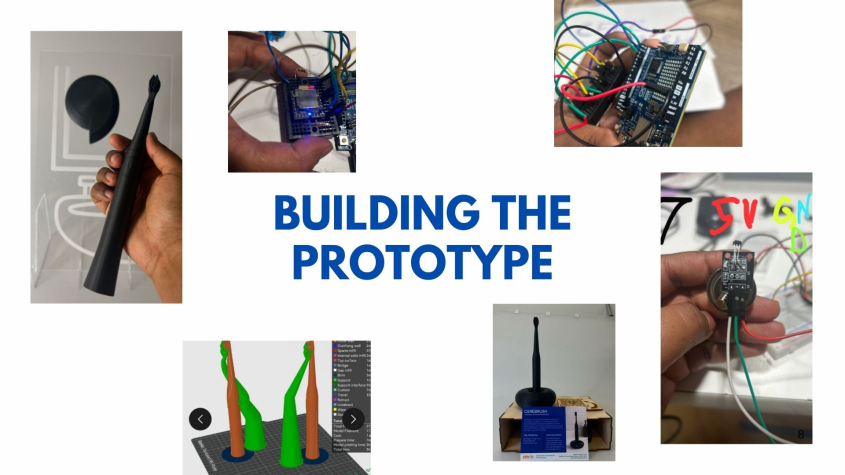
That question began my prototyping journey with Rev: Ithaca Startup Works and the Cornell entrepreneurial community leading to weeks of CAD drawings, prototypes, engineering failures, and more iterations.
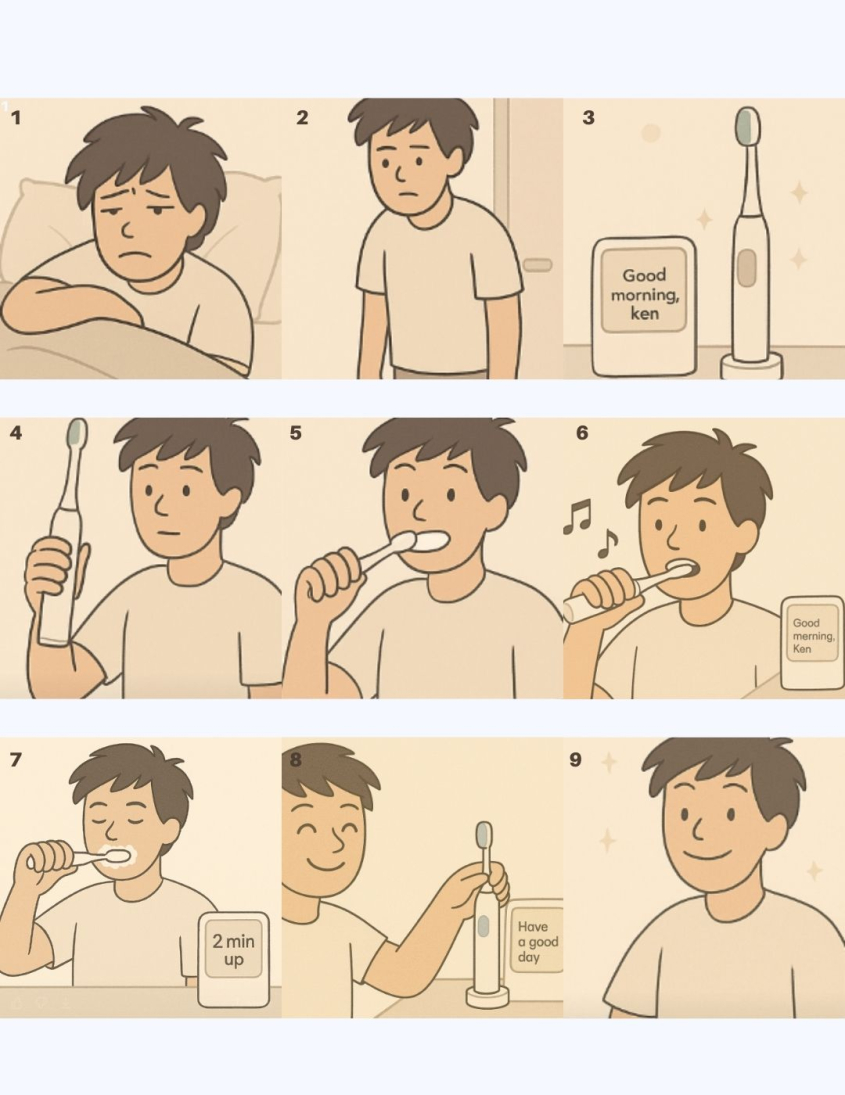
Imagine beginning your day with Morgan Freeman narrating a piece of cosmic trivia or Adele singing your to-do list for the day. Cerebrush is a behavior-first smart toothbrush designed to intervene at the moment a habit begins. When the brush is lifted from its base, a two-minute audio segment plays to create a moment of engagement.
This is based on a simple principle we already use: habit stacking. We listen to podcasts while cooking. We journal while drinking coffee. We fold laundry while watching a show. We naturally pair routine tasks with something engaging.
Cerebrush sits at the intersection of dentistry, behavioral science, and design. It is less about optimizing technique and more about rethinking how preventive behaviors are expected and experienced.
Oral disease remains one of the most prevalent preventable conditions globally. One in three Americans do not brush their teeth twice a day. The average brushing time is just 45 seconds, even though dentists recommend two full minutes.The burden of oral disease is not evenly distributed. Structural inequities in access to care are real and urgent.
But daily behaviors still accumulate.
Two minutes in the morning.
Two minutes at night.
If those two minutes feel like a chore, they are vulnerable.
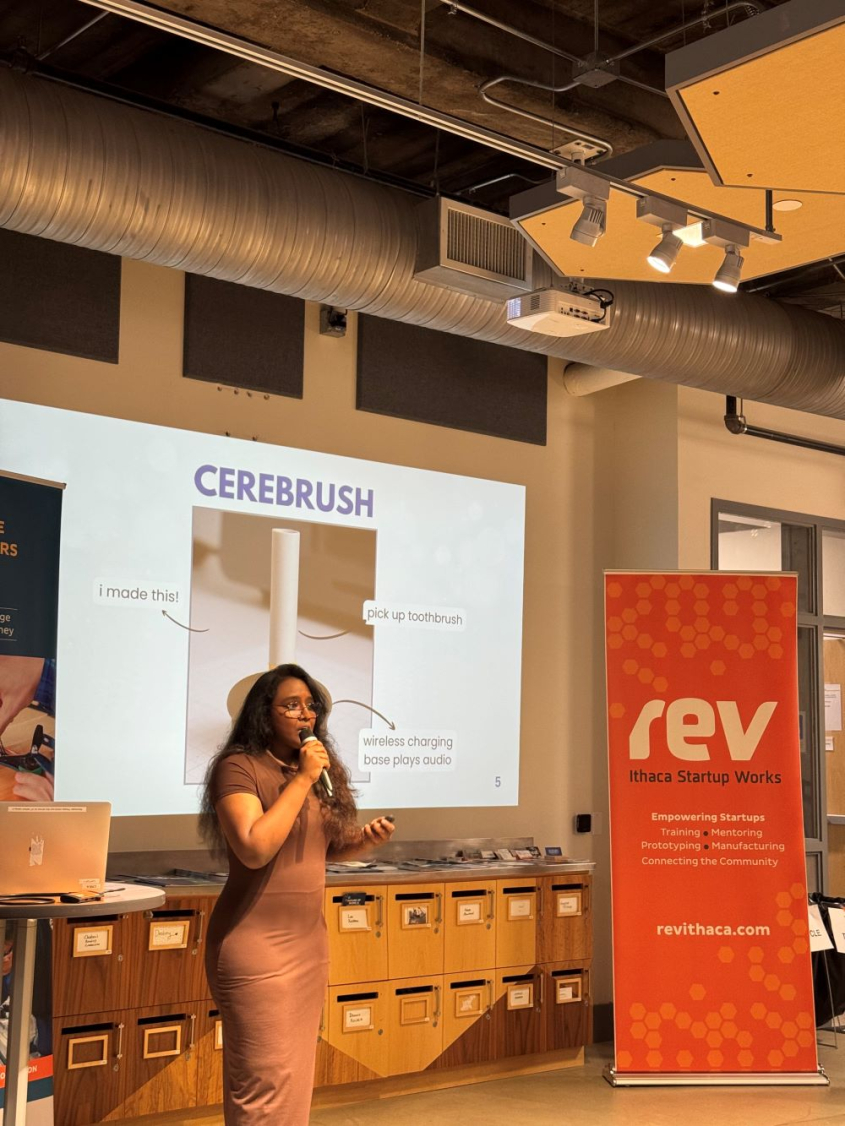
Cerebrush is becoming a test case for how human-centered design can complement preventive health systems. The next steps include prototype optimization, behavioral trials, and mentorship from experts in implementation science and design thinking to evaluate whether delight can function as a measurable behavioral nudge.
This work has been shaped by my training in Cornell’s Master of Public Health program and the generous support of Rev: Ithaca Startup Works and the Cornell entrepreneurial community.
Meghana (Megan) Guturi is an M.P.H. student, Class of 2026, in the Infectious Disease Epidemiology concentration. She is an international student from India and a dentist by training. She is passionate about making public health actually work for people when it comes to health equity, infectious diseases, and communities often left out of the conversation. She cares deeply about science communication, culturally responsive interventions, and reimagining what public health can look like when it’s people-first.
All images provided by Meghana Guturi.