
Cornell diagnostic laboratory leads robust community engagement and training efforts
There is no slow season at the Cornell Animal Health Diagnostic Center (AHDC). Its commitment to the land-grant mission of Cornell means that on top of its regular testing efforts, the AHDC prioritizes training opportunities and community engagement. Faculty and staff are continuously speaking at conferences, leading workshops, arranging governmental meetings and more. The result is a highly connected, well-informed network working on behalf of both veterinary professionals and the public in New York state. In the last few months alone, ambassadors from the AHDC have conducted a wide variety of events that impact the profession, from the dairy industry to wildlife conservation, shelter medicine and more.
Rural resources connections
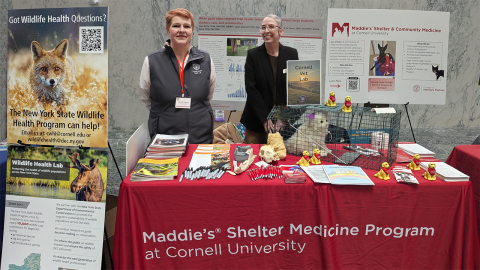
Each year, the New York State Legislative Commission on Rural Resources hosts a Rural Resources Fair at the Legislative Office Building in Albany. This fair focuses on the needs, concerns and contributions of rural communities across the state. With a shared table, the Cornell Wildlife Health Lab (CWHL) and Maddie’s® Shelter and Community Medicine (MSCM) represented the AHDC and the College of Veterinary Medicine (CVM) as resources for rural communities interested in protecting wildlife populations, being good stewards of the environment, promoting access to veterinary care, providing animal shelter outreach, and providing feral cat spay-and-neuter programs.
Organized by State Senator Rachel May and Assemblymember Anna Kelles in late March, this year’s fair offered insights into the challenges rural communities face, opportunities on how to improve and connect and a platform for networking with the organizations that support these communities. Showcasing the significance of rural areas, this fair brings together representatives across agricultural disciplines, human health services, extension outlets and educational outreach. It is an opportunity for groups to share their impact and why rural communities are a vital part of New York.
Jennifer Peaslee, the CWHL program and communications coordinator, shared updates on the New York State Wildlife Health Program, which is a partnership between the CWHL and the New York State Department of Environmental Conservation (NYS DEC). This program focuses on the population health of free-ranging wildlife, an important part of rural living, from hunting to trapping, important wildlife diseases like chronic wasting disease and avian influenza, and their potential economic impact across the state.
Dr. Jessica Reed, the Janet L. Swanson Director of MSCM, highlighted the program’s trap-neuter-vaccinate-return (TNVR) initiative, emphasizing its critical role in managing free-roaming and feral cat populations in rural communities. TNVR supports animal welfare, protects wildlife and promotes both human and animal health, while advancing the program’s broader mission to expand access to veterinary care across rural upstate New York.
From discussing the importance of preserving sustainable, free-ranging wildlife populations to sharing solutions that prevent feline colony overpopulation, the AHDC continues to be a resource that supports rural communities in New York state.
Wildlife conservation collaboration
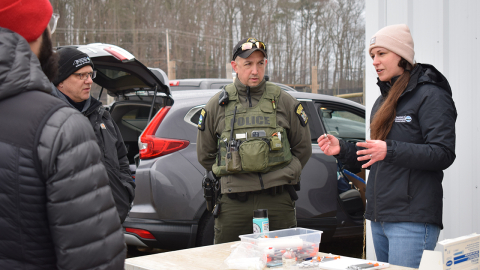
In addition to attending Rural Resources Day, the New York State Wildlife Health Program hosted a New York–species-focused chemical immobilization training workshop for more than 30 NYS DEC biologists and environmental conservation officers. Field sedation and anesthesia, known as chemical immobilization, are critical skills for personnel working with wildlife. To maintain proficiency and ensure the highest standards of animal and human safety, DEC staff who may be involved in chemical immobilization complete a full training course.
Dr. Jennifer Bloodgood, assistant professor of practice and wildlife veterinarian with CWHL, led the two-day training this March. The workshop included didactic lectures held at CVM, followed by a hands-on lab at NYS DEC Reynolds Game Farm.
Classroom sessions covered the rationale for chemical immobilization, regulations governing controlled substances, common drugs and dosage calculations, equipment use and maintenance, animal care and human safety.
The practical component allowed participants to practice range exercises with various projectors, use pole syringes, draw up and load drugs into darts, safely remove darts from animals, conduct case-study reviews, collect samples and ensure animal safety during sedation.
Mastitis testing skills
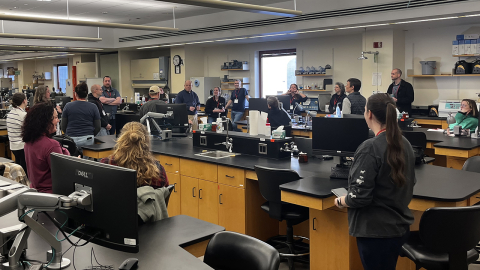
Quality Milk Production Services (QMPS) recently hosted a laboratory training event aimed at enhancing the quality and consistency of mastitis testing services provided to dairy producers across New York.
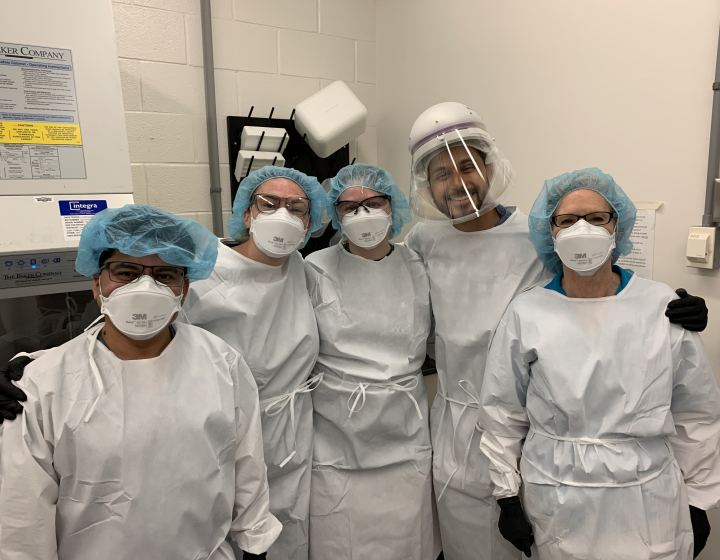
QMPS is a unique program with four laboratory locations distributed throughout the state, enabling local service while maintaining centralized processes and procedures. This training brought together laboratory technicians and veterinarians from all sites for a day of hands-on learning and collaboration. The event focused on core laboratory processes and procedures such as sample preparation, culture techniques and diagnostic interpretation. Participants also completed proficiency exercises to ensure consistency in reading cultures.
By investing in ongoing training and cross-lab collaboration, QMPS continues to strengthen its ability to deliver reliable, high-quality diagnostic services. These efforts directly support dairy producers and veterinarians by providing accurate results that inform animal health management and milk quality improvement.
D.C. departure
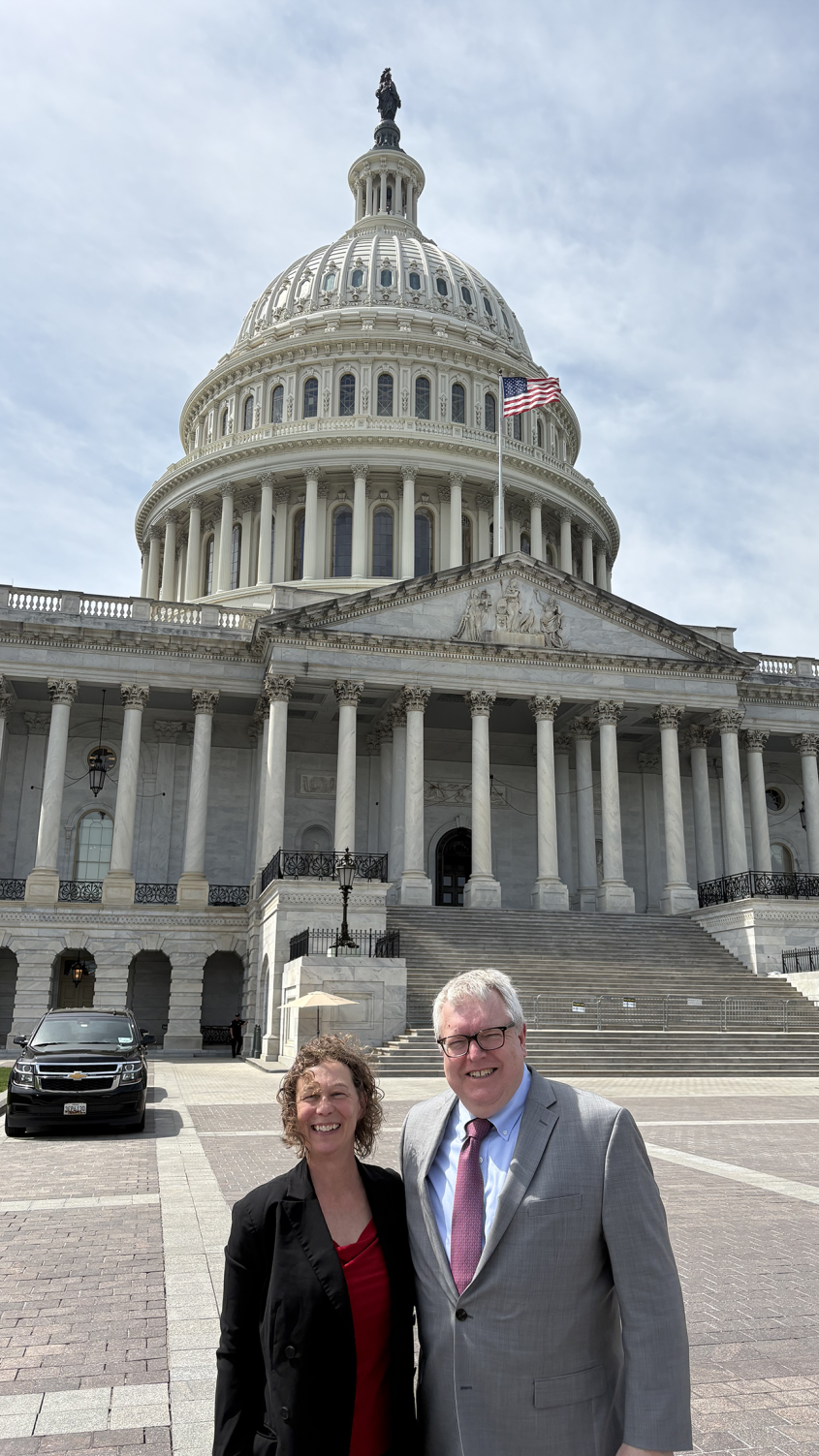
Dr. Shelley Mehlenbacher, executive director of the AHDC, joined Lorin D. Warnick, D.V.M., Ph.D. ’94, the Austin O. Hooey Dean of Veterinary Medicine, in D.C. this spring to discuss federal support of CVM, as part of the Association of American Veterinary Medical College visits to Capitol Hill. Mehlenbacher emphasized the role the AHDC plays in safeguarding animal populations and human health in New York.
In addition to highly advanced testing capabilities, the AHDC is a crucial outbreak surveillance body with expertise in preventing, mitigating and responding to disease spread among animals and people. Mehlenbacher regularly meets with state and federal government officials as associate dean for external relations at the college. The AHDC’s impact spans everyday testing for individual veterinary clinics, to wider research that drives the profession forward, to state and even national policy.
Read more about the AHDC’s mission and vision in its strategic plan.
All photos provided
Written by Jennifer Peaslee, Mia Everts and Melanie Greaver Cordova