

Adventures in time: What a cat from the 60's taught us about a dangerous dog virus
This story is part of a series that explores the role of time in science.
Here, a deadly dog virus and a cat from the 1960s illustrate how time shapes scientific perspective. By providing a snapshot of the past and with new analysis technology, old samples come back to life with great scientific value.
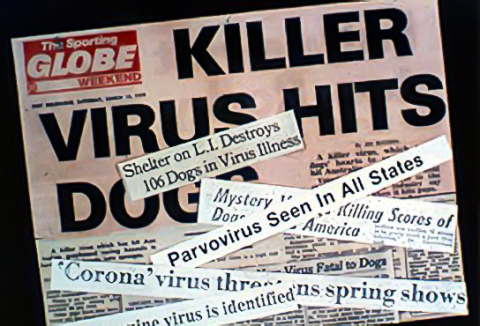
Since Canine Parvovirus, or CPV, first appeared in 1978, generations of scientists at the college have been working on this frightening virus that can kill puppies or put them into intensive care.
Dr. Colin Parrish has dedicated his career to studying CPV. Not long ago, researchers in his lab made a priceless discovery. Cleaning up the lab freezers, the researchers discovered long-stored sample of a related cat virus, the Feline Parvovirus (FPV), from 1964. These samples allowed them to see the virus’s DNA sequence as it was in the past. It was like being able to travel in time and answer questions they couldn't before.
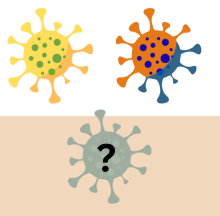
For example, scientists know that CPV emerged from a cat FPV that jumped to dogs in the 1970's. The original CPV was therefore similar to FPV. Since then, both have evolved in their feline and canine hosts. We can see what they look now.
But nobody knew what the earliest CPV looked like.
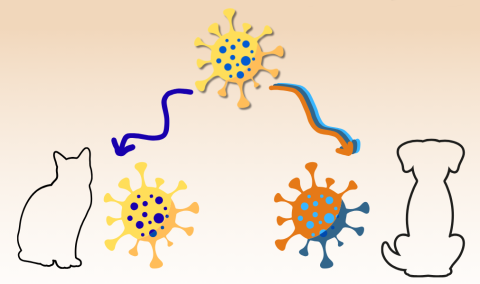
By uncovering the 1964 FPV samples, the team could reconstruct a precise history of FPV and CPV though time. With this data, they saw how much faster CPV has been evolving compared to FPV.
Vaccines derived from the first CPV virus, developed in 1979 at the Baker Institute at Cornell, are still in use today. Fortunately for today’s dogs, Parrish’s lab work showed that the genetic changes in CPV and FPV do not change how effective current vaccines are. Existing vaccines provide adequate protection from modern strains of both viruses.
Science takes time. In 1964, DNA sequencing didn't exist. The old FPV sample was valuable because it provided a snapshot of past DNA, but also because it was rediscovered when technology had advanced enough to reveal new information from it. Oh, the findings will we make in 60 years with the samples we store today!
The research presented in this story was performed by Dr. Brian Wasik, a senior research associate, and Dr. Robert López-Astacio, a graduate student (who graduated since then), in the lab of Dr. Colin Parrish, Ph.D '84. The original research paper is available in open access in the Journal PNAS.