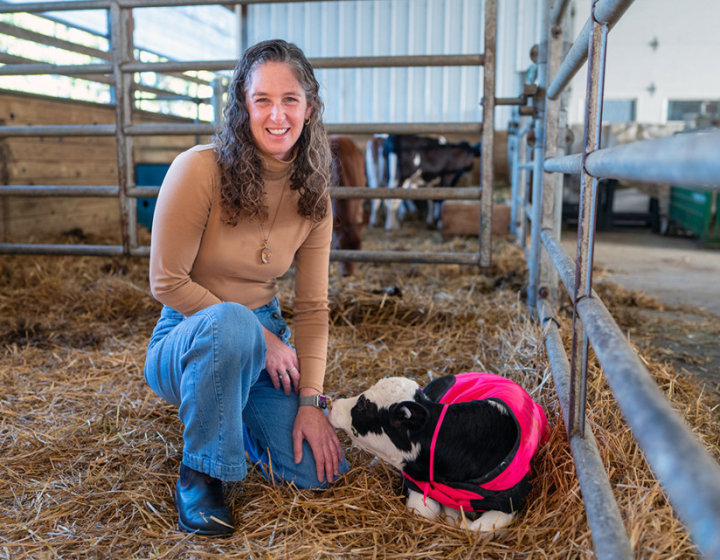



Cornell summit sets the bar for responsible data science and AI in veterinary medicine
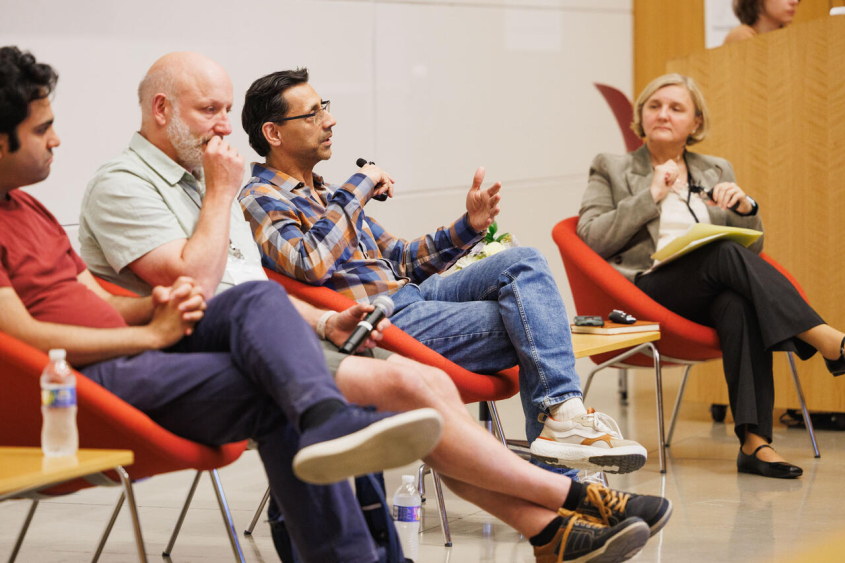
The summit condensed key insights into a concrete and shared mission: to enable responsible data and AI innovation for animals. Photo: Alexandra Bayer/Cornell University
Like many other disciplines, AI is moving fast in veterinary medicine and animal health, but the data infrastructure hasn’t kept pace.
Fortunately, Cornell is picking up the slack. The Building Benchmarks for AI-Driven Veterinary Innovation, funded by the Cornell AI Initiative and part of the Thought Summits series, gathered experts across fields to spark solutions in this emerging area.
Converging from June 9-11 at the Cornell University College of Veterinary Medicine (CVM), leaders in veterinary medicine, artificial intelligence, computing science, human medicine, law, the basic sciences, ethics and education from academia, industry, government and foundations united with a clear directive to develop benchmark datasets for AI for veterinary medicine.

“Think of them as a shared standard measuring stick. Without them, we can’t tell if an AI tool is reliable, fair, or even useful,” says summit co-organizer Renata Ivanek, Ph.D. ’08, professor in the Department of Population Medicine and Diagnostic Sciences. “That gap is a real risk. If experts don’t step in to build these benchmarks, AI will not be properly vetted, and that could undermine veterinary medicine, animal health and welfare, and trust in AI.”
The stakes are serious — and so are the challenges. Data standardization, literacy, ownership, privacy, bias, and whether tools actually generalize across settings are all barriers to consider. “The enormity of these problems can be paralyzing – no one group has the knowledge and resources to fix them,” says summit co-organizer Dr. Parminder Basran, associate professor of medical oncology. “The summit created space for leaders to align on the problems and start working on shared solutions.”
Forty of such leaders gathered from 16 different institutions and across 6 countries at CVM to do this in three days — no small task. The first day focused on identifying the needs of different stakeholders. “What emerged was the recognition that addressing this unmet need requires a collaborative ecosystem built on trust and transparency,” says event co-organizer Jennifer Sun, assistant professor in computer science with the Cornell Ann S. Bowers College of Computing and Information Science. “On top of this, everyone agreed that we needed immediate tangible outputs — a white paper and a ‘minimum viable product (MVP)’.”
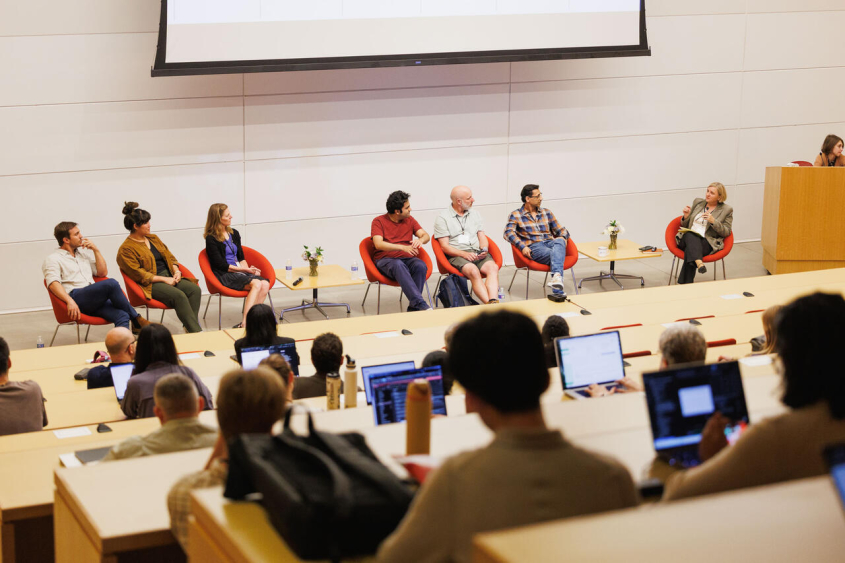
Day two dug into the details — identifying opportunities and threats, and what practical strategies could be leveraged. The final day consolidated these insights into a concrete and shared mission: to enable responsible data and AI innovation for animals. “We also agreed on core values,” says Ivanek. “Those were: sustainability, awareness of AI’s environmental impact and a One Health perspective that connects animal, human and environmental health.” The group also outlined a governance structure for the emerging data repository, which would house an ecosystem of live benchmark datasets for AI in animals.
At the end of the summit, the group had drafted a 22-page white paper with a target publication date of September 2026, it had established four working groups: governance, sustainability, MVPs, and data repository; and had outlined each working group’s corresponding roadmaps for both the near and long-term goals.
“The summit went further than I thought possible,” says Basran. “We left with real momentum, motivation, and a blueprint for building this ecosystem. The level of engagement and willingness to collaborate and the momentum to continue working together were tremendous.”
-Written by Lauren Cahoon Roberts