

BBS student Q&A: Alexis Smrekar
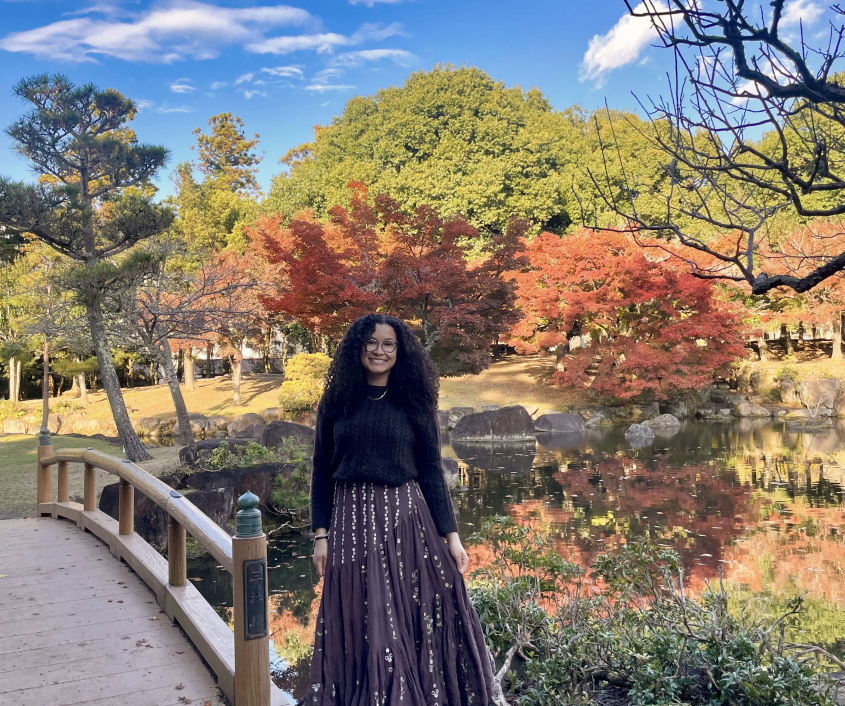
Alexis Smrekar: Photo: Provided
Alexis Smrekar
Second-year Ph.D. candidate, Molecular and Cellular Medicine concentration, de Mestre Lab
Why did you pursue science?
Growing up on the Gulf Coast! I moved from Detroit to Tampa, Florida when I was in elementary school and spent a lot of my childhood on the water. When I moved to Gainesville for undergrad, I fell in love with what a lot of people call “Old Florida”, everything from the pine flatwoods to the freshwater springs. I chose to pursue science simply because I was deeply curious about the natural world, and that still grounds much of my Ph.D. research today.
Why did you pursue your graduate degree at Cornell’s BBS program?
The opportunity to take a comparative approach to immunology research greatly influenced my decision to join the BBS program. Before moving to Cornell, I studied Francisella tularensis, the causative agent of tularemia. Being immersed in the world of host-pathogen interactions encouraged me to think about how organisms adapt to stress and naturally led me towards comparative physiology. It was then that I knew I wanted to pursue a Ph.D. in a space where I could explore how diverse species use unique physiological strategies to address immunological challenges. As a part of the veterinary college, the BBS program made it possible for me to connect these interests.
What has been your favorite aspect of your education as a BBS student?
Probably the creative autonomy I have in curating my experience as a doctoral student. The scientific training completed in a Ph.D. is often framed as a methodologically driven experience, and of course, in many ways it is. However, I think that it is incredibly important to encourage creativity within science such that we can use our work to engage meaningfully with society. My education in the BBS program has allowed me to develop my own scientific voice, and I am very grateful for that.
How has the BBS program changed the way you think?
In the past two years, I’ve learned that every scientist should take some version of “public debate”. I came to Cornell passionate about science communication, but the current challenges facing the scientific community made it clear to me that I had much more to learn. Rather than simply focusing on translating dense jargon into accessible narratives, public debate requires value-driven framing of ideas. Science cannot tell us what our values should be, but we can use science to lead intentional conversations that create community-driven impact with clear outcomes.
What are you researching currently?
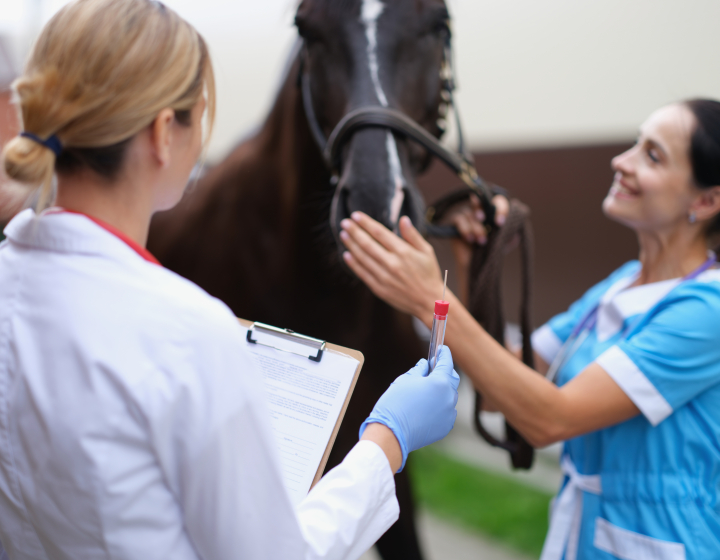
My current work aims to understand how endometrial natural killer cells develop in the equine uterus to support maternal and fetal health during early pregnancy.
What research question(s) are you hoping to answer as a scientist?
I consider myself incredibly lucky to be able to study the maternal immune system in the mare! More broadly, I hope to use placental diversity as a framework to understand the evolutionary importance of natural killer cells in pregnancy.
What are your professional plans after you graduate from Cornell?
After graduation, I intend to stay in academia to pursue a postdoc and eventually apply for a tenure-track professorship. In doing so, I also hope to be able to engage with organizations dedicated to improving maternal and infant health globally.