

Student story: Understanding One Health and addressing veterinary access gaps in Ghana

“Welcome home” - these were the words I was greeted with when I first arrived in Ghana in May. I spent the two months thereafter for my Expanding Horizons project and during that time it soon started to feel like another home. My project was centered around understanding and addressing One Health issues in Ghana, primarily through outreach and community education.
One Health is an integrated, multisectoral approach to addressing health challenges, that recognizes the important interconnectedness between the environment, human health, and animal health. In Ghana there is often close contact with free-roaming species, including dogs, cats, goats, chickens, and sometimes monkeys, which has a great impact on public health. Rabies in particular is a high-risk disease that is endemic in the country and thus of major concern, especially in more rural areas and/or those with limited access to veterinary care. One of my goals was to learn about how to coordinate community initiatives to increase health care access as well as develop One Health educational initiatives catered to them.
My host was The Animal Aider Project (TAAP), a non-profit organization committed to improving animal welfare and increasing access to veterinary care in underserved communities in Ghana with the goal of disease prevention. I originally planned for my project to be focused predominantly on rabies and its prevention, but to get a more diverse understanding of the different contexts of veterinary medicine and One Health in Ghana, Dr. Akosua Kumi Nyarko, TAAP founder and CEO, helped coordinate collaborations with other institutions/clinics for me to rotate through.
University of Ghana Small Animal Teaching Hospital
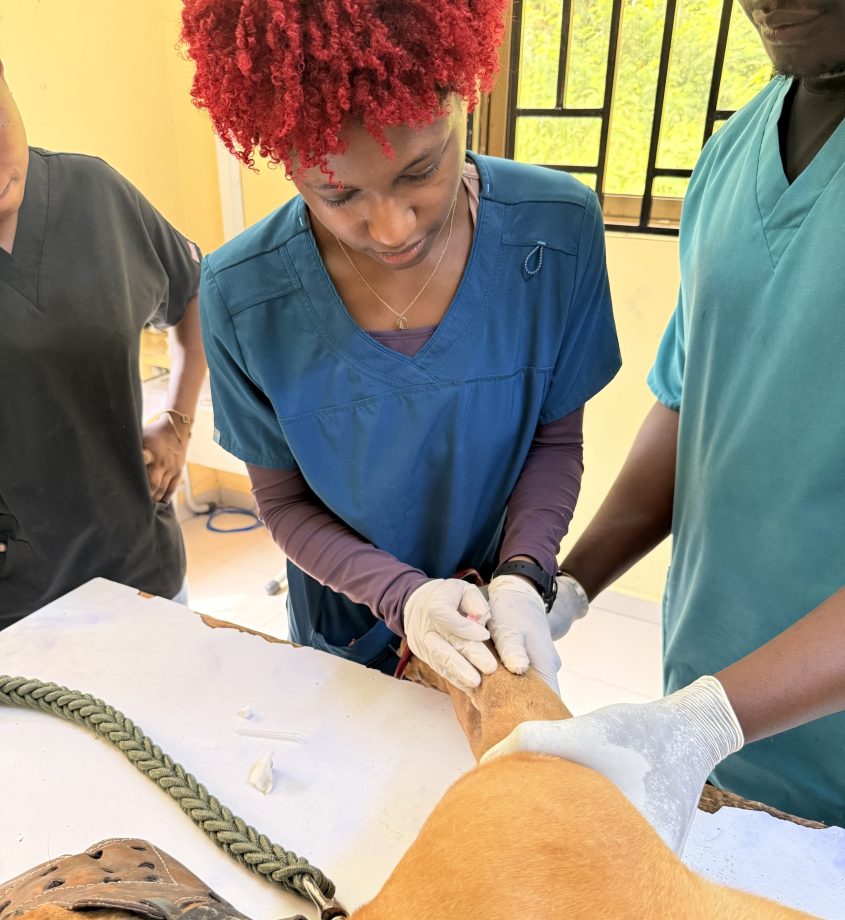
My first rotation was at the University of Ghana Small Animal Teaching Hospital (SATH), a quasi-governmental clinic that sees a range of species, primarily canine and feline. I started in the clinic shadowing during cases, surgeries, and necropsies. During my weeks there I gained more experience with practical skills, like performing physical exams, phlebotomy, and wound treatment. I also strengthened my clinical reasoning skills, like developing differential lists, treatment plans, etc. I challenged my skills in a new way since I was learning about the top differential diagnoses in the region, new drug names, etc.
It was important for me to dive into novel and frequent cases that came there, particularly their One Health implications and the region-specific factors contributing to their occurrence. In my logbook I noted the cases I saw, and from there researched more about certain diseases/conditions that came into the clinic. I wrote a review on a case of canine transmissible venereal tumor (TVT) that was being treated, which was the first time I had encountered it. I learned that TVT is more common in tropical/subtropical areas like Ghana where there are large populations of free-roaming and stray animals, highlighting the need for more population control as well as client education on prevention. Among the very common cases in the clinic were canine parvovirus and tick-borne diseases (e.g. Babesia canis, Ehrlichia canis). These have One Health implications regarding disease spread to humans. I learned so much about the contributing factors of these diseases in discussions with the clinicians at SATH, such as cost barriers to vaccination/prevention, certain beliefs regarding animals (e.g. that mongrel dogs don’t get sick), and potential environmental factors, such as climate change and flooding. In discussing this background, I began to understand more about how to approach client education in this context.
While I was at SATH, I also spent some time in their diagnostic lab. There I assisted with the hematology and cytology of patient samples. I learned about the procedures of the diagnostics they do in the lab, which also include processing samples for research and disease investigation. In addition to the clinic and lab, I attended student case conferences and a field trip to the University of Ghana Livestock and Poultry Research Centre, where we practiced collecting herd/operational history from the farm staff and practical skills with their sheep and goats.
Dr. Sackey’s Veterinary Clinic
After SATH, my next rotation was at Dr. Sackey’s Veterinary Clinic, a private two-doctor clinic run by Dr. Kojo Sackey himself. Aside from assisting with cases and improving clinical skills, Dr. Sackey and I discussed a number of topics that were relevant to veterinary medicine in Ghana, such as their core vaccines. We also practiced client communication in which I was challenged to find new ways to explain topics like foods toxic/dangerous (including cultural foods) to animals and hypovolemic shock. I got to learn firsthand common gaps in client knowledge regarding pet care and health. My time there was a look into practice and client management in Ghana. Dr. Sackey was an amazing mentor, and I was able to take away many lessons that will be valuable when starting my career as a veterinarian.
TAAP Vetreach in Nsawam
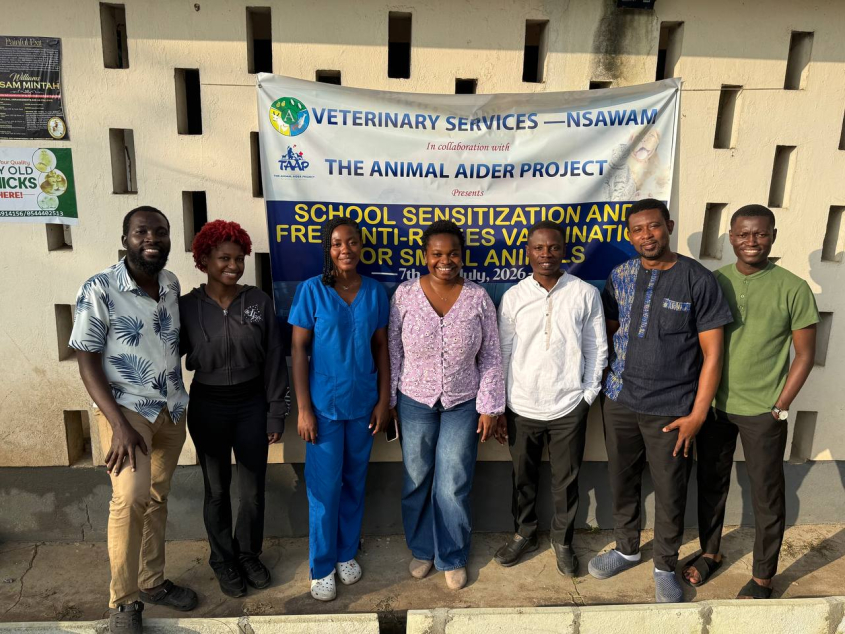
Following my week at Dr. Sackey’s, it was finally time for the TAAP Vetreach in Nsawam. Leading up to the outreach, I completed TAAP training lessons on One Health in Ghana, education strategies and community engagement in public health and animal welfare (incorporating community dynamics and cultural sensitivity), integrated bite management, and how to design a public health campaign. I also became a certified rabies educator through the Global Alliance for Rabies Control. Nsawam is a more rural town and has had a relatively high number of reported bites and rabies cases, making this outreach effort pertinent. We collaborated with Nsawam District Veterinary Services to help work with the local community, such as the chiefs, in coordinating the outreach.
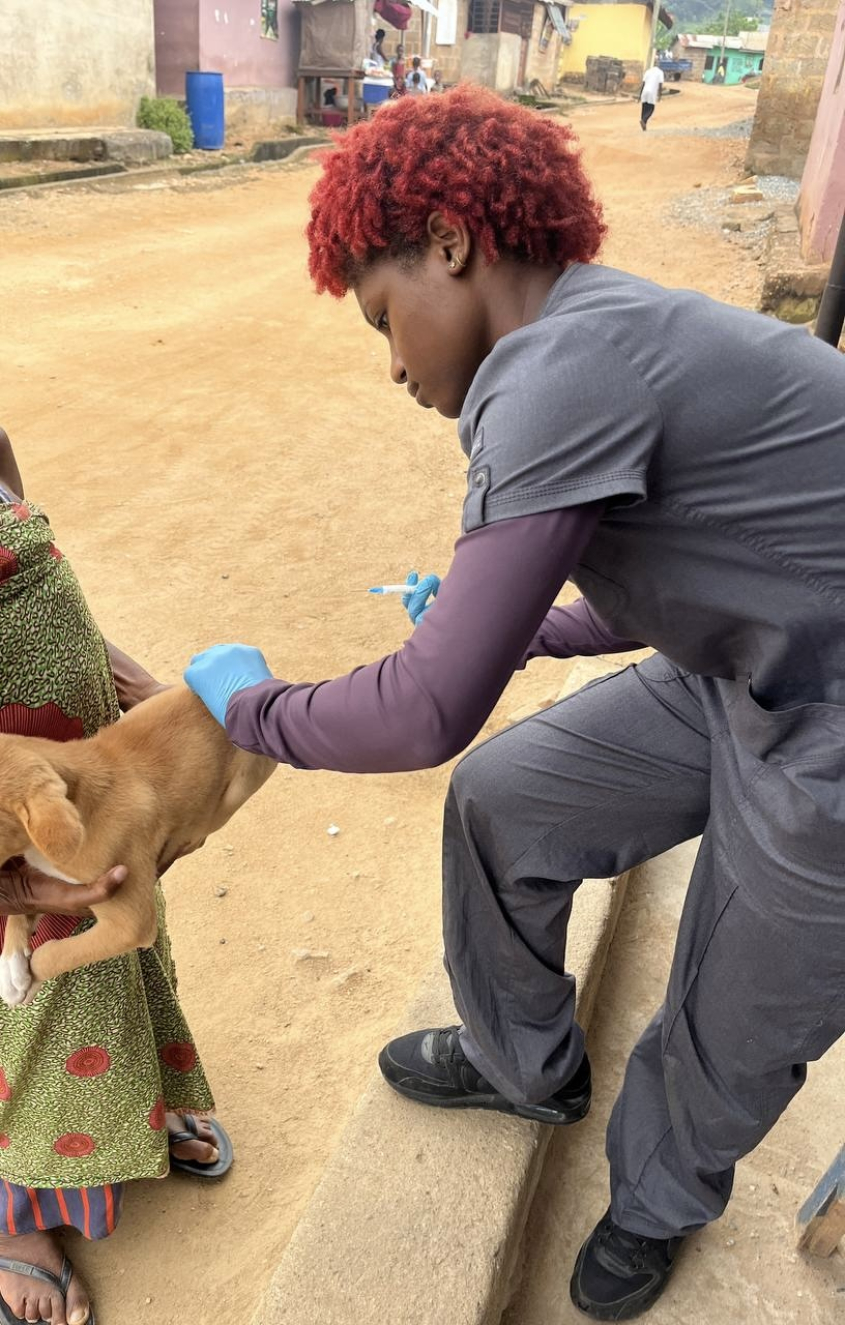
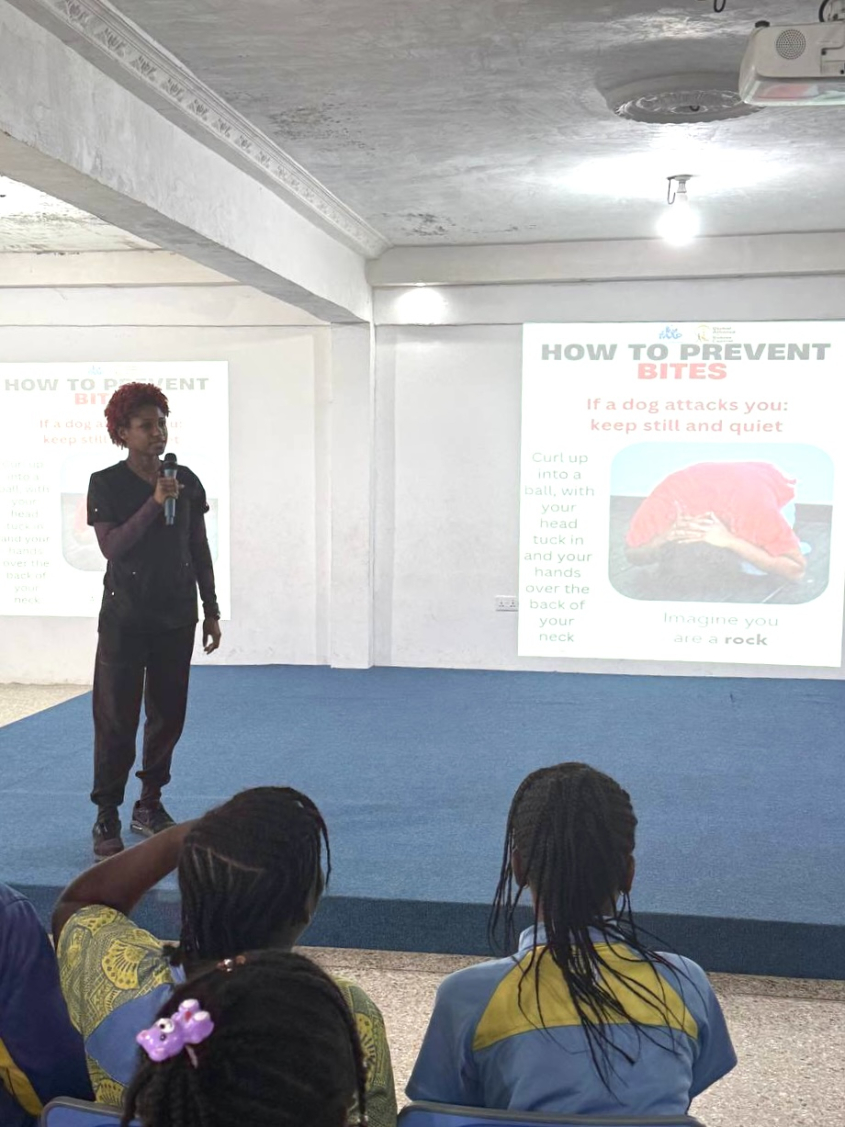
We hosted 2-3 vaccination clinics each day for the week and in total vaccinated 586 animals against rabies. We also educated 1,485 people, primarily at local schools, on rabies prevention and post-exposure prophylaxis (PEP). PEP is the process of emergency intervention necessary to prevent a fatal infection following exposure to a rabid or potentially rabid animal. I led one of the school education sessions, engaging the students on how to prevent bites, how to recognize rabies in animals, and what they should do if they are bit. They all had so many interesting questions about rabies. It was amazing to see how curious they were and be able to share with them. We were able to make a memorable impact on the community and make great progress toward rabies elimination in Ghana and the protection of public health from the disease.
In between the days of field vaccination, I also learned more about disease investigations conducted at the clinic there and got to shadow a few post-mortem examinations. Overall, I gained so much knowledge and skills on outreach strategy, field medicine, and how to engage different communities and audiences in One Health education. These are lessons that I will continue to carry with me and that will help guide me in the work that I want to do.
West African Centre for Cell Biology of Infectious Pathogens
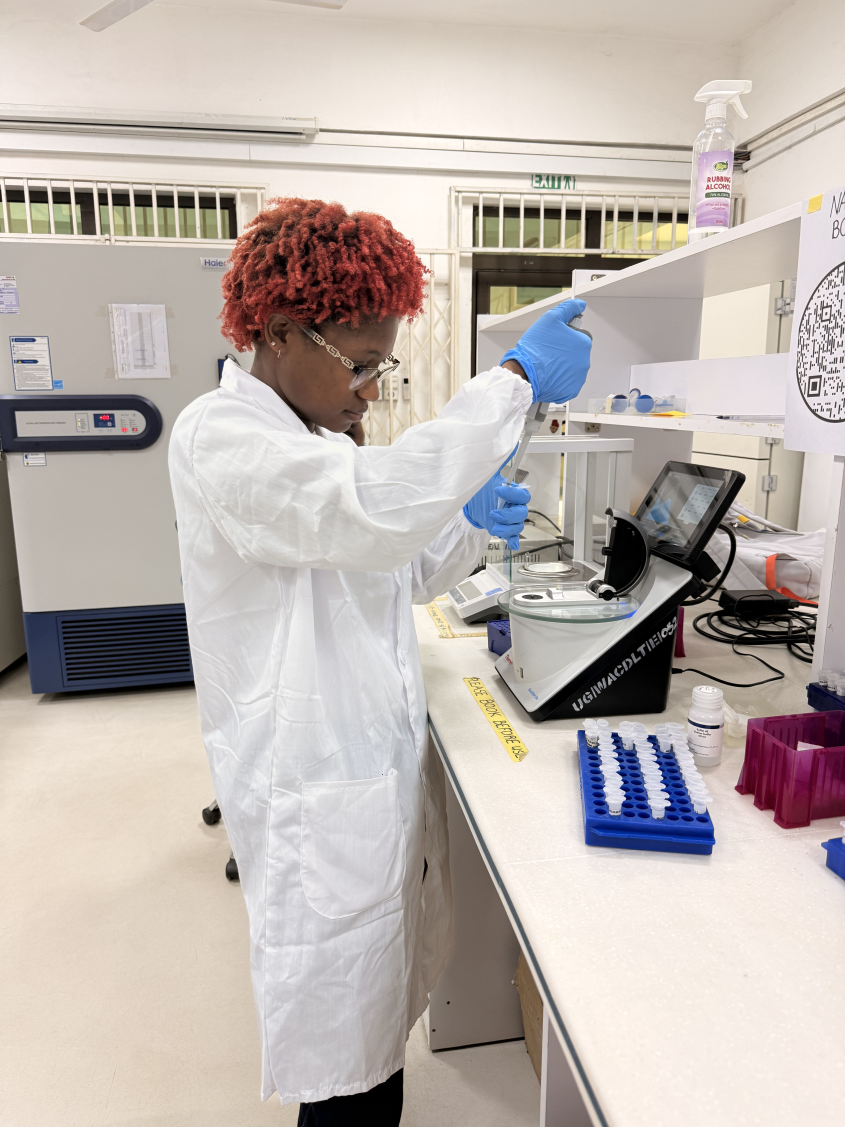
The last institution I interned at was the West African Centre for Cell Biology of Infectious Pathogens in their microbiology lab. Their lab focuses on hemoparasites, particularly Trypanosomes and Leishmania, as well as early drug discovery against them. There I learned about some of the research they were doing, such as investigating Trypanosome resistance in domestic animals. I learned about the risks and regional factors associated with Trypanosoma spp. and Leishmania spp. I performed DNA extraction from blood samples collected from goats and blood smears to look for the presence of hemoparasites.
During my time there, I also got the opportunity to shadow on a farm call with my supervisor, Dr. Richard Kwamena Abbiw. The farm had a range of species, including swine, goats, poultry, rabbits, and ostriches. I assisted with treatments for the swine and goats. I also learned about farm management, disease control/prevention, biosecurity assessment, and how to make animal care instructions more accessible to farm staff.
My Final Days in Ghana
I spent my last week back at SATH where I got to continue learning in the clinic. It was tough having to wrap up my time there and say my goodbyes to those that made my experience in Ghana truly feel like home. I worked with many amazing doctors that are deeply committed to providing great care for their patients and educating people in their relative communities on animal health/welfare, despite the challenges they may face in doing so.
In preparation for my final project presentation to the TAAP team during my last week, I reflected on the many lessons I learned, the people I met, and the unforgettable experiences I had: what it’s like to work and live independently in a different country, resource/cultural impacts on veterinary medicine and animal care (e.g. the use of traditional medicine), and the work being done and left to be done in closing access gaps. These lessons will help me be better able to contribute to initiatives that aim to improve animal welfare, access to care, and One Health education and protection in underserved communities in and out of the U.S. I am grateful to have had the opportunity to do this project in Ghana, thanks to the Cornell University College of Veterinary Medicine Expanding Horizons program. I hope to be able to continue building upon these lessons and work in the future.

I am a class of 2028 DVM student at the Cornell University College of Veterinary Medicine. My career interests are primarily in low-cost community medicine and HQHVSN, also with the goal of improving access to care and One Health education in international communities lacking veterinary resources.