
Protecting pollinators, mangroves and deer: Yang Center for Wildlife Health postdocs tackle One Health problems
The 2026 cohort of Cornell K. Lisa Yang Postdoctoral Fellows in Wildlife Health is poised to restore mangrove ecosystems in the Galápagos, improve chronic waste disease surveillance, and protect the pollinators that underpin global food systems. By integrating approaches spanning genomics, ecology, biostatistics, and beyond, these fellows aim to generate practical solutions to complex One Health problems.
The Cornell K. Lisa Yang Center for Wildlife Health supports early-career researchers who work with Cornell faculty members and external partners to translate cutting-edge science into real-world impact. Through their research programs, the 2026 fellows are advancing new tools and insights to inform conservation strategies, strengthen disease management, and promote sustainable systems that benefit wildlife, people, and the planet.
Jaime Ortiz Pachar, PhD ‘26
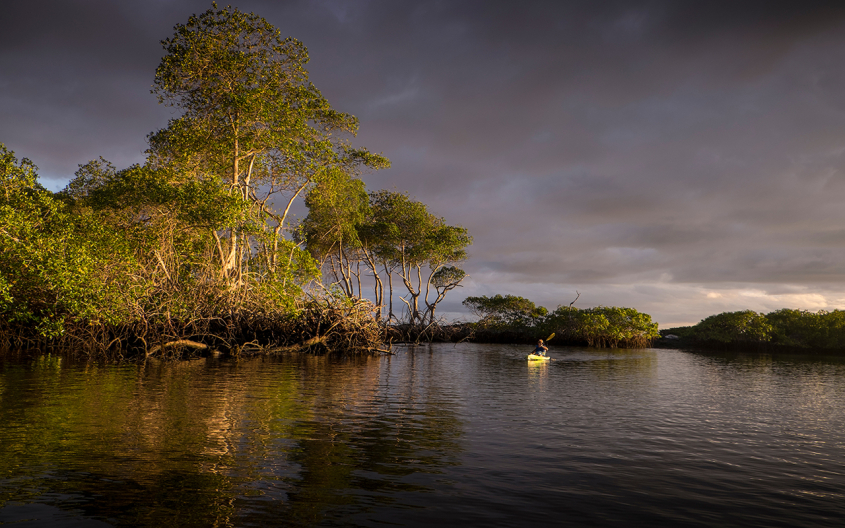
Safeguarding the One Health value of Galápagos mangroves: Genomics‑driven solutions for global wildlife health and ecosystem resilience
Mangroves are vital coastal ecosystems that safeguard coastlines, sequester large quantities of carbon, and underpin global fisheries, yet up to half of the world’s mangroves have been destroyed in the past 50 years. In the Galápagos, park managers lack the genomic tools and data needed to identify climate-resilient mangrove populations, map mangrove genetic diversity and connectivity, and track genetic responses to pollution, a threat that propagates through the food web and affects human health. Without understanding which mangrove populations have the adaptive capacity to withstand future changes in climate and, for example, microplastic pollution, costly mangrove restoration projects may fail.
This project will generate high-resolution reference genomes for four dominant mangrove species and apply population and functional genomics to map connectivity, identify climate-resilient genetic variation, and develop biomarkers to monitor pollution-related stress. These tools will support conservation and restoration in the Galápagos and provide scalable approaches applicable to mangrove management worldwide.
- Cornell faculty mentors: Nina Overgaard Therkildsen (CALS / Natural Resources and the Environment) and Erik Enbody (CALS / Computational Biology)
- External mentor: Nicolás Moity (Charles Darwin Foundation)
Dr. Chandika Rani Ganesh Babu
From genes to management: A transcriptome-informed framework for chronic wasting disease surveillance in white-tailed deer
Chronic wasting disease (CWD) is neurodegenerative disease affecting white-tailed deer and related species, and its spread across North America poses growing challenges for wildlife conservation and management. However, we still do not understand why some deer exposed under similar conditions become infected and die, while others remain disease-free. Addressing this gap requires a better understanding of the genetic factors underlying CWD susceptibility before genetic information can be effectively incorporated into surveillance and control strategies.
This project will develop a functional genomic framework to better understand the heritability and molecular underpinnings of CWD susceptibility. This work marks the first application of a transcriptome-wide association study (TWAS) in a wildlife disease system. The project will integrate multidimensional genetic risk scores into disease surveillance programs, providing practical tools for wildlife agencies to prioritize high-risk populations, optimize resource allocation, and enhance the long-term resilience of deer populations in North America and beyond.
- Cornell faculty mentor: Krysten Schuler (Cornell Vet / Public and Ecosystem Health)
- External mentor: Nick Pinizzotto (National Deer Association)
Dr. Wendy Leuenberger
Effects of neonicotinoid regulations on bee communities
Bee species play a critical role in food production, with insect pollination contributing an estimated $275 billion annually to the global economy. Yet bee and other insect populations have declined sharply in recent decades, largely due to the widespread use of insecticides, including neonicotinoids. In response to these pollinator losses, the European Union, Canada, and the United States have implemented regulations restricting the use of neonicotinoids. However, no studies have yet assessed the effects of these policies on pollinator health.
Leuenberger’s project aims to evaluate how neonicotinoid regulations affect bee populations. Using advanced statistical methods that integrate multiple data sources, the work will assess the impacts of current neonicotinoid restrictions and predict the outcomes of additional proposed regulations in the United States. These findings will inform policy decisions, support stakeholder engagement, and promote more sustainable agricultural practices that protect pollinators and food systems.
- Cornell faculty mentor: Laura Melissa Guzman (CALS / Entomology)
- Project Partner: Alejandro Calixto (Cornell Integrated Pest Management)
Written by Melisa DeGroot, Ph.D. ’22