


What can we learn by eavesdropping on immune cells?
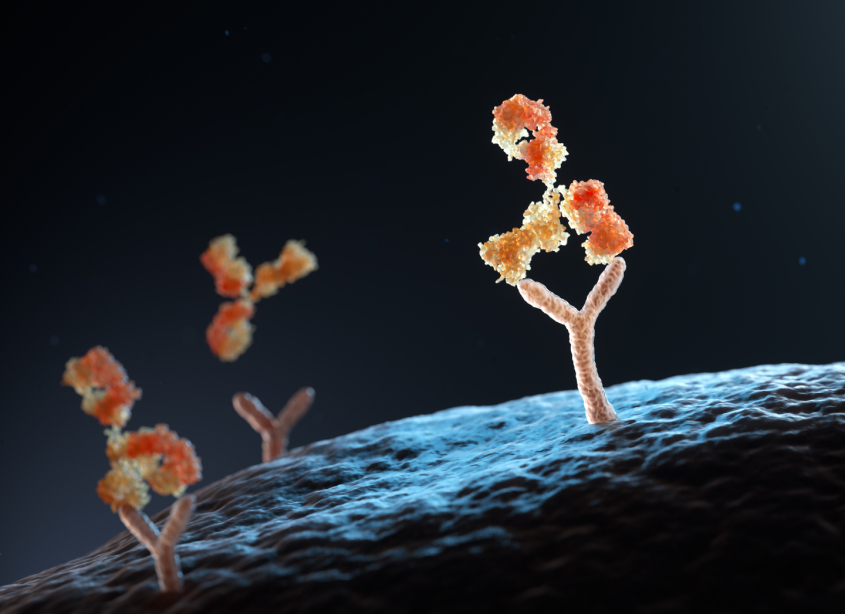
Photo: Adobe Stock
The immune system is a highly complex biological process that involves many different and highly specialized cells. Understanding how all these pieces work together matters – a lot – because immune responses are something doctors would like to be able to control better.
The immune cells respond to viral or bacterial infections, but are also involved in many other biological processes. Immunity is involved in tissue repair after an injury, in allergic responses and insect bites. It plays a role in how cancer cells are controlled, but also causes tissue damage during autoimmune and cardiac diseases. “Whether we want to boost the immune system to fight infections or cancer, or tamper with it in the case of autoimmune diseases, we need to understand how it works,” says Deborah Fowell, director of the Cornell Center for Immunology.
To understand how immune cells interact with each other, scientists had been looking at where and when immune cells cluster in the same place, how they look before gathering, how they look after, and where they go from there. But seeing discrete snapshots of a group of cells in different states is not the same as knowing what triggers and controls the change from one stage to the next. “When you see a group of cells in a tissue, you don’t know if they’re talking to each other. You don’t know if these cells are pausing or passing through,” says Fowell.
Working collaboratively, Fowell and two other Cornell scientists, Iwijn De Vlaminck, a biomedical engineer, and Brian Rudd, an immunologist, are developing new approaches to “eavesdrop” on the immune cell interactions by combining two incredibly cutting-edge technologies. The first one is multiphoton microscopy, which allows scientists to see deep inside living tissues to ‘watch’ cells interact in real time. The second one, spatial transcriptomics, tracks the outcome of the cellular interactions by looking at gene activity inside a tissue where it happens.
The number of applications is immense, explains Fowell. Recently, they published a proof-of-concept paper to introduce AIR-SPACE, a new capability of their approach. AIR-SPACE can track millions of different immune cells in time and space. For example, it can follow — across the course of an infection — the genetic changes happening in immune cells that improve their ability to recognize pathogens.
Opening new windows into how immune cells work together has a wide spectrum of medical applications. It ranges from tampering the immune system when it creates tissue damage, to harnessing the power of the immune system to fight cancer, or enhancing the immune response to new microbes. “This is really exciting,” says Fowell. “It’s like clearing the fog and seeing a brand-new landscape.”
Want the nitty-gritty details? Read the technical results published in the peer-reviewed journal PNAS. Dr. Deborah Fowell is a professor of immunology, the chair of the Department of Microbiology and Immunology, and the director of the Cornell Center for Immunology. Dr. Brian Rudd is a professor of immunology in the department of Microbiology and Immunology. Iwijn De Vlaminck is a professor in Meinig School of Biomedical Engineering at Cornell Duffield Engineering.
Written by Elodie Smith