


First known cases of feline Marfan syndrome discovered in cat siblings
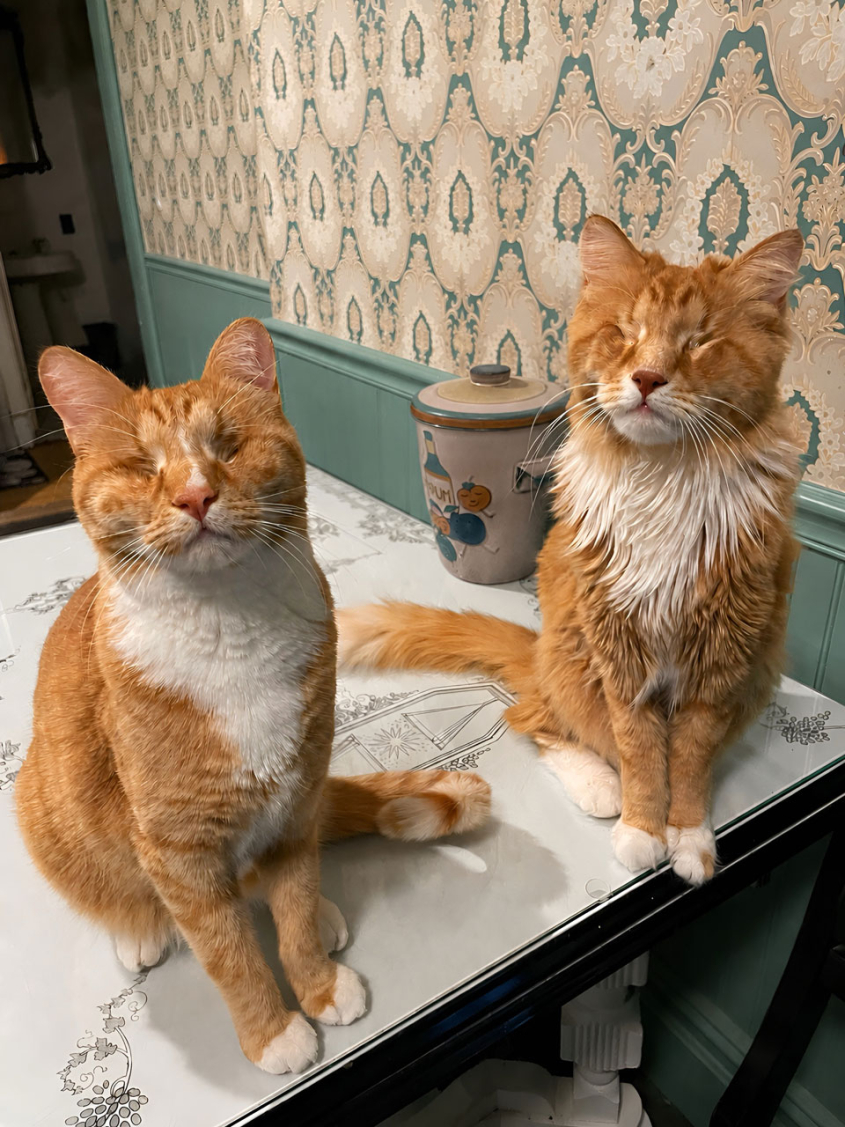
Feline siblings Gary, left, and Shaggy are the first domestic cats to be documented with molecular characterization of Marfan syndrome. Photo: Nicole Desmond
Researchers at the Cornell University College of Veterinary Medicine and the Baker Institute of Animal Health have documented the first molecular characterization of Marfan syndrome in domestic cats, documented in a paper in the September 19 issue of Scientific Reports. “The findings may help veterinarians recognize similar cases in the future,” says senior author Dr. Jacquelyn Evans, assistant professor in the Department of Biomedical and Translational Sciences and at the Baker Institute for Animal Health.
As kittens, feline siblings Gary and Shaggy had noticeably longer limbs, and later examinations revealed problems with the structures of their eyes and enlargement of the aorta, pointing veterinarians toward Marfan syndrome, a rare inherited disorder, seen mostly in humans, that weakens the body’s connective tissues. It affects about 1 in 4,000 people, but this was the first known documented case in cats.
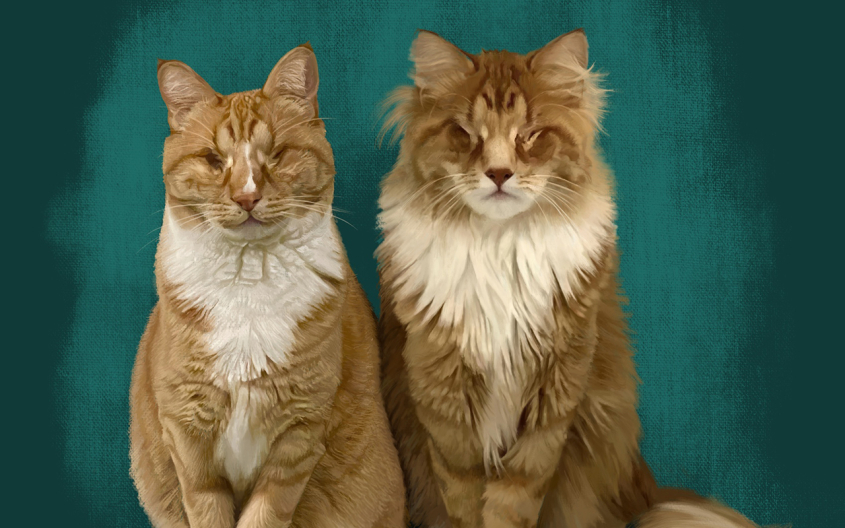
This medical rarity united veterinary specialists and genetic experts from Cornell’s Baker Institute for Animal Health and College of Veterinary Medicine, along with collaborators at Ghent University in Belgium, the University of Pennsylvania, and the Schwarzman Animal Medical Center in New York City. The multidisciplinary team combined detailed clinical evaluations with genetic sequencing to identify the gene responsible for the feline siblings’ condition; FBN1, which codes for a protein called fibrillin-1, a building block for the body’s connective tissues found throughout the body including blood vessels, bones, ligaments, skin and eyes.
Researchers found that both brothers carried two altered copies of the FBN1 gene, meaning they inherited a changed copy from each parent. In humans, just one altered copy of the FBN1 gene can cause Marfan syndrome. Inheriting two altered copies is extremely rare and can interfere with the body’s ability to produce normal fibrillin-1. In the case of Gary and Shaggy, however, further investigation showed that the cats’ variant did not completely shut down the gene. Instead, it partially disrupted the way the gene’s instructions are processed, allowing some normal function to remain — explaining how the cats survived into adulthood despite carrying two copies of a variant that otherwise might have caused more severe disease.
“This discovery is a great example of how pet parents can collaborate with veterinary and genetic experts to learn something that could help other animals in the future,” says Evans. “It also showcases the comparative approach that has long been central to research at the Baker Institute for Animal Health.”
Written by Teresa Griffin
A version of this story appears on the Cornell Chronicle.