


Produce by prescription
Produce by prescription: Improving access to fresh food in rural New York
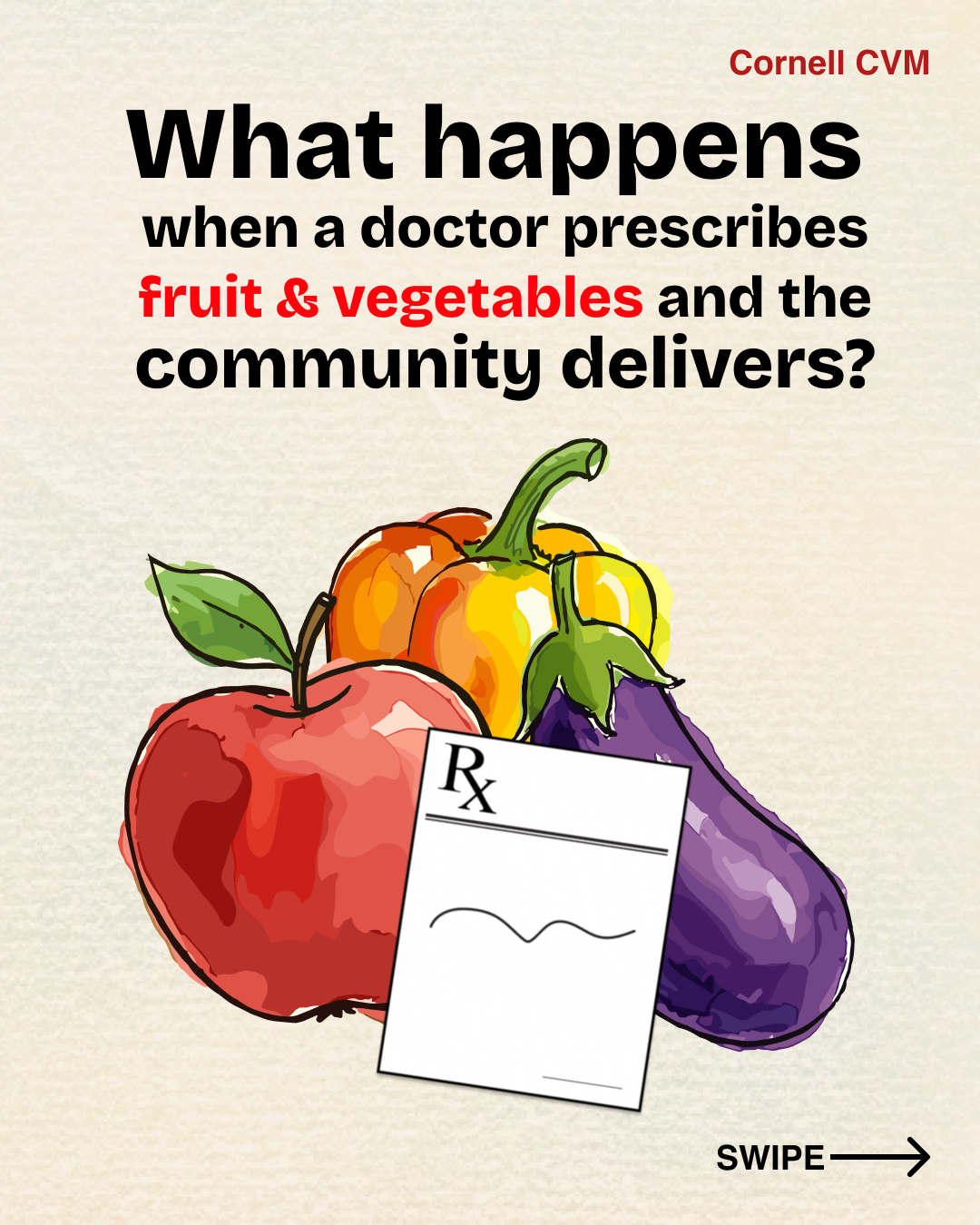
What happens when a doctor prescribes fruits and vegetables and the community delivers?
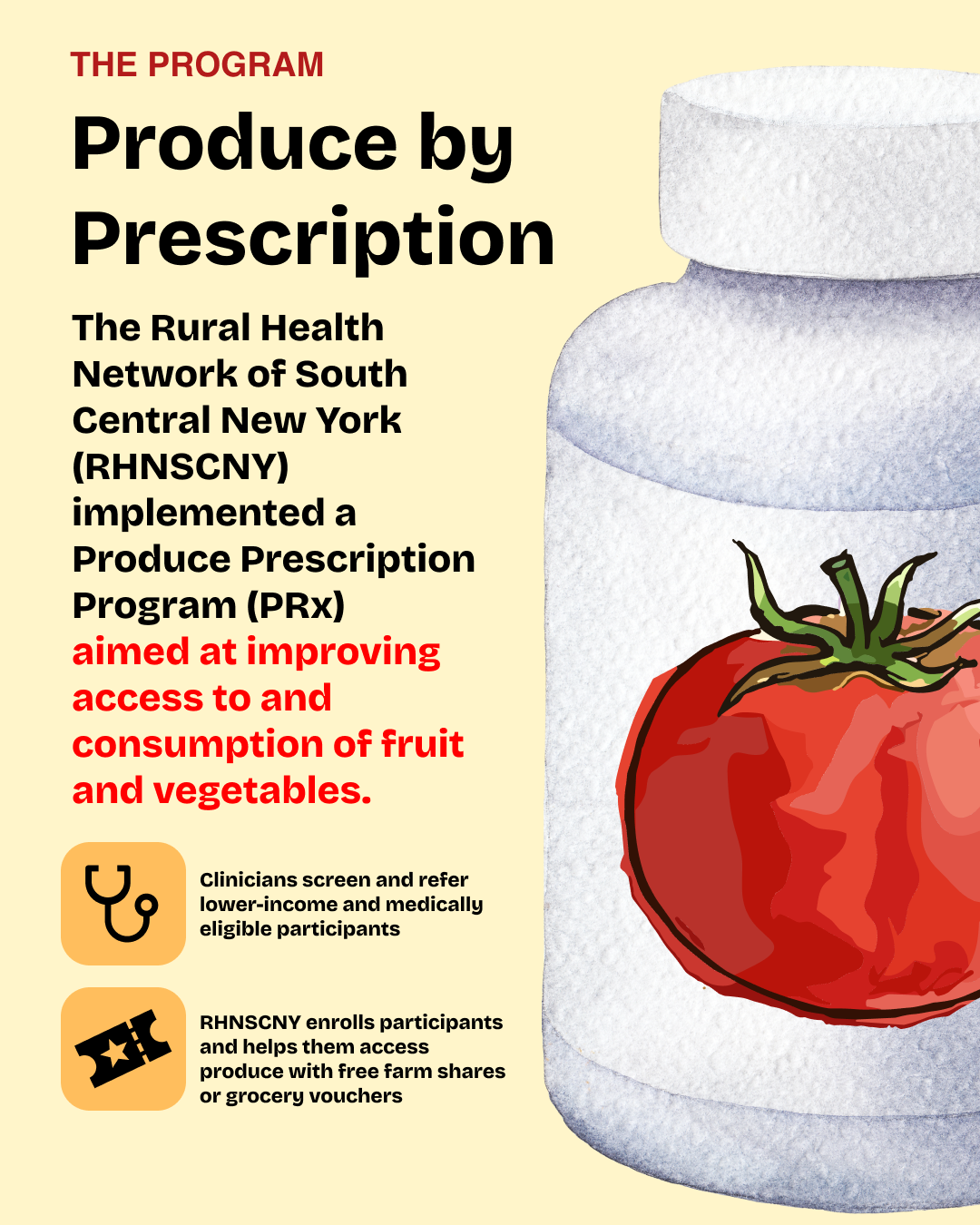
Rural communities face high rates of diet-related chronic disease, often influenced by food insecurity and limited access to fresh, affordable foods. In rural New York, obtaining nutritious food can be a challenge for individuals and families. To help address these barriers, the Rural Health Network of South Central New York (RHNSCNY) implemented a Produce Prescription Program (PRx) aimed at improving access to and consumption of fruits and vegetables.
How the program works
The Produce Prescription Program connects eligible individuals with fresh produce through partnerships between healthcare providers and community organizations. Clinicians screen and refer lower-income, medically eligible participants to the program. RHNSCNY then enrolls participants and helps them access fresh fruits and vegetables through free farm shares or grocery vouchers. By connecting healthcare recommendations with community resources, the program helps make nutritious foods more affordable and accessible.
Evaluating the results
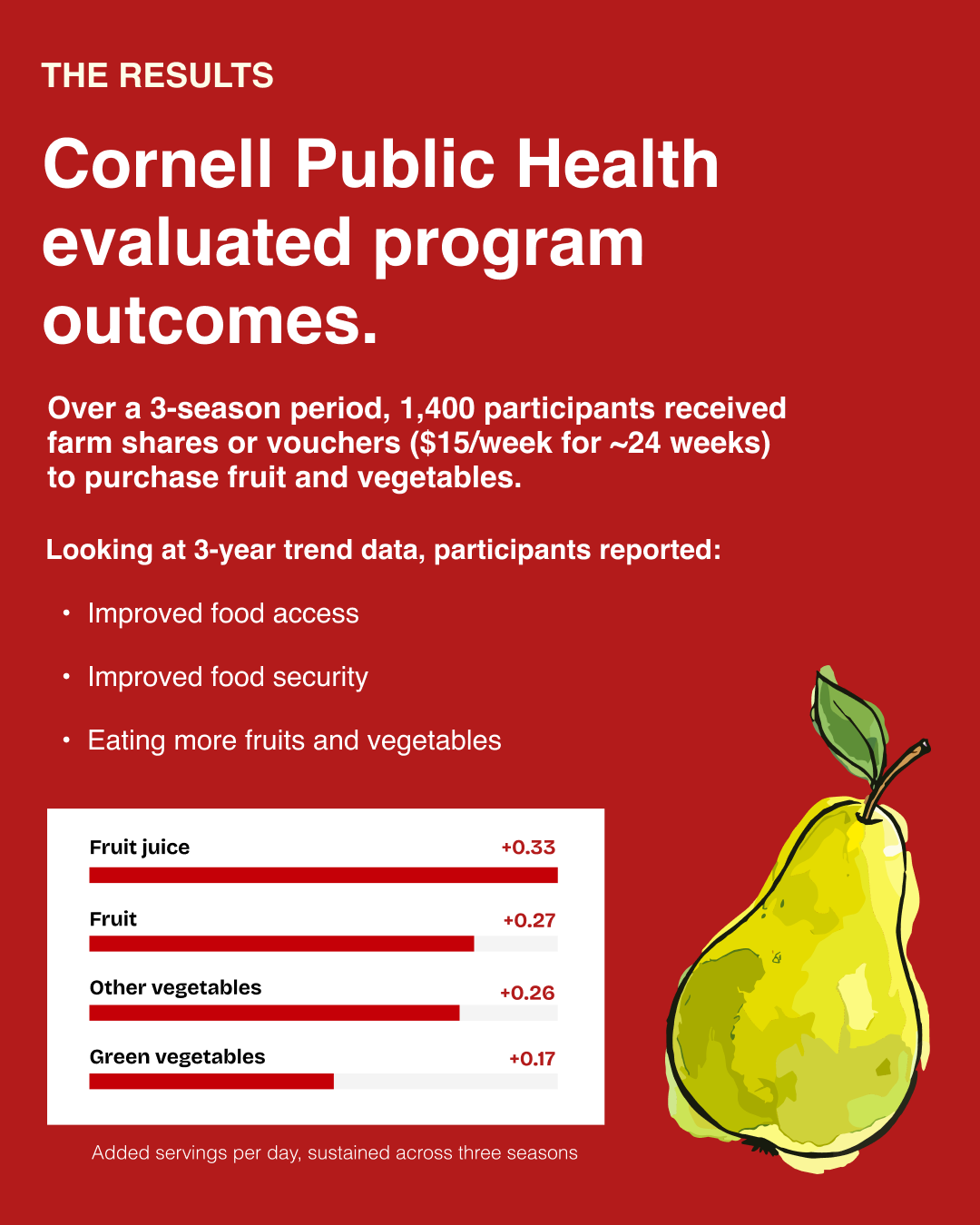
Cornell Public Health evaluated the program's outcomes over three seasons. During this period, 1,400 participants received farm shares or grocery vouchers valued at $15 per week for approximately 24 weeks to purchase fruits and vegetables.
An analysis of three-year trend data found that participants reported:
- Improved access to food
- Improved food security
- Increased consumption of fruits and vegetables
The evaluation also identified sustained increases in daily servings across three seasons:
| Food category | Additional daily servings |
|---|---|
| Fruit juice | +0.33 |
| Fruit | +0.27 |
| Other vegetables | +0.26 |
| Green vegetables | +0.17 |
These findings suggest that produce prescription programs can help address barriers to healthy eating and support improved dietary habits.
Better, but not yet solved
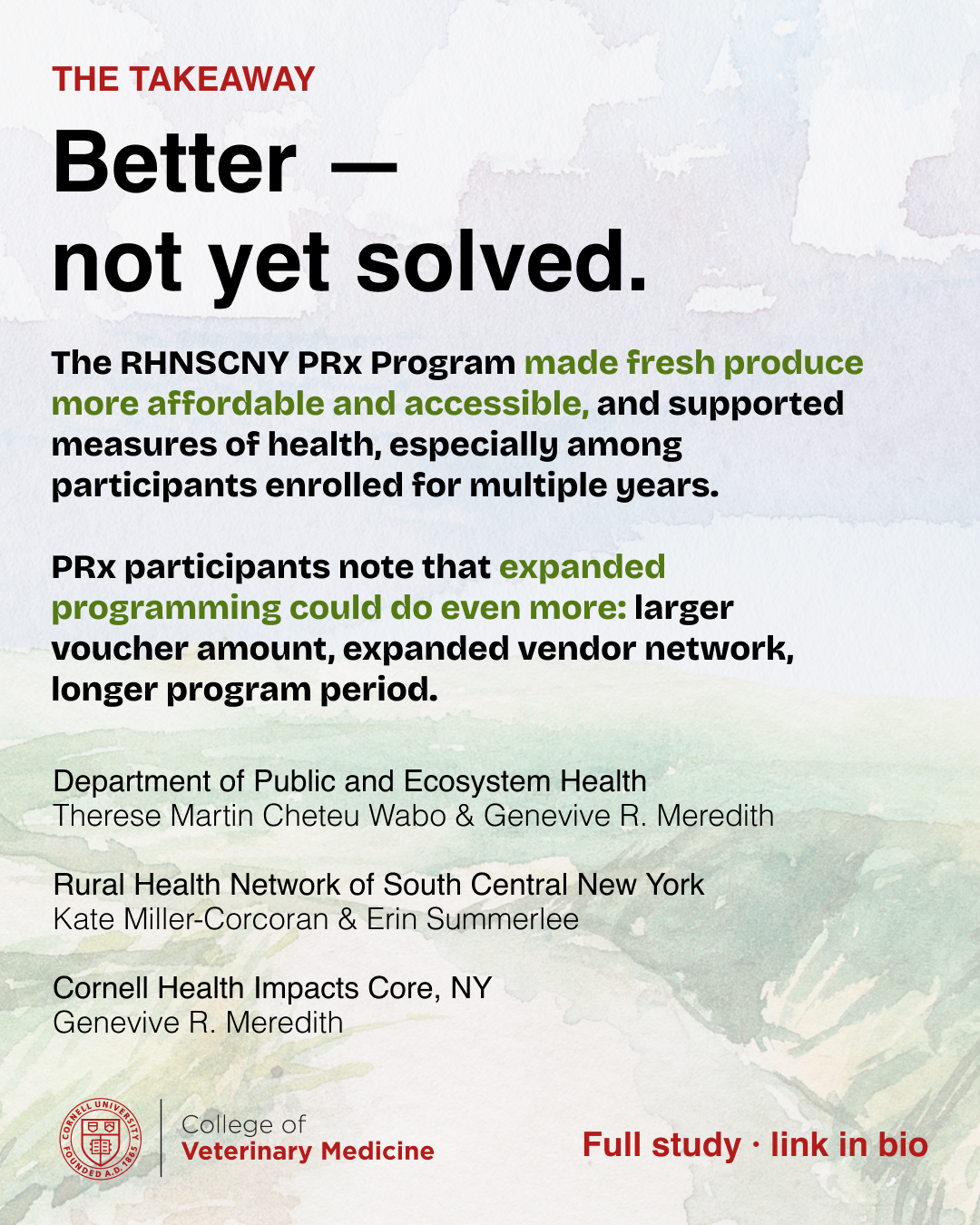
The RHNSCNY Produce Prescription Program made fresh produce more affordable and accessible while supporting measures of health, particularly among participants enrolled for multiple years.
However, participants also identified opportunities to strengthen the program and expand its impact. Their recommendations included larger voucher amounts, an expanded network of participating vendors, and longer program periods.
The findings highlight both the benefits of community-based produce prescription programs and the potential for expanded programming to further improve food access and health outcomes in rural communities.
Research and Community Partners
Cornell University College of Veterinary Medicine
Department of Public and Ecosystem Health
Therese Martin Cheteu Wabo and Genevieve R. Meredith
Rural Health Network of South Central New York
Kate Miller-Corcoran and Erin Summerlee
Cornell Health Impacts Core, New York
Genevieve R. Meredith