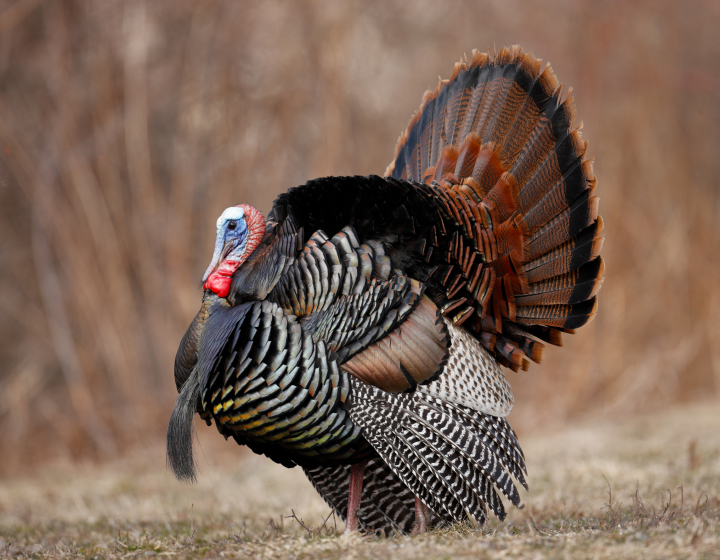



Keeping an eye out for erysipelas in poultry
Written by Jarra Jagne, D.V.M. '90
Erysipelas, caused by the Gram-negative bacterium Erysipelothrix rhusiopathiae, is a rapidly re-emerging pathogen in poultry. Due to increasing consumer demand for better welfare in the poultry industry, there has been a noticeable shift from conventional production to alternative systems such as free-range, cage-free, indoor aviary, and organic systems. In conventional systems, turkeys are additionally vaccinated for E. rhusiopathiae, which has contributed to a considerable decline in the disease.
With new production systems and increased exposure to the outdoors, we have seen an increase in avian erysipelas worldwide, and in New York State in particular. Fifty percent of cases of E. rhusiopathiae diagnosed at the AHDC in the last five years were submitted in 2026, and all came from birds raised outdoors.
Erysipelothrix rhusiopathiae is a zoonotic pathogen that can infect a wide variety of species (including aquatic species) but is seen more commonly in turkeys, swine, and sheep and now increasingly in pastured laying hens. It can also infect humans causing localized cutaneous lesions known as Erysipeloid. In humans, it can also manifest as a generalized skin lesion and as a rare acute septic infection that can cause fatal endocarditis.
The organism resides in the soil and is highly resilient, able to infect birds and mammals through breaks in the skin and mucous membranes. Fighting among male turkeys, causing open wounds, is a common way for the organism to infect turkeys. Poultry red mites (Dermanyssus gallinae) act as reservoirs and mechanical vectors, and flies and rodents are mechanical vectors. Chickens and turkeys can be asymptomatic carriers, passing the organism in their feces and contaminating the environment.
The disease was first described in avian species in the early 1900s and later was an important pathogen causing skin disease among farmers, butchers, veterinarians, slaughterhouse and abattoir workers, and people who work in the seafood industry. The disease in humans disappeared when birds were moved indoors into what we now call conventional housing.
Clinical signs in avian species include lethargy, crusty skin lesions on the head and wattles, swollen and crusty snoods in tom turkeys, diarrhea, and sudden death within 24-72 hours. Mortality can range anywhere from 15-50%. Rapid diagnosis is essential to starting treatment with short-acting penicillin products. Post-mortem lesions include enlarged, congested spleens, hepatomegaly, and pericarditis. Samples from affected organs such as the spleen, liver and heart should be sent for bacteriological culture and PCR tests for viruses. Top differentials in turkeys and chickens include Pasteurellosis (fowl cholera), Colibacillosis, highly pathogenic avian influenza, and virulent Newcastle disease virus.
Farmers who slaughter their birds on the farm need to take precautions, such as wearing PPE; gloves and face masks are especially important.
To report sick birds, unexplained high numbers of deaths, or sudden drops in egg production, please contact the AHDC (607-253-3900), the New York State Department of Agriculture’s Division of Animal Industry at (518) 457-3502, or the USDA at (866) 536-7593.