



Carolyn Adler, PhD
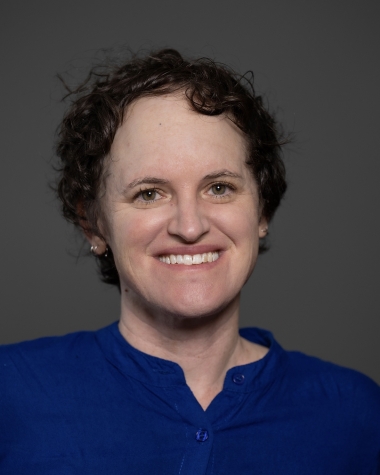
Associate Professor
Course Leader, Foundation Course II (Cell Biology and Genetics)
Department of Biomedical and Translational Sciences
Carolyn Adler's LabC3-173 Veterinary Medical Center
Cornell University College of Veterinary Medicine
Ithaca, NY 14853
Profile
Research/Clinical Interests
The goals of my lab are to understand the molecular and cellular mechanisms driving biological resilience, which is the ability of animals to recover from stresses such as injury or environmental threats like ionizing radiation. Stem cells offer a potentially powerful line of defense against these insults through their ability to restore tissues, yet stem cells themselves are susceptible to deterioration from overuse or age, as a result of recurring cell divisions. To understand how stem cells can resist these types of insults, my lab studies one of the most resilient animals known, freshwater planarians. These invertebrates can rebound from almost any kind of stress or amputation. We use genetic tools such as next-generation sequencing and RNA interference combined with cell biological and behavioral analysis to dissect how cells coordinate their activity to regenerate individual organs.
Education
- PhD, University of California, San Francisco, 2005
- BA, Wesleyan University, 1996
Biography/Professional Experience
- 2024-present, Associate Professor, Cornell University
- 2018-2024, Assistant Professor, Cornell University
- 2015-2018, Assistant Research Professor, Cornell University
- 2006-2015, Postdoctoral Research Fellow, University of Utah and Stowers Institute for Medical Research
Awards and Honors
- 2022, Zoetis Award for Veterinary Research Excellence
- 2008-2009, Ruth L. Kirschstein Individual NRSA Postdoctoral Fellowship, NIH
- 2006-2008, Developmental Biology Training Grant Postdoctoral Trainee, University of Utah
- 2002-2003, Julius and Patricia Krevans Fellowship, UCSF
- 1999-2002, National Science Foundation Predoctoral Fellowship, NSF
Publications
Selected Publications
RoboA reinforces planarian stem cell fate through FoxA and Anosmin1a
Kuang-Tse Wang, Fu-Yu Tsai, Yu-Chia Chen, Catherine P. Judy, Indya E. Weathers, Engin Özkan & Carolyn E. Adler
Nature Communications volume 17, Article number: 1971 (2026)
CRISPR/Cas9-based depletion of 16S ribosomal RNA improves library complexity of single-cell RNA-sequencing
Wang KT and Adler CE (2023)
BMC Genomics, 24:625.
Inhibition of the ATM kinase rescues planarian regeneration after lethal radiation
Shiroor DA, Wang KT, Sanketi BD, Tapper JK, and Adler CE (2023)
EMBO Reports, 24(5):e56112
Convergent evolution of "genome guardian" functions in a parasite-specific p53 homolog.
Wendt G, Shiroor DA, Adler CE and Collins, JJ III (2022)
PNAS, 119 (37) e2205201119
Planarian stem cells sense the identity of the missing pharynx to launch its targeted regeneration.
Bohr TE, Shiroor DA, and Adler CE (2021)
eLife, 10:e68830. doi: 10.7554/eLife.68830.
Injury delays stem cell apoptosis after radiation in planarians.
Shiroor DA, Bohr T, and Adler CE (2020).
Current Biology, 30(11):2166-2174.