

CVM marks a decade of innovation at the Animal Health Hackathon
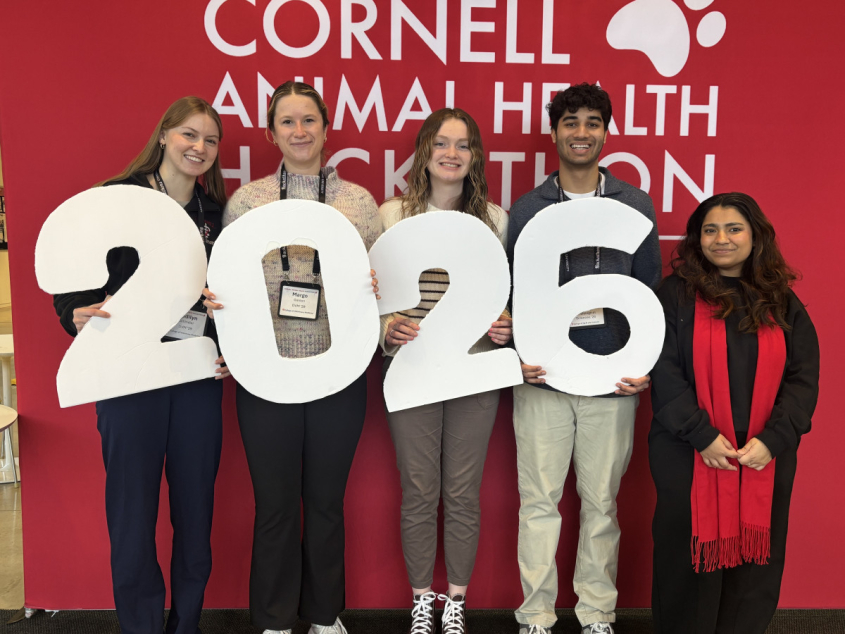
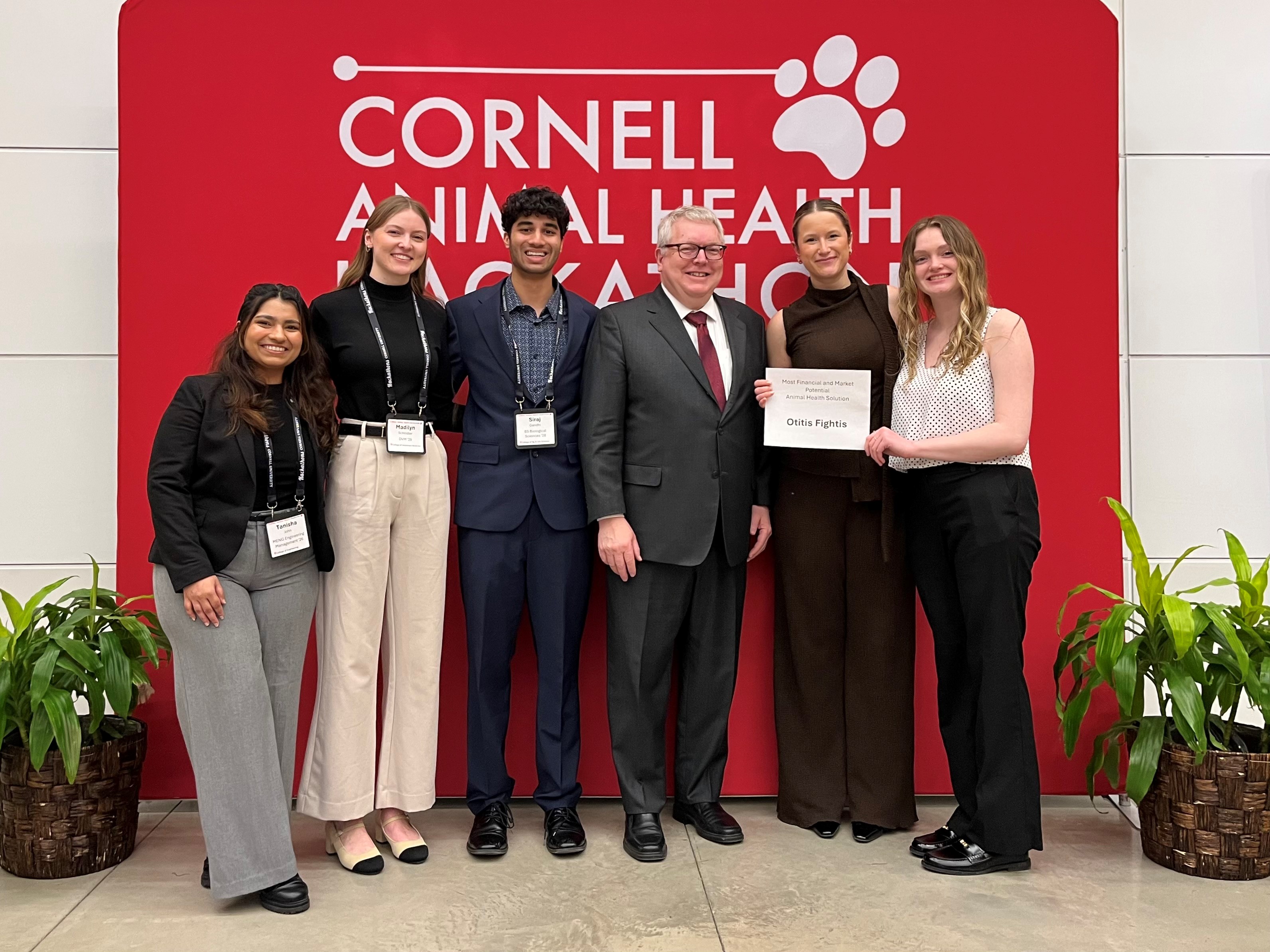
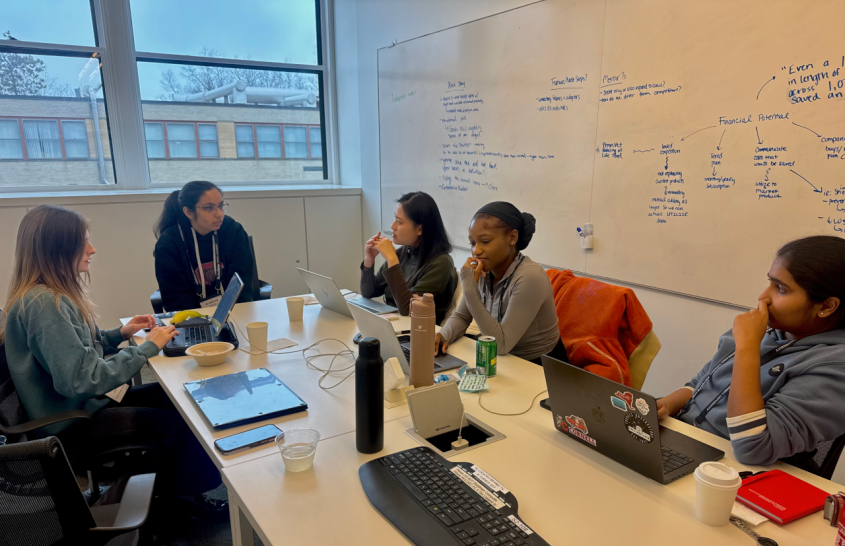
The Otitis Fightus team at the Cornell Animal Health Hackathon. Photo: Provided
On Feb 20-22, the Cornell University College of Veterinary Medicine (CVM) celebrated the tenth anniversary of its Animal Health Hackathon. The signature interdisciplinary event gathered over 100 students from across Cornell’s colleges to compete in a time-honored challenge that has grown from a small campus experiment into a leading student‑run engine for veterinary and animal health innovations.
“A decade ago, we took the chance that a sprint-style innovation challenge, usually reserved for computer science, engineering and business schools, could cross over to the veterinary community,” says Lorin Warnick, D.V.M., Ph.D. ’94, the Austin O. Hooey Dean of Veterinary Medicine. “Our instincts were right. As we celebrate the tenth anniversary of the Animal Health Hackathon, I am pleased to see how far this event has come over the years.”
A successful experiment
Warnick first conceived of the Animal Health Hackathon in tandem with the concept of the Center for Veterinary Business and Entrepreneurship (CVBE), inspired by discussions with his colleagues, Dr. Wesley Sine, the John and Dyan Smith Professor of Management and Family Business, and Ami Stuart, director of hackathons and entrepreneurship, both at the SC Johnson School of Business. Stuart had been organizing Cornell hackathons since 2014, and Sine had his business and engineering students participate in these events as extra credit. Warnick was intrigued by the idea of brining a hackathon to the veterinary college.
“Initially, we were unsure if veterinary students would be willing to add this to a schedule that’s already full of clinics, classes and studying,” Warnick says. However, with the organizational efforts of Stuart and CVM’s Len Johnson, assistant dean for marketing and communications, the program came to life. The first Animal Health Hackathon, held in January of 2017 at the Entrepreneurship at Cornell eHub offices, was a success. Thirty-two D.V.M. students participated in the event, along with 92 students from other Cornell programs. The first winning innovation was ‘Retriever’, a wearable device and app designed to help owners find lost pets. Additionally, the event drew alumni and veterinary industry partners who contributed time and support to the event. “This hackathon became one of the most popular ones offered all year, with a lengthy waitlist of students wanting to participate each year,” says Stuart.
“It made for a unique networking and learning opportunity for everyone involved,” Warnick says. We are grateful for the many businesses and individuals who have made the event successful through sponsorships, as guest speakers, judges and service as mentors for the student teams. These partnerships have been an essential part of the Hackathon experience.”
Scaling innovation and impact
Over the years, the hackathon has grown and changed: In 2020, the fourth iteration of the event moved from eHub to the newly renovated halls of CVM. It adapted once again during the pandemic — going totally virtual during the pandemic years of 2021 and 2022. Involvement by sponsors has also grown, with representation from corporations such as Purina, Care Credit, Zoetis, IDEXX, COVE Animal Health, Boehringer Ingelheim and VPP.
The event’s organizers and leaders have evolved as well: In 2017, Jodi Korich, D.V.M. ’97, associate dean of education, took the helm in planning the event for several years. Later, Jorge Colón '92, D.V.M. '95, the first CVBE faculty hire, took on a director role for the event, a position he holds today. “The Animal Health Hackathon is a flagship event for CVBE,” Colón says. “The drive and ingenuity demonstrated by the students is an inspiration year after year.”
The hackathon-created innovations are as diverse and creative as the students who conceived them, from AI detection of mastitis to cat-scratching mitigation technology. Some projects have even led to entrepreneurial ventures. For example, the startup Equilibrate, which focuses on high-capacity sensors that gather data on horse weight for better horse care, was created by Michelle Greenfield, D.V.M. ’23, at the hackathon.
“The Cornell Animal Health Hackathon was a life changing experience,” says Greenfield. “Since the Hackathon, I have a whole new outlook on my future and the endless possibilities that are available to me as an entrepreneur and veterinarian.”
A milestone year, and looking ahead
This year’s tenth‑anniversary hackathon highlighted current challenges in veterinary medicine, including shortages in the veterinary workforce, specialty‑care backlogs, high‑volume diagnostic testing and health equity concerns across species. The fast-paced schedule was packed with workshops, trainings, pitch-sessions and culminated in the demos and award ceremony. This year’s winners are listed in the table below.
As CVM celebrates this milestone, those who have helped build the hackathon emphasize that its success is multifaceted. “It’s the cross-campus collaborations and diversity of perspectives that makes this event special. The event exemplifies what the college, Entrepreneurship at Cornell and external partners can accomplish for the benefit of Cornell students and animal health,” says Warnick.
Colón agrees, adding that adaptability has been instrumental as well. “Each year, the Animal Health Hackathon has adapted to changing industry needs while preserving its original ethos of solving pressing animal health issues,” he says. “I believe this approach will keep the event staying relevant for years to come.”
| Category | Team Name | Students |
|---|---|---|
Most Market Potential (Learn about the highlights of this project in the Cornell Chronicle) | Otitis Fightis | Krista Greening, D.V.M. ‘29 |
| Madilyn Schindler, D.V.M. ‘29 | ||
| Margo Ganton, D.V.M. ‘29 | ||
| Siraj Gandhi, B.S. Biological Sciences ‘28 | ||
| Tanisha John, M.Eng Management ‘26 | ||
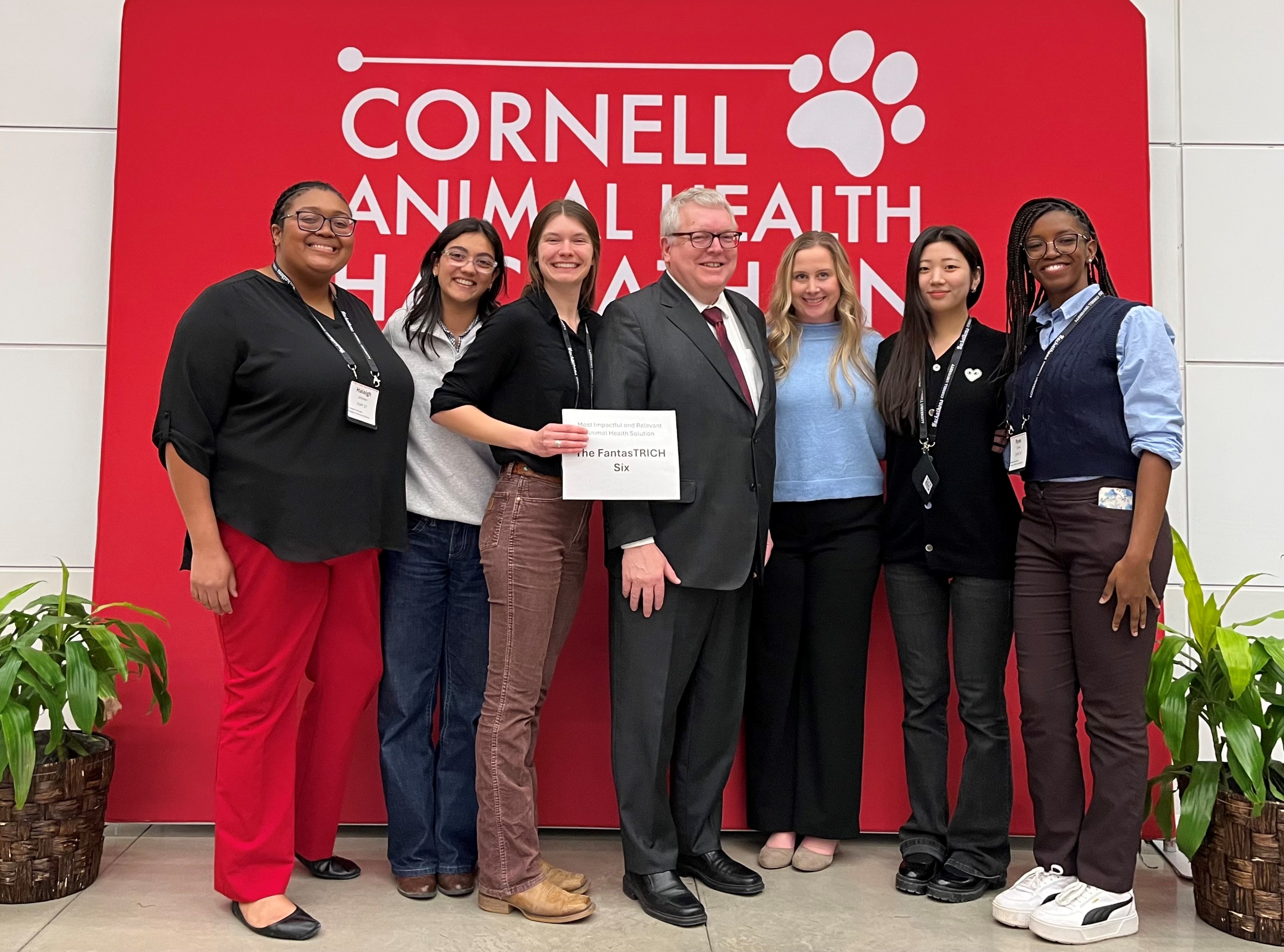
Most Relevant & Impactful Animal Health Solution (Learn about the highlights of this project in the Cornell Chronicle) | The FantasTRICH Six | Elizabeth Kim, M.P.H. Animal Science & Public Health ‘27 |
| Kerstyn Countrymann, D.V.M. ‘27 | ||
| Maggie Kowalewski, D.V.M. ‘28 | ||
| Sofia Kulasooriya, B.S. Hotel Administration ‘26 | ||
| Haleigh Johnson, Tuskegee D.V.M. ‘27 | ||
| Ryen Greer, Tuskegee D.V.M. ‘27 | ||
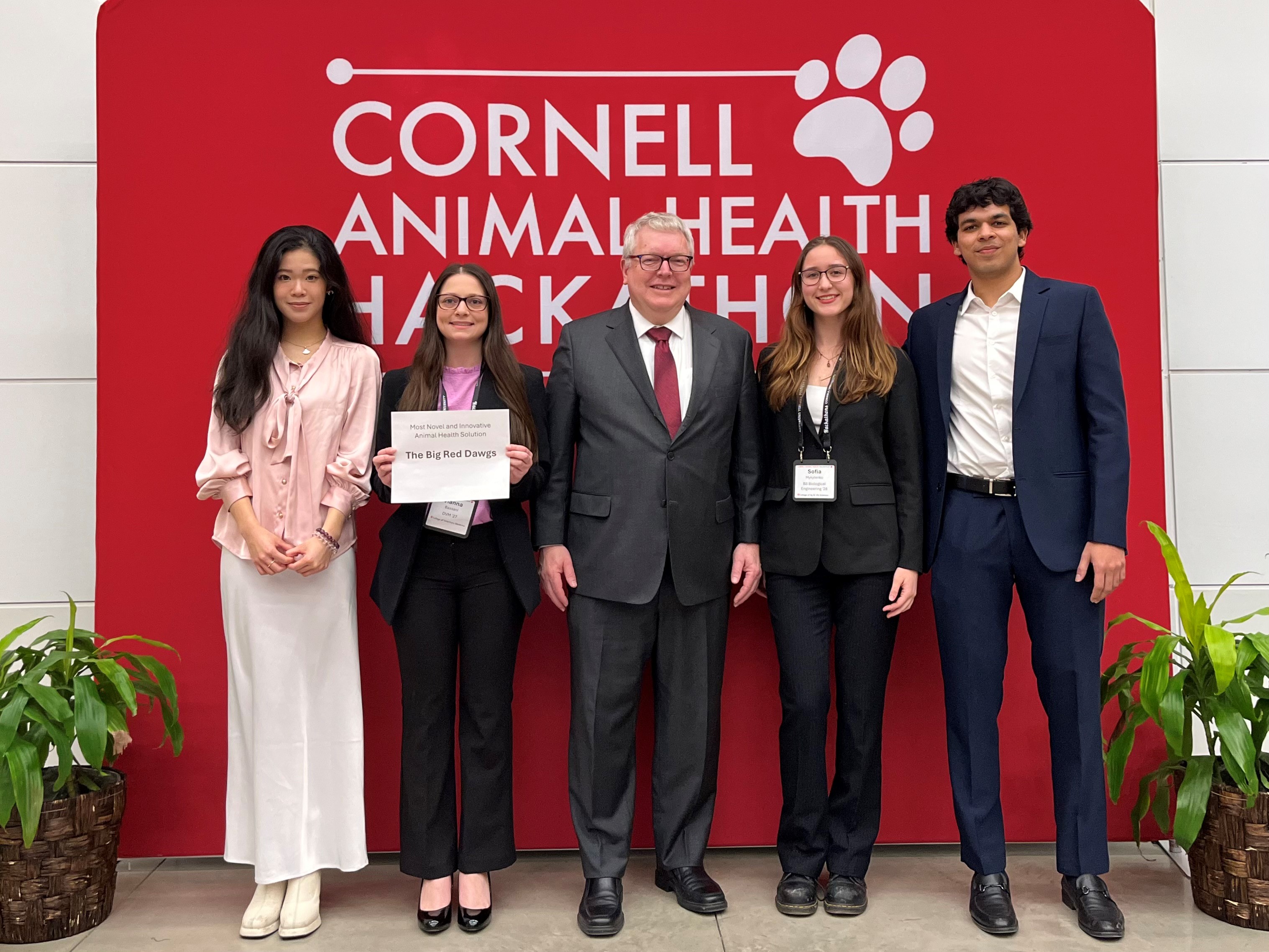
Most Novel & Innovative Animal Health Solution (Learn about the highlights of this project in the Cornell Chronicle) | The Big Red Dawgs | Aryan Agarwal || BS Biometry & Statistics ‘26 |
| Athena Huo || MENG Systems Engineering ‘26 | ||
| Sofia Mykytenko || BS Biological Engineering ‘28 | ||
| Vianna Bassani || DVM ‘27 |