
Spotlight on the Anatomic Pathology Laboratory
What is your primary mission and how many people are on your team?
The Anatomic Pathology Laboratory at the Cornell Animal Health Diagnostic Center is dedicated to providing comprehensive diagnostic services, including postmortem examinations, histopathology, specialty pathology services (hepatopathology, dermatopathology, neuropathology, and ocular pathology), immunohistochemistry, and in situ hybridization testing. Our team includes 11 board-certified anatomic veterinary pathologists, eight anatomic veterinary pathology residents, and nine technicians specializing in histotechnology and necropsy procedures. Together, we are committed to delivering high-quality diagnostic support, advancing veterinary pathology education, and contributing to clinical and research excellence.
What is unique about your lab?
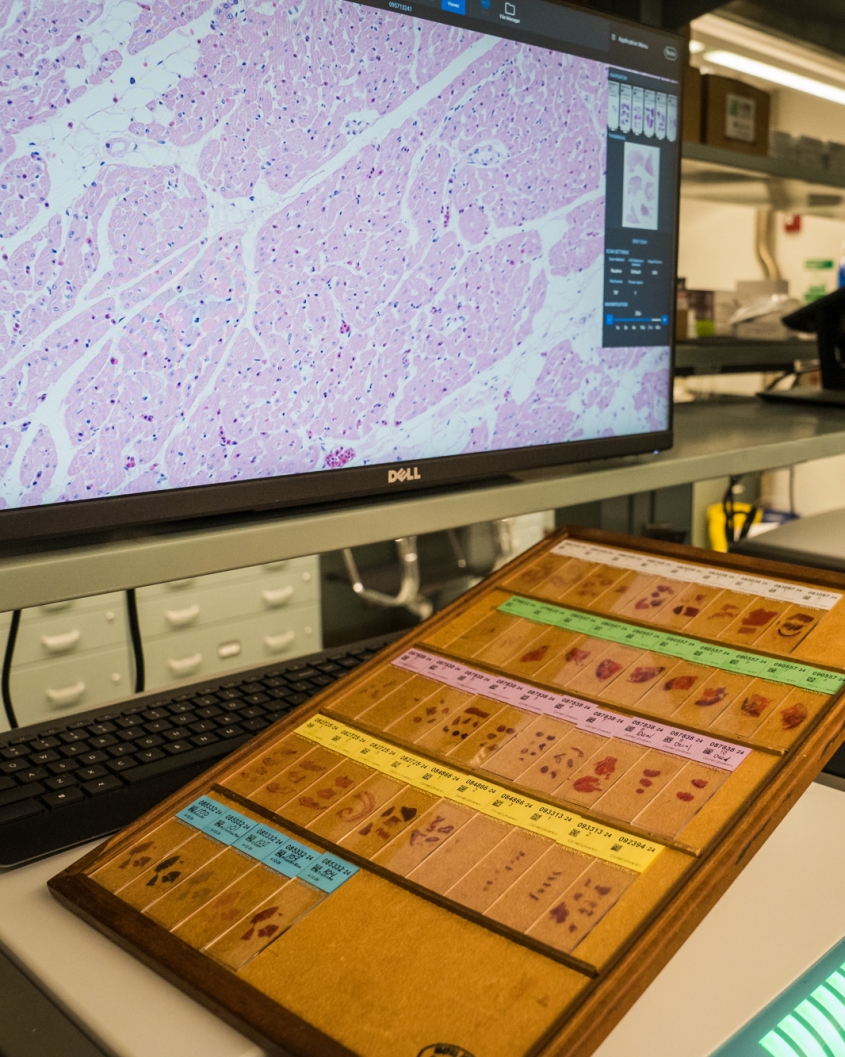
The Cornell Anatomic Pathology Laboratory is one of the few veterinary diagnostic laboratories to transition from traditional glass histology slides to a fully digital pathology workflow. Whole-slide imaging enables pathologists to review cases remotely, collaborate more efficiently, and complete diagnostic reports in a timely manner, providing greater flexibility and improved service for our clients. Additionally, we offer a comprehensive suite of histochemical, immunohistochemical, and in situ hybridization assays, many of which are unique among veterinary diagnostic laboratories. These advanced testing capabilities enhance diagnostic accuracy and support the evaluation of a wide range of diseases.
What does a typical day look like for your team?
Because the Anatomic Pathology Laboratory provides a wide range of diagnostic services while supporting veterinary teaching and research, no two days are the same. For the histotechnology staff, each day involves preparing tissue specimens for microscopic evaluation and converting histology slides into high-resolution digital images that are integrated into our reporting system. Necropsy technicians begin the day by preparing cases and spend the afternoon assisting with postmortem examinations. Pathologists on clinical service start their day by reviewing cases with residents and veterinary students. Afternoons are typically devoted to performing necropsies or interpreting biopsy specimens. Pathologists and residents who are not on clinical service focus on completing diagnostic cases, teaching veterinary students, advancing research initiatives, and developing new diagnostic approaches. This dynamic environment provides opportunities to contribute to exceptional patient care, veterinary education, and scientific discovery every day.
What's the most common test request you receive?
The most common test ordered through the Anatomic Pathology Laboratory is histopathology (biopsy) followed by necropsy (postmortem) services. We perform close to 11,000 biopsies per year and 2,500 necropsies per year.
What is something people might not know or expect about your lab or its employees?
In addition to our diverse diagnostic caseload, the Anatomic Pathology Laboratory supports several important programs throughout New York state. These include a veterinary forensic necropsy program, an equine racehorse health program, and collaborative initiatives with the Wildlife Health Laboratory. Notably, the veterinary forensic necropsy program partners with counties across the state to investigate cases of suspected animal cruelty, providing the scientific evidence needed to support law enforcement investigations and legal proceedings.
Anything else you wish to highlight about your lab?
Our faculty have noted expertise in all animals, big and small! They have prominent roles on national committees, help define the standards of our profession, and publish widely to advance the veterinary anatomic pathology.