
Student Story: My journey into stem cell conservation
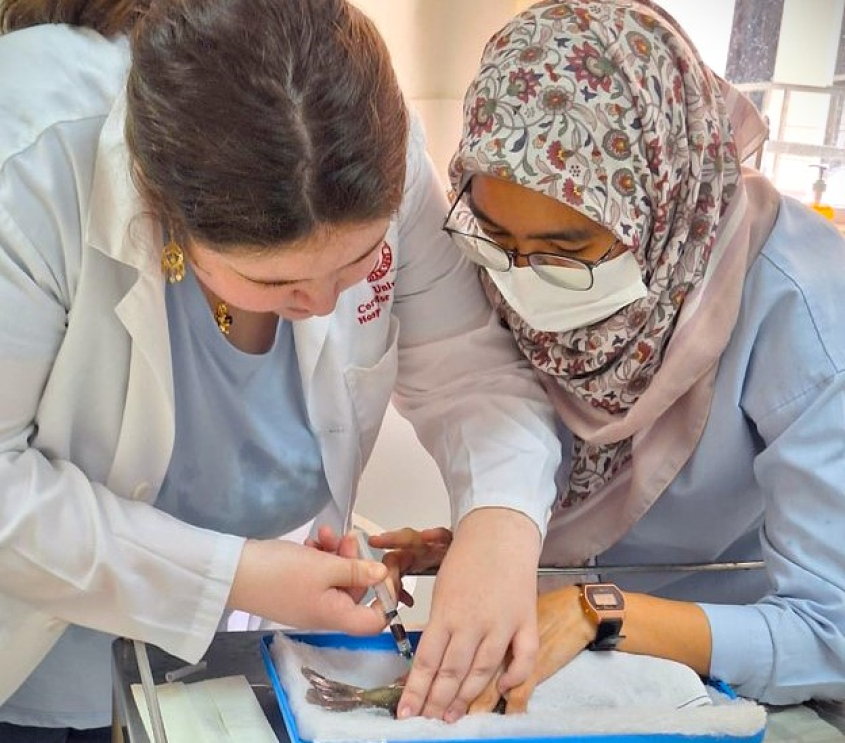
Collecting a blood sample from a sedated perch for PBMSC isolation under the supervision of Dr. Diyana. Photo: Alyssa Iraida Miguez
In the heart of Malaysia, surrounded by the calls of hornbills and the hum of lab equipment, I found myself not in a jungle, but in a lab, holding a vial that could hold the key to wildlife conservation: stem cells. As a prospective veterinarian interested in wildlife medicine, especially where it intersects with reproductive medicine, I had imagined a life filled with palpations, ultrasounds and hormones. Imagine my surprise when beginning work in Dr. Soon Hon Cheong’s Comparative Reproduction Lab led me to the fascinating world of stem cells. Specifically, I began working on peripheral blood mesenchymal stem cells (PBMSCs), a type of stem cell found in blood that has the potential to develop into an assortment of different kinds of tissues. These cells are of interest for their potential as a less invasive tool for genetic biobanking, making them valuable for genetic preservation.
Globally, biodiversity is declining at an alarming rate, with more species becoming threatened or even endangered every year. Organizations such as the International Union for Conservation of Nature (IUCN) track these changes in populations and share them through the IUCN Red List, a global measure of extinction risk. With the expanding loss of habitats and the decline of wildlife populations, researchers and veterinarians are searching for innovative tools to help preserve species before they disappear.
With the training I received at the Cornell University College of Veterinary Medicine, I was able to take this work internationally to Malaysia, where I joined the renowned reproductive specialist Dr. Wan Nor Fitri at Universiti Putra Malaysia (UPM) for nine weeks in the summer of 2025.
Stem Cell Successes
Our initial proposal aimed to isolate PBMSCs from the Malayan pangolin (Manis javanica) and other wildlife species native to Malaysia. With growing excitement, Dr. Fitri and I began establishing collaborations to secure samples even before my arrival. Unfortunately, upon reaching Malaysia, many collaborators had to withdraw due to political challenges in our respective countries. This was my first major lesson: research, veterinary medicine and politics are more intertwined than we often realize, and these relationships can be delicate.
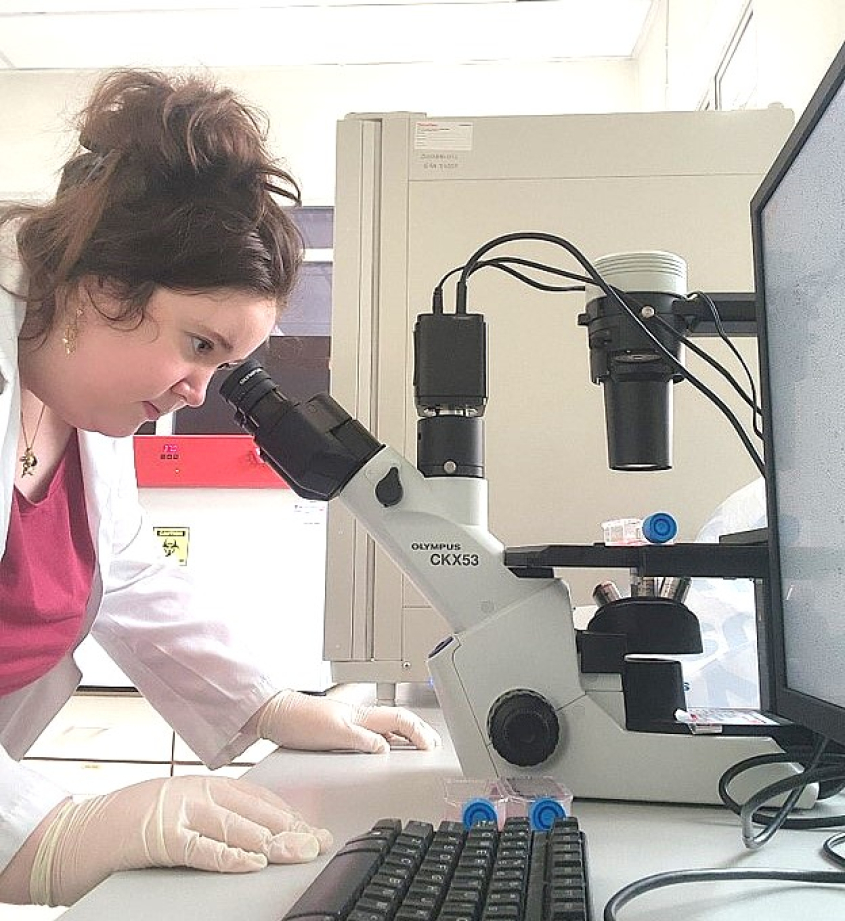
Even without wildlife samples, we remained determined to help establish the laboratory as a future hub for stem cell conservation research. To do this, we first refined and validated our techniques using samples from domestic cattle and other teaching animals at UPM. Working with these more accessible species allowed us to confirm that our methods and cell cultures were functioning properly before expanding to more challenging wildlife applications.
After validation of our methods, we expanded to other species, including goats, domestic cats, and (my personal favorite) fish. Domestic cats were of particular interest because, if successful, they could help us secure collaborations with the Department of Wildlife and National Parks (Perhilitan) for access to wild felids, especially the Malayan Tiger. Fish were my personal passion, as aquatic medicine has always fascinated me and I jump at any opportunity to improve my skills in working with them.
While many of our cell lines were successful, wildlife samples ultimately never became available. This was another valuable lesson: conservation research rarely goes exactly as planned, but adaptability is key.
Hanging up the microscope
Beyond stem cell research, I enjoyed a variety of other opportunities that made this experience unforgettable. Working in UPM’s Theriogenology Lab allowed me to join rounds with veterinary students, visit local farms to confirm goat pregnancies, practice palpation skills on the dairy herd, and even assist in diagnosing reproductive diseases. These experiences sharpened my clinical skills and strengthened my ability to collaborate with others.
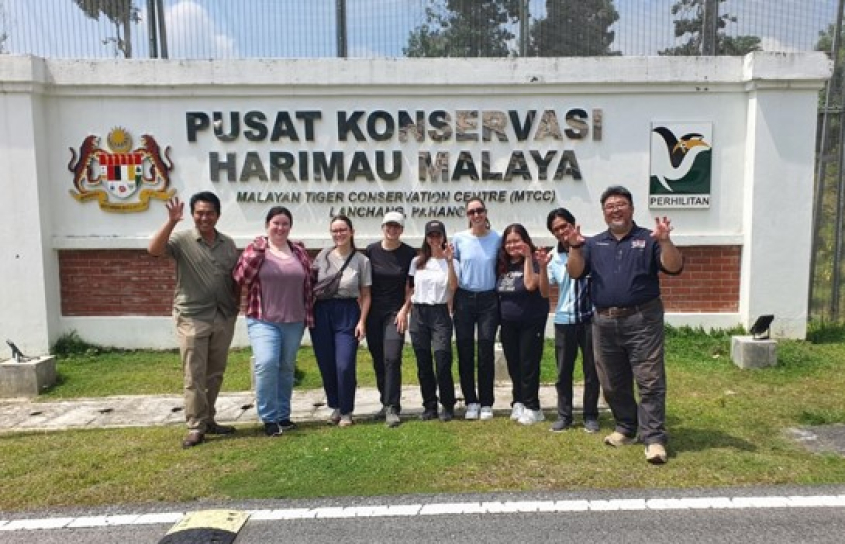
A highlight of the summer was joining Dr. Rinalfi and his team for visits to the Malayan Tiger Conservation Center (MTCC) and the National Elephant Conservation Center (NECC). The MTCC is a cornerstone of Malaysia’s efforts to protect and breed endangered Malayan Tigers and we learned about current research and the daily management and conservation work taking place at the facility. At the NECC, we met the elite Elephant Relocation Team, which specializes in safely moving elephants involved in human-wildlife conflict situations. We also had the privilege of helping with enrichment activities and feeding the resident elephants.
Personal Growth
Malaysia is a cultural mosaic of Southeast Asia, and I met countless people from diverse backgrounds who were united in the mission to conserve wildlife. Immersing myself in this world was both challenging and rewarding. With so many perspectives and schools of thought, I learned how to advocate for my ideas while remaining open to others. Witnessing what a passionate team can achieve for conservation was nothing short of inspiring. I am emboldened more than ever that this career path is for me as a veterinarian who can bridge clinical medicine, reproductive science, and conservation research to support endangered species around the world. Catching the fever, I am ecstatic to begin my work back home at Cornell in improving our technique for fish PBMSC with the hopes of applying it to endangered shark species.
I am deeply grateful to all the professionals I worked with at UPM and MARDI for welcoming me into their world of conservation. Special thanks to Cornell’s College of Veterinary Medicine Expanding Horizons International Education Program for funding this experience.
Finally, I would like to dedicate this piece to the memory of my mentor, Dr. Soon Hon Cheong, whose guidance, generosity, and passion for conservation science made this experience possible. His mentorship profoundly shaped my growth as a scientist and aspiring conservation veterinarian, and his impact will continue through the students and research he inspired.
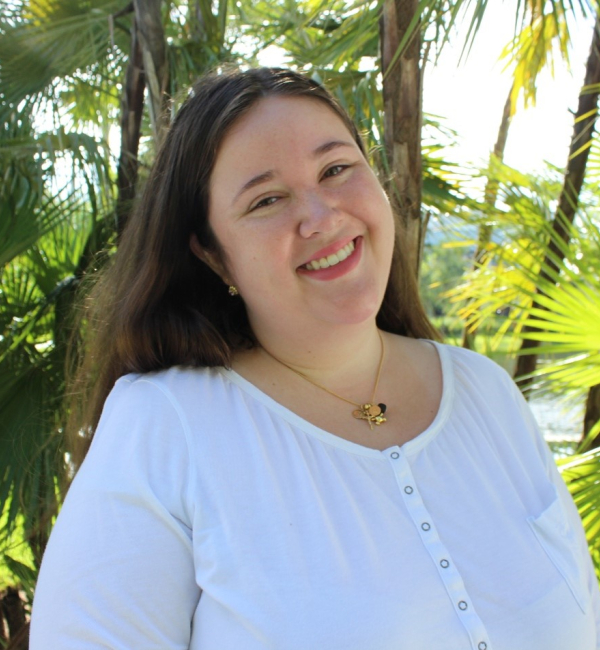
Alyssa Iraida Miguez is a fourth-year veterinary student (Class of 2027) at CVM with a passion for conservation medicine and a multidisciplinary approach to protecting endangered species. With strong interests in zoo, wildlife, and aquatic animal health, she aims to integrate theriogenology into conservation strategies, contributing to rewilding efforts and global biodiversity preservation. She earned her B.S. in Biological Sciences with honors and double majored with Natural and Applied Sciences from Florida International University in August 2022. She has a special interest in pangolins and sharks as her main species of current research.